
It’s been a couple of years since I was last at the Barnstaple Fringe and I’d always had good memories of it, in particular it’s manageable nature and the camaraderie of the other performers. Coming back this year, I can see that it has grown, and this just adds to its excitement and the variety of shows on offer.
This is my first time here with my own show. I don’t mind admitting that the whole process has been nerve wracking and I was incredibly jittery on the train here the other day, that crazy single line track between Exeter and Barnstaple which seems more like a throwback to the 1950s. This is the first show that I’ve invested a lot in, from rehearsing almost every night to having friends and professionals help out with voice, music and movement. Yet I still had no idea how it would go.
The technicians and the people running the fringe have been very helpful indeed and my mind was put to rest after the technical rehearsal in which it appeared that the technology I was using actually worked! Indeed, the technicians were also pleased because they said that i was, and I quote, ‘low maintenance ‘.
And then the fringe craziness kicks in, the familiar faces you see around town and at other gigs, performers and friends from the local and national circuit all coming together in this small town, this Devonian Edinburgh. And my shows had an audience! Last nights was a classic, for example. On the spur of the moment the technicians suggested using the smoke machine, which certainly added a layer of mystique to the performance and perhaps further adding to the ridiculousness of it.
Bizarrely, the show was reviewed and the reviewer praised my dancing!
Last night I stayed in a venue. By which I mean, Bryony Chave Cox had been performing a production in a hotel room, which she then hired out to me for the night. It was certainly a very strange sensation, having an audience in your hotel room and having to wait for them to leave before getting a good night’s sleep.
So I’ve got one more show to do, and I’m going to try and get out and see as much as possible. I’d really like to thank the organisers of this whole festival, it’s been homely and artistic and everything that a fringe should be. I really hope they let me come back again next year!
Tag Archives: performance
What is Juicy? An interview with Robert Garnham
What’s the theme of your show?: Juicy is a scatalogical mishmash of comedy poetry, spoken word shenanigans, serious and deep explorations of loneliness, LGBT rights, songs and a comedy monologue about lust at an airport departure lounge. I suppose if it has a theme, then that would be finding love. Different characters throughout the show find love, or dream of finding love.
What’s new or unique about the show?: Juicy is a free form entity, different every night, with no definitive order. It’s upbeat and funny one moment, contemplative the next. It looks at some serious issues, too, behind the fun and the hilarity, such as gay rights in places such as Uganda and Russia, loneliness, isolation, longing.
How did the show come into being?: the show just kind of evolved outwards from several different places simultaneously, somehow, in a kind of spoken word osmosis, meeting in the middle. It started with a few ideas, which were improvised, then these ideas led to other ideas.
Describe one of your rehearsals.: The show is in three parts so rehearsals were conducted in fifteen minute sessions in a shed at the back of my parents garage in Brixham, Devon. This is real home grown stuff! There’s a big mirror along one wall where I can watch myself practising. I play around a lot with word order and tone and movement and hey presto, the show started to come into being.
How is the show developing?: One of the important aspects was the adoption of music. I worked with some talented musicians and sound artists, which really helps with the tone and the delivery. And then I was privileged enough to work with Margoh Channing, one of the funniest cabaret drag artists of the New York scene, and she recorded some words for the end. I just knew that the end would have to fit in with her words!
How has the writer been involved?: The writer has been involved since the start. I’m the writer. I’ve been there for every rehearsal.
How have you experimented?: As I say, the music was the key to the show. I’ve performed all over the UK and New York for years, but never used music before. Most of my experimentations were actually with the technology necessary to get the music backing just right. I’ve also never done a long monologue before, so this was kind of scary. I was influenced by another New York friend of mine, the storyteller Dandy Darkly.
Where do your ideas come from?: I wish I knew! They just seem to arrive. Like being hit in the face by a kipper. You can be in a sauna or swimming pool or on a bus about to get off and suddenly, oh yeah! A badger that wants to be in EastEnders!
How do your challenge yourself or yourselves?: I watch other performers and see how they do it. And then I try to be as good as them. I’m really influenced by cabaret artists, even though I’m a spoken word artist. The sense of fun and naughtiness is irresistible.
What are your future plans for the show ?: Juicy will be going to GlasDenbury Festival near Newton Abbot, the Guildford Fringe, and then the Edinburgh Fringe, where I’ll be at Banshees Lanyrinth.
What are your favourite shows, and why?: Margoh Channing’s Tipsy, for the humour and the pathos. Dandy Darkly’s Myth Mouth. Paul Cree, Ken Do. All these people invent characters and invest them with humour, and take you to new places almost effortlessly. I’ve seen them all at various fringes. Also Melanie Branton’s new Edinburgh Show, she’s such a good writer and performer.
Show dates, times and booking info: 29 June at 5pm, 1st June at 650pm, 2nd June at 330pm, all at the Golden Lion in Barnstaple, tickets available on the Barnstaple TheatreFest website.
Then the Keep pub, 9 July at 730pm, Guildford Free Fringe, tickets available, again, from their website.
And finally at Banshees Labyritnth, every day at 1230pm, 13th to the 19th August, at the Edinburgh Fringe.

My writing life.
I started my writing career in 1981. I was seven. In a style which I have later adopted in my poetry, my first novel didn’t have a title, it just had a giant R on the cover, which stood for Robert. I can’t remember much about if except that the villain was an entity known only as the Blue Moo. The Blue Moo was what I used to call my sister, because she wore a blue coat. Which is kind of cruel, seeing as though she was only five at the time.
I would write at school during playtime, whenever it was raining. It rained a lot, I remember, when I was a kid. I’d always get excited about rainy days because it meant that I could write. I still get excited shout rainy days, even now.
By 1984 I was at middle school and I used to fill notebooks with stories. I was encouraged to do this by my teacher, Mr Shaw, who would then let me read my stories out in class. The first of these was called Bully Bulldog’s Ship, and for reasons which I’m still not sure, all of the characters were dogs. And secret agents. The cover for Billy Bulldog’s Ship shows explosions and a radar screen and has he tag line, ‘Featuring car chases, underwater bases, kings and prime ministers and that sort of thing’. It was rubbish.
By 1986 I was still at middle school, but now I’d progressed to writing about humans. I wrote a whole series of short novels about a skier, called William Board, and his friend Ed Butf, and how they would get into all kinds of adventures during and after skiing tournaments. I have no idea why I picked skiing tournaments, but I did watch an awful lot of Ski Sunday back in the day.
In 1988 my grandparents gave me a typewriter, which I still use now whenever I’m Poet In Residence anywhere. By now William had left the skiing circuit and was a policeman in a small Surrey village called Englemede. I’d type up these stories and inject as much humour as possible, because this would make my English teacher, Mr Smith, laugh as he read them. This was probably a big moment in my adoption of comedy. The stories were still rubbish, but my grammar and spelling had improved.
By the time I got to sixth form I was still plugging away, and remarkably, William Board was still the focus of the stories, his ineptitude as a policeman and his promotion to detective providing much mirth. My magnum opus of this time was Impending Headache, set at a sixth form college in Surrey much like the one I attended. And in between chapters I’d write over the top comedic poetry.
By 1992 I had my first job and, amazingly, William Board was still my main focus. By now his detective work would take him to a supermarket in Surrey, round about the time that I worked at a supermarket in Surrey, in a novel called Bar Code Blues.
In 1994 I got a job in a village shop in the suburb of Englefield Green, and I wrote a new novel with a new main character, the trainee guardian angel Genre Philips. The novel was called Englefield Green Blues, and like Impending Headache, it would be influential on my writing career in that I’d re-use chapters and stories to form the novel I’ve been working on this year.
At this stage, I’d started sending novels off to publishers and agents, and one or two were very supportive but would ultimately say no.
By now I’d dabbled in comedy poetry, filling up notebooks with poems written with a pen I’d been using since sixth form. I’d stay at my grandmothers house in the hot summer, she lived on a hill overlooking the whole of London from the airport to Canary Wharf, and I’d listen to the jazz stations and just write whatever I felt like. This would form the basis of my one man show, Static, in 2016.
In 1995 my Grandfather passed away. I went to see the pathologist and watched as he signed the death certificate with a cartridge pen, and that afternoon I went out and bought one for myself. Amazingly, this is the same pen I use today for anything creative, and it has written every poem, short story, novel and play since 1995.
In 1996 I moved to Devon. By now I’d discovered Kafka, Camus, Beckett, and my writing became dense, impenetrable. I used my own system of punctuation which made even the reading of it impossible, and to further add to the misery, my novels had numbers instead of names. RD05, RD06, RD07, and so on. I’d send these off to publishers and I could never understand why they’d come right back.
I joined a band of local amateur actors and I would write short sketches and funny monologues for them, we’d rehearse and make cassettes, but never got anywhere near the stage. One of my monologues was about a rocket scientist who’d fallen in love with his rocket. Not phallic at all.
I came out in 2000. I didn’t write much at all for a while. I was busy with other things.
By now I had a job, and I’d studied a-levels, undergraduate and postgraduate at night school, so I didn’t have much time for writing. For a laugh, I got a part in a professional play, and while it meant I would never act again, (oh, it was so traumatic!), it led me to write a play called Fuselage. Amazingly, it won a playwriting competition at the Northcott Theatre. I remember getting off the train in Exeter thinking, wow, it’s my writing that has got me here. This all happened in 2008.
In 2009 I discovered performance poetry, accidentally, and kind of got in to that. Around the same time I wrote a short novel called Reception, based on an ill fated trip I took to Tokyo, but by now my main focus was performance poetry and spoken word, shows and comedy one liners. In 2010 I had my first paid gig, at an Apples and Snakes event in London, and amazingly, this was the first time I made any money from my writing since I was 8!
So that brings me up to date, more or less. I now write every day, still with the same pen, and I still use the same typewriter every now and then, though mostly for performance. And I’ve kept a diary, every day writing something about the previous day, which I’ve kept up since 1985 uninterrupted. It’s only taken 37 years to find the one thing I’m halfway decent at!


On memorising.
So lately I’ve been trying to memorise my new Edinburgh show, Juicy. This would be quite an undertaking for me, as I’ve never successfully memorised anything I’ve ever written, and to be jones I probably won’t manage it. I can memorise whole Bob Dylan songs, all fourteen minutes of Desire, but I’m quite hopeless at anything I myself have written.
I did a scratch performance of Juicy at the Bike ashes Theatre in May. It was a daunting experience because I was surrounded by theatrical types, and to be honest I think they were looking at what I was doing more in the context of a theatrical piece than a set of poems. The feedback afterwards unanimously suggested that I should learn the whole thing, because this is what theatre is. Some of the feedback suggested I move around more. Which was quite funny on two counts, firstly because some of the feedback also said how nice it was to see someone who doesn’t move sound all the time, and also because the director I used for my last show told me to stand dead straight for the whole hour. And he was a theatrical director.
So I’ve set to work trying to learn Juicy, and after two months I’ve managed to learn six pages of it. Out of thirty. Now this may not seem like much, but for me, this is a small triumph. I’ve never managed to learn anything before, so six pages of Juicy is the ultimate achievement.
Last week I went to a gig in Totnes and I spoke to a fellow performer who I have lots of respect for. I told her about learning my show and she replied, ‘Why?’
And that got me thinking, why indeed? Ok, so if you’ve learned your lines you can move around more and have a deeper connection with the audience. But on the other hand I’ve always performed with a book, and it is a part of my whole repertoire. I look up from the book, glare at the audience, look at them all in turn. Which should be quite easy at the Edinburgh Fringe. In fact, I know the words, I just can never remember in which order the verses fall.
Make no mistake, it’s good to learn poetry and adds to the performance. And the fact that I’ve memorised six pages of the show means that now I can apply this to the three minute poems, and hopefully grow my performance. But I think I shall just relax on the memorising at the moment and concentrate just on the performance. That’s the main thing. It’s performance poetry, after all!

Ant – A solemn investigation
It has been apparent for some time that a solemn investigation were needed into the effects, physical and psychological, of an ant crawling on someone’s hat. Seeing it as upon myself, (the theme, not the ant), I set out, in a somewhat grave manner, and yet bravely, into such an investigation.
The manner this investigation took soon revealed itself to be poetical in nature, and within a couple of hours I had completed a poem based on the theme of having an ant crawl on someone’s hat. Yet this did not fully satisfy me, and a further poem was written.
At this time, I was bitten by the bug, (again, not the ant), and more poems began to arrive. The theme of an ant on a persons hat soon took over my life and all of my creative output, until such a time arrived that I could think of little else. Indeed, the poems began to resemble a Groundhog Day syndrome, the same repeated themes, the same story with different outcomes, different languages and tones, until within a month I had thirty such poems.
The good people at Mardy Shark publishing soon recognised their worth and a pamphlet was soon produced, titled, simply, Ant.
Ant stands as the zenith of my creativity, a full flow measure of poetic and literary sensibility, all inspired by the horror and the bizarre situation of having an ant crawl on ones hat.
You can download the Kindle version of Ant herehttps://www.amazon.co.uk/Ant-Robert-Garnham-ebook/dp/B071JDZJ7X/ref=sr_1_1?ie=UTF8&qid=1497201234&sr=8-1&keywords=Robert+Garnham+Ant
Or you can send off for the physical version here http://www.lulu.com/shop/robert-garnham/ant/paperback/product-23218401.html

Life lessons from performing spoken word
Life lessons from performing spoken word
1. If at first you don’t succeed, act as if you’ve never failed.
2. Image is everything. If you arrive straight from work wearing a shirt and tie, then this will become your look and people will always see you as a performer who wears shirt and a tie.
3. If a poem isn’t working, give it a third verse freak-out. Then take out the first two verses.
4. Watch out for light fittings when using props.
5. The audience wants you to do well and will be on your side but try not to balls it up in the first place.
6. The whole world is an audience even if you’re not performing.
7. You never stop performing, even when you’re not performing.
8. If you need to ask the host if you’ve got time for ‘one more poem, a short one’, it means you haven’t rehearsed. In any case the host will always say yes, because they’re just being polite.
9. When you’re rehearsing, stand at the bottom of your bed and rehearse to the pillows. They will stare back kind of blankly.
10. Like sex, there’s no wrong way of doing it.
11. Like sex, you can get a lot of laughter from just one look.
12. Everyone has a voice. Authenticity is everything. Every stage character is just an exaggerated version of yourself.
13. If humour’s your thing, the obvious joke can often be the most effective. Sadly.
14. If it’s a high concept poem which needs a lot of explanation, then it’s probably not going to work very well. But don’t stop experimenting.
15. Music stands to hold your book allow you to make extravagant hand gestures if you haven’t learned the poem by heart.
16. It doesn’t matter if you haven’t learned the poem by heart. Just make sure you don’t hide behind a huuuuuuge folder.
17. You can imagine the audience naked if that helps, but the audience might be imagining you naked too. In fact they probably are. How else to explain the amazing amount of people who upchuck during my gigs?
18. Everything becomes subject material for your poetry. Emotional turmoil, break-ups, losing your car keys. The last time I had a break up I thought, oh good, I’m going to get some poems out of this.
19. It was going to happen eventually, the bastard.
20. By all means copy the mannerisms and style of your heroes, but for goodness sake, innovate.
21. I mean I thought it was going ok but then one day I suddenly thought, hmmm, we’re just going through the motions.
22. Spoken word artists get their points across, they draw attention to injustice and prejudice, they make you laugh, they make you cry. They play with language and dance on grammar, they play with rhythm and rhyme. It’s always sickening when this is all done by one genius youthful bright-eyed performer. I remember the Bristol Poetry Slam. I was up against someone performing an excellent poem about the death of their grandmother linked in with the entire history of the British black experience from slavery to the present day, and then I went up and did a poem about liking beards.
23. Don’t worry about anything.
24. Just a small planet in deep dark space and our time on it is incredibly small in the general scheme of things, everything is relative.
25. You can take the mic off the stand if you like, but move the stand out the way. Take down that barrier!
26. If you enjoy it and have fun, then so does the audience. And so does everyone. Even the people you see on the bus on the way home. Enjoy it. The world becomes a better place.
27. There’s no subtle way to plug a book.
28. My book is available here. https://burningeyebooks.wordpress.com/2015/11/19/new-nice-by-robert-garnham/

An Interview with MargOH Channing
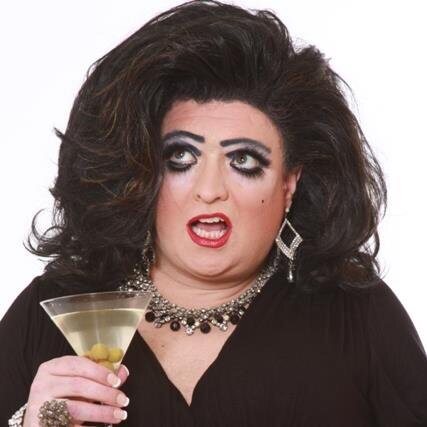
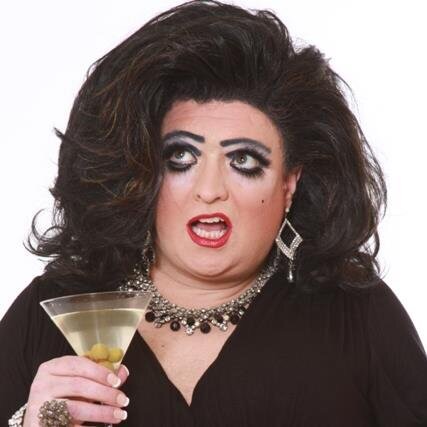
Last month I performed in New York and I had the pleasure of making the acquaintance of MargOH Channing. MargOH is a singer and comedian whose performances mix high camp and cabaret style singing with the seriousness of life itself, issues of identity and representation. We hit it off immediately, sharing a green room, though it must be noted that she finished all the Martini, and I had to help her down the stairs after a bit of a stumble on the second landing. MargOH is an engaging and almost tragic figure who has been very inspirational to me personally. I jumped at the chance to probe her in more detail in light of the recent presidential elections.

1- You come from a fishing community. How did you end up on the New York cabaret circuit?
Darling my road was long and winding. I came from a very broken family so I had to go out on my own at a very young age. I actually moved to NYC as a child to work at my Aunt’s bar where I was discovered by Russ Meyer and was cast in his film “Common Law Cabin” and the rest is history…I call my cabaret career winding down as I’ve done just about everything, even Liberace!
2- I’ve noted from your work that you like the occasional drink. How does alcohol affect your performance?
I don’t know how anyone can perform without it? Many years ago Elaine Stritch told me after I had a rough night at the Reno Sweeney. She said MargOH! “Stick to one before the show, one during and afterwards whose counting”. She came on a night when my panties fell off and I tripped and fell on Rex Reed, he was not happy as he picked pubes out of his teeth…well anyway its not like I gave him the clap!
3- Dear God. Trump. Did that actually happen? What’s the mood right now in liberal New York?
Let me make a martini! People in this country are basically stupid! Reality TV has leaked into our news sources and everything is so sensationalized we can no longer tell the difference between fiction and reality any longer. Plus everyone is very nostalgic instead of looking to the future. The fact is people over 65 and their white kids vote for the old days when certain people knew their place. That is what got Trump elected. When we as a nation realize “Political Correctness” is progess then maybe we can elect visionaries instead of dusty old hacks…was that too harsh?
4- Your performances and incredibly funny, occasionally tender, and with excellent comic timing. Who are your influences?
I have so many influences but most of all Judy Garland is my muse, someone to aspire to be as a performer. When I started performing I wanted to be a celebrity, you know be loved, but that’s all wrong! As you get older you realize its about the work and sharing that connection with an audience. Judy did that better than anyone and I try to remember that everytime I walk out on stage, things may not be perfect but if you connect with just one person then it’s all good. I’m also a big fan of Totie Fields, Sandra Bernhard and downtown legend Penny Arcade.
5- What’s a perfect night, in the eyes of MargOh Channing?
Honestly, a good old dinner party with friends where someone ends up under the table or you wake up with someone in your bed and can’t remember a thing…Those are the moments I cherish…
6- There’s an underlying hint of personal tragedy in your act. Have times been hard?
Are you sure that’s not my Chanel #5? In the world of Social Media where everyone shares their good times, I like to mess with everyone and let them see the real me…I never met a happy comedian, have you?
7- When you’re putting a show together, what makes the perfect big opening?
As an audience member I do not like formula in a show, makes me feel they are taking the easy way out, challenge me please! Actually for the first time in my new show HUNG I open with a song, “You Go To My Head” . I’ve never done that before and do find it fun. In the past I’ve always opened with an overture or entrance song by my back up singers but since they all quit I had to change it up. The one thing I do always do is end with a ballad. Once, my musical director Tracy Stark asked me ‘Why do you always end with a sad song”? I replied, “I am a sad song.”
8- Do your family miss you, now that you’re a big star in the big city?
Of course, my sister Rita is always asking me to come back to Bangor to be her receptionist, she is a highly successful Opthalmologist! I never would have thought that was possible since she is cross-eyed but she is a trooper. My mother on the other hand is a bit of a problem so we shipped her off to a retirment home in Wasilla, Alaska. I thought it best Sarah Palin keep an eye on her or vice-versa…They come to shows when they can so we are all good!
9- What influences your writing?
The underdog is my inspiration for writing. Injustice and inequality drive me to do what I do. I never felt part of the party so I write about that. It’s not always being the belle of the ball, it’s how you trip the one that is in the nicest possible way to let them know they may deserve it but I’m not sure why because you seem wretched. Does that make sense?
10- What advice might you have for any young buck who would like to take up performing?
My best advice for an upcoming performer is something Burlesque Legend World Famous BOB said to me. “If you aren’t making yourself nervous or frightened every couple of weeks then you aren’t trying hard enough”. It was the best advice i was ever given and it’s so true. Do what you love to do and the audience will come, it may be harder and take much longer than you thought but when it happens you’ll know you stayed true to yourself and its magic. XOXO MargOH!
Check out MargOH’s website:
On getting nervous at poetry gigs.
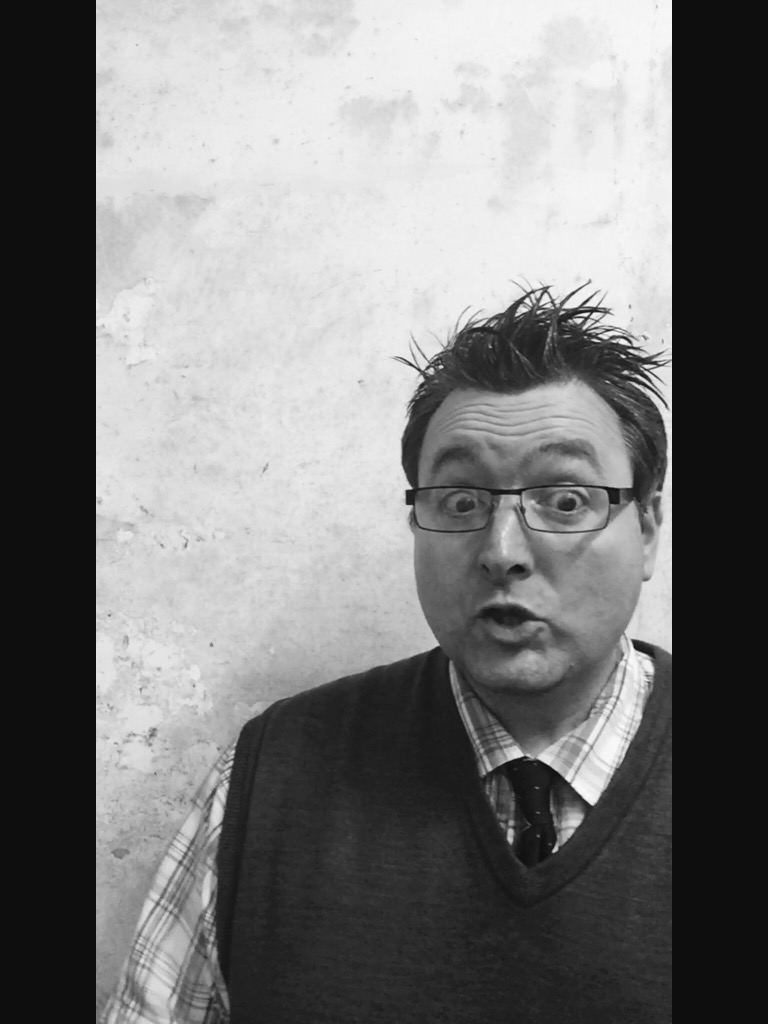
Last night I caught the train to Torquay and walked from the station to the Blue Walnut. It was seven years almost to the day since I started performing which means I’ve done the walk from the station regularly all that time. The road is steep and at one point it does a switch back, like a mountain road, and there are steps cutting through so that the pedestrian doesn’t have to follow the road and has a short cut. When I first started performing, I used to be so nervous walking this route that I would follow the road rather than take the short cut, because it prolonged the moment that I would arrive. In fact I used to be so nervous that before a gig, I would spend an hour in my flat lying on the floor staring at the ceiling, trying not to think about it.I chatted to Tim King last night and we both said how nervous we were before the gig. Perhaps it’s a good sign, being nervous. But even after all these years I feel something deep within, some fear of the unknown, of mucking it up, of being humiliated in front of a room full of strangers, of being exposed as an incompetent who’s only blagging his way through spoken word events.
The biggest fear is probably of completely losing touch with everything. With the audience, with the words on the page, with the whole situation. The line between being in the audience, being a normal member of society, and being a poet, particularly a humorous poet whose job it is to make people laugh, is very thin. Anyone can do it. I did. I made that leap after coming along to a poetry night.
But there’s a suspension of disbelief inherent in being in the audience, and this is the thing that keeps me going. They’re not judging you, they’re there to have a good time and they want you to do well, particularly if they have paid to get in. The moment you step in front of the microphone you are on show, and everything you do comes through the filter of being there. Actions become acts and words become performance. The promoter has chosen you to be there, an instance of curatorial design, you have been hand picked and therefore judged as worthy to be on show. The audience knows this.
But that doesn’t stop me from being nervous. Even last night, cutting through and using the short cut on the way to the Blue Walnut, I felt that the walk was quicker than usual and I felt a bit cheated because of this. But it wasn’t as bad as it was in the old days.

The Most Significant Full Stop (Part Ten)

The ability of anybody with word processing equipment, smart phones, tablets, computers, laptops and anything else which types, to create grammar of their own concoction, grammar of their own conception, means that there are more full stops now in the world than at any one time. One of the reasons for this is the short attention span of people used to sound bites and social media updates, Twitter accounts, website addresses, snippets of news and information. Sentences are now shorter. Like this one. This means that there are more full stops than ever before, less semicolons and commas, less brackets, except when using text speech.
This never used to happen in the days of Marcel Proust.
The paragraph at the start of this passage contains five full stops. Of those five full stops, one of them means a lot to me and idolise it. Can you guess which one it is?
As an experiment I have screensaved this page and magnified the full stop to its fullest extent. In the normal run of things, it would have been completely missed, a psychological notification, almost subconscious as they eye scans over it, picks up the necessary information. The next stage of this project will be that I print off the full stop and post it somewhere in the town in which I live, (Paignton, Devon). How many people will then see it?
This might very well prove to be a very exciting line of inquiry.


The most insignificant full stop (part seven)

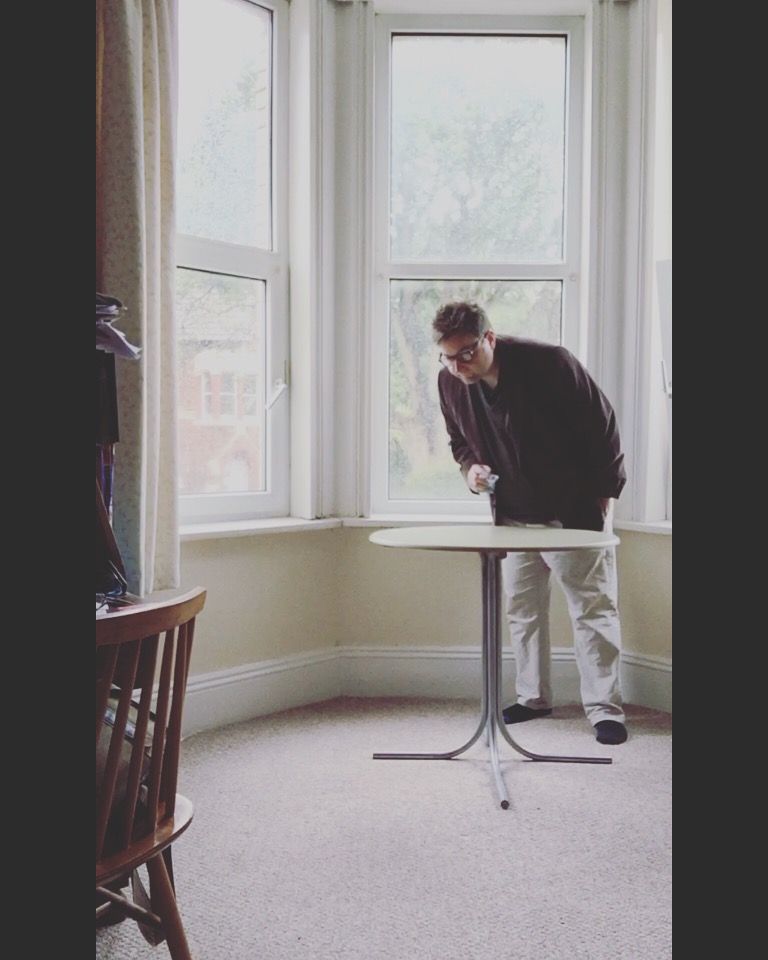
I asked my assistant Lars to write a full stop on the table while I was out of the room. My job was then to find it and eradicate this.
If I hadn’t found the full stop, the knowledge of its continued existence would have given it a significance far beyond its actual worth.
Or I would have begun to doubt that Lars had drawn it in the first place.
Or I would have begun to doubt the existence of Lars.
You can watch the video here.
https://youtu.be/9TDkQN-tbuI
 Robert Garnham