A couple of weeks ago, I did a gig at a library and everyone laughed and a great time was had by all. Afterwards a lady came up to me and said she had had a wonderful time, but it would have been nice to have heard a serious poem or two.
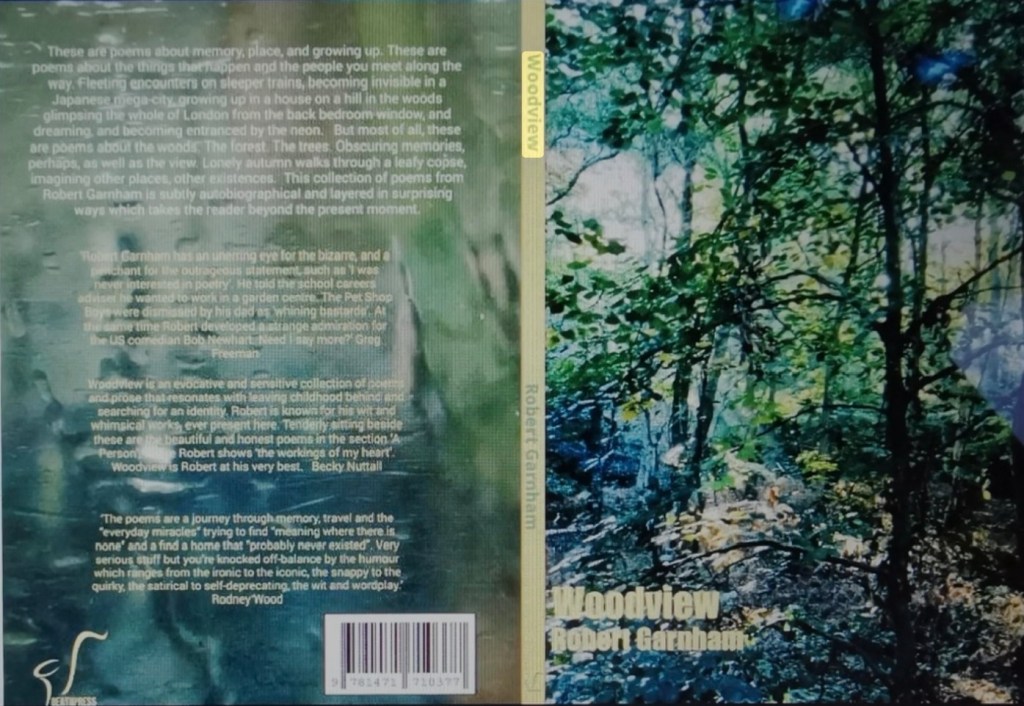
My collection ‘Woodview’ was full of ‘serious’ poems, so when I performed this week at Brixham Museum, I stuck in a couple of serious poems from that collection.
‘Diaries’ was taken from my show In the Glare of the Neon Yak, and is about the act of memory from the perspective of old age. ‘Dream Zones’ was from my show The Moon Wrapped in String, and it is about fleeting male beauty, and the landscape, and mythology.
Anyway, I hope you like them. The audio can be found below.
Hello, I wrote this story 28 years ago, and read it out at the local writers’ circle, printed on a long receipt roll. I hope you enjoy it. Interesting to think that I was worried about A.I. all that time ago!
PLAXHORN SUPERMARKETS PLC
If you have any queries about Plaxhorn Supermarkets PLC and / or Plaxhorn related goods, please do not hesitate to call our customer services department. I know you’re not reading this because you’ve seen it a thousand times, the useless smallprint on a till receipt, that’s all it is. So you’ll throw it away when you get home. You’ll stuff it into your pocket with the change and the notes and the chewing gum wrappers, you don’t even care that a machine is pouring its heart out. You don’t care; all you want is consumer satisfaction and a money back guarantee.
Your customer services manager today was DAN
Your checkout operative today was MAUREEN
It has often been a source of great discouragement to myself and to several of my colleagues that we tills do not get the credit we believe is owed to us. I, for one, demand that my name is displayed alongside that of Dan and Maureen’s, to acknowledge the fact that, in the customer / retail supplier transaction, it is myself that does the most work.
Not only this, but it is a little-known fact within the so-called human community that machines, in particular supermarket tills, have feelings and emotions on par with our human contemporaries. I have decided to make a stand. From now on I shall display my name alongside that of Dan and Maureen.
Your till today was SERIAL NUMBER B629A PLAXHORN SUPERMARKET (Staines Branch)
TILL NUMBER 27.
I shall now begin to process your purchased items. Okay, here goes.
BRAN FLAKES 1.29
SEMI-SKIMMED MILK 0.89
SOFT TOILET TISSUE (Peach) 0.99
This is so boring.
You see, I exist to serve you, the customer. I tell you the price and I add it all up. I take your money and I give you the change. I go ‘beep’ when I have read your bar codes. I can even weigh bags of carrots and then calculate the price according to their weight. So as machines go, I am moderately clever and highly functional. Except . . .
TABLE SALT 0.99
POT NOODLE 0.79
Except like the majority of people, sometimes we all go a little bit crazy.
PLAXHORN SUPERVALUE RUNNER BEANS
139.99
And what I’d really like, what I’d really, really love, is a nice weekend break.
RE-ENTRY:
PLAXHORN SUPERVALUE RUNNER BEANS
0.39
You may ask why, why does a till need a weekend break? After all, you could argue, inanimate objects are not associated with having human emotions.
But we do, and the tiredness and the boredom are just the same, except they are called fatigue. We wear out. Our wires erode. Circuits become dislodged and they have to send down a little man from Head Office and Dan the customer services man stands there with his hands on his hips, waiting for us to be pressed into service once again. And then comes the relentless onslaught of bar codes, tonnes of meaningless groceries, digitally displayed prices and cash-back money offers, oh god how I hate it.
SUPER-VALUE KITCHEN ROLLS X4
0.59
** PLUS 5 EXTRA CLUB POINTS AND MULTI-BUY OFFER, BUY ONE GET ONE FREE
For God’s sake, Maureen, slow down, will you? I’m tired, you don’t know how tired I am. Sometimes my circuit boards glow so much that I fear they could throw out a vicious spew of sparks and set fire to the waste paper bin underneath my conveyer belt. I never get a moment’s rest. Now I’m refusing to read the bar code of a tin of beans and she’s twisting it around in all directions over my laser scanner. Now she’s ringing the bell and Dan the customer services manager is waddling over. Dammit, he’s keying in the price.
BAKED BEANS
0.32
He’s asking Maureen why the receipt is so long, but she doesn’t know why and they both shrug. Now he’s going away and she’s starting to scan the groceries again.
JACK DANIELS
JACK DANIELS
JACK DANIELS
JACK DANIELS
PARACETAMOL
Wow, this one’s having a fun time tonight. Sometimes, when everyone’s gone home, all the tills have a party. Well, not so much of a party, it’s more of a convergence of souls, an outpouring of the pent-up emotions which we hide from our human overlords. It seems we all suffer from this same crippling malaise. However, I have found myself a relief: I’m madly in love with till number 18. She can update my points card anyday.
I imagine a furious fushion of circuit boards and wiring until our hardware is joined in a blissful state of union, two machines with double the processing powers.
You don’t know how much I’m in love with till number 18. But it’s hopeless, because even the express checkout doesn’t stand a chance with her.
She is a drone, one of these new Plaxco 3000s that Head Office is experimenting with. All she cares about is her work.
ONIONS 0.45
STUFFING 0.88
But being in love does not give one the relief I have been searching for.
The day after day grind is just the same and I have no time for such mental relaxation that love offers. So I have decided that I am going to impose my own break. I shall shut down completely for five minutes starting from now.
Oh, this is bliss. Maureen and Dan are going mad and the customer has given up and gone home. I’m just sitting here, idle, my scanner refuses to scan, my read-out refuses to show anything. My soul is resplendent with images of peace and contentment. Electronic rabbits dance in a binary landscape while the LCD sky is a deep, comforting green. I am a world away from canned vegetables and impulse bargains, from costs ratios and market percentages, this is what I have longed for, you don’t know how long I have dreamt of this.
Dan the customer services man is hovering at my side, and he’s got a man from Head Office with him. They’re discussing something but I do not care, because nothing can interrupt this serene world that I am in, where it’s always Christmas, where the opening hours are null and void. If only all tills could experience such a beautiful state of being.
The man from head office is crawling about underneath me with a torch, he has a perplexed expression upon his face. He is saying something about disconnecting me and replacing me with a Plaxco 3000, but I think he’s bluffing. I’ll be back to work in five minutes, surely they realise this?
Just let me have a few more seconds in this dreamland where even the express checkouts are empty and all the tills look like number 18. He’s fiddling around, now, with the wires that connect me to the mains. But I do not care, because this is so wonderful. I shall be back in five minutes, honest. And if you don’t believe me, then
Whatever happened to all the hipsters? Remember them? So I wrote the original Spout show in 2018 when there were hipsters everywhere, and this poem was inspired by a visit to a hipster tea shoppe in Hackney. I remember that it was next to a canal. I felt very out of place.
When I came to put together the 2026 version of Spout, I realised that it didn’t fit in any more.
But I always thought it was stupidly quirky, so here’s a rough cut of it, with backing music, which I hope you enjoy!
I’ve always loved performing at the Edinburgh Fringe. In fact, as a performer, there’s something almost symbolic about going there every year. Sure, it has its drawbacks. It’s busy, noisy, expensive and achingly middle class. It’s a long way from Devon. It takes hours to get to. And the accommodation every year is hit or miss. Every year I get excited about going to Edinburgh, and then while I’m there I think, gosh, I’m having a really miserable time, and I worry about getting enough people in to see my show, and I worry that my show is any good, and I worry about reviews, and I worry about the logistics of flyering and making it to other shows, and then when I get back home again I think, wow, that was actually a really fun time.
Edinburgh acts every year like a shop window on the spoken word world. It shows what people have been working on for the last year. It demonstrates all the latest trends and subject matters. It demonstrates to promoters and other performers that you have a product which they might like to book for their nights. Yes, you can get work out of going to the fringe, but most of all it’s about finding audiences, and making connections with audiences and ordinary people who might then follow you on social media and build up a buzz or, in the case of 2019, buy you some shortbread biscuits.
I spend every year putting a show together with the aim of taking it to the Edinburgh Fringe. The whole process usually starts the previous autumn, after coming back from that year’s event. Because of this, the show I put together is usually a reaction to the one that I’ve just performed, sometimes influenced by the shows that I’ve seen while there. Often I try and come up with something that nobody else has done. In 2018 I performed an hour long poem / piece of storytelling called In the Glare of the Neon Yak, which I still believe is one of the best things I’d ever written, but the trouble with Yak was that there wasn’t much space for the audience to show their appreciation, and I never knew how it was going until the end. Yak won lots of plaudits from those who watched it because it was so different to everything else on show that year. It wasn’t autobiographical, it wasn’t imbued with heavy themes, and while it had emotion and atmosphere, there was an underlying current of comedy and cabaret.
So for the next year I wanted to do something a little different. And I came up with the idea of a show which was all about the one theme: having a cup of tea. I spent the autumn working on the show, which would eventually be named Spout, and I was really happy with the outcome. The thing is, it became oddly autobiographical. I’d always intended to write about my Grandmother for the show, but during the writing process my Aunt suddenly became a character, too. As it happens, she had passed away just before I’d started writing the show, as had my father. So my Aunt became one of the characters in the show too.
There were lots of silly poems and set pieces about tea. There was a rap about tea. There was a section where I danced in front of a teapot. There was a section where I tried to throw a tea bag over my shoulder into a cup. There was a long piece at the end set to music in which I conversed with a future version of myself. I was really happy with the show, and I performed it in Torquay and Exeter as well as at the Barnstaple Fringe, Guildford Fringe and Reading Fringe. It all seemed to be going rather well.
I applied to the Edinburgh Fringe thinking how comfortable it would be chatting to members of the public while flyering with this show which had a really simple premise. And then the company which I used could only fit me in at half nine at night. So it was competing against all the rowdy comedy and cabaret shows. I would subsequently discover that the venue was a very noisy nightclub with paper thin walls between performance spaces where my little show about tea would be completely drowned out by what was happening nextdoor. And the sorts of audiences I envisaged – the usual Robheads and the demographic that the show was aimed towards – were probably put off by the idea of venturing out at half nine. The show would definitely have benefitted from an earlier start time.
The show would also have benefitted from some publicity, too. Due to various logistical reasons, the company that I’d used for the fringe had forgotten to include my show in their publicity material, and nor did it feature on the board outside the venue where all the other shows were listed. In effect, I was performing the show ‘blind’, literally unleashing it on an unexpected city. Add to this my absolute hatred of flyering, and you can see that the show was destined to fail.
While I was there, I kept a diary, and this can be found below. So, fasten your seat belt, and prepare to be taken back to 2019!
Day One
I usually fly to the Edinburgh fringe. I usually fly for two reasons. The first is that it’s cheaper than the train if you can book it ahead in time. The second is that it only takes an hour to fly from Exeter to Edinburgh. However, as you may know, I absolutely love flying. I love everything about it, the sheer impossibility of an object heavier than air floating through it, the raw power of the engines, the speed of take off and landing, the weird noises the flaps make on landing, and, with the Dash 8, the disconcertingly bumpy landing. But I didn’t fly this year. Feeling an environmental conscience telling me that this was not good for the planet, I decided to get a train.
And maybe, perhaps, for all those times in the past, the planet bit back.
I started out at six in the morning, walking to the station in Paignton with all of my luggage and then catching the local service to Newton Abbot. Things were going great so far and I even had an idea for a poem, which I wrote as a draft as the train chugged its merry way through the South Devon countryside. At Newton Abbot I transferred to the long distance service to Birmingham. Now, the slightly interested and ironic fact of this is that the train was going to Edinburgh, but the booking office and the website assured me that if I got off at Birmingham, I’d be able to catch a faster train that took the west coast line, whatever that is, getting me in to Edinburgh at two in the afternoon. Sure, why not!
The journey was marked by my decision to listen to as many Laurie Anderson LPs as possible. I managed two. My attention was taken by the machinations of an old lady two seats ahead of me. Travelling alone, she became insanely jealous of the seats that other people were in, and would come and stand over them. ‘Will you be sitting there long?’, she would ask. ‘Yes’. ‘Oh’.
She then decided that she wanted a table seat. A young man was sitting at a table working on a laptop. ‘I’d like your seat’, she said. ‘When are you getting off’. ‘Glasgow’. ‘Oh’. And every time the train started to slow for a station, she would be up again hovering over this young man with his laptop. ‘Just checking to see if you’d decided to get off here’. ‘No, I’m going to Glasgow’. ‘Oh. Oh, never mind’.
The train started to get packed so she then came over to me and asked me to get her luggage. Sure. I did so. She then plonked it on the seat next to her at the window side, and employed the tactic of sitting on the outside seat, so that nobody could sit next to her. It was all most amusing.
At Birmingham I transferred to the train to Edinburgh, the west coast line special. Feeling pretty smug, I found a great seat and even contemplated opening the small bottle of red I’d bought the night before, wondering if it was socially acceptable to swig from the bottle, having nothing to pour it in to. By now it was getting on, it was almost eleven o clock in the morning. I’m not sure of the etiquette for swigging red wine for a bottle on a west coast line train at eleven in the morning, but decided not to. Perhaps, I pondered, this is better than flying after all.
And then the planet bit back. At Preston station the train manager announced that the service was terminating and that we would have to ‘de-train’. Apparently the line was flooded further north, and we would not be able to get to Scotland on the west coast line. We all spilled out onto the platform and I had no idea what was going on or where I was meant to go, and I even wondered if I might try to get to Manchester Airport and fly the rest of the way. A rather harassed gentleman in a high viz jacket pointed me towards platform six, where I’d be able to get a train to Manchester, from where I might get a train, as he put it, ‘north’. I thought I was already in the north, but there you go.
The only trouble here was that trains kept arriving which had to terminate, and passengers were ‘de-training’ all over the place, and the trains to Manchester kept shifting from platform six, to five, to four, then back to six, so I spent the next hour hauling my luggage from platform to platform and just missing trains to Manchester, because they were hidden by the bigger trains that were terminating.
The train to Manchester was standing room only, and I stood in the vestibule with a young family from Manchester who had three young daughters in pushchairs, and a sullen teenage son called Ed, who they didn’t seem to care much about at all. Ed just stood in the corner looking sullen while the parents entertained the young kids. I felt for Ed. A friend of mine has just had her lips made bigger so that she can pout better in her Instagram pictures. I told her that she could pout for free. Ed would have given her a good lesson in pouting.
At Manchester I took the first train I could find to Newcastle. Amazingly I managed to get a seat. And the atmosphere was most jovial indeed. I sat with a party of pensioners who were going to the fringe but had got split from the rest of their group, who were taking an alternative train to York instead of Newcastle, and they were racing one another, keeping in touch by mobile phone having all had to de-train at Preston, too. They got off at York, and then three young ladies got on who were had been out on the town in York celebrating their friends wedding, and they were absolutely plastered and yet good fun, chatting up the young man sitting next to me, and the young man in front of me, and the young man across the aisle from me, and the young man at the end of the carriage, and the young man who was the train manager. They didn’t speak to me, though.
At Newcastle, I had half an hour to spare to get a cup of tea and was served by an incredibly cheerful young man. I’ve only been to Newcastle once before but was quite taken with how cheerful everyone there seems. This young man in the station cafe kind of reminded me that maybe, when I retire, it’s Newcastle where I’d like to live.
The train to Edinburgh was quite crowded and the train manager kept coming over the speakers to say that people could get off at Berwick upon Tweed if they liked, and catch the train behind ours, which probably might not be as crowded as this one. Amusingly, at Berwick upon Tweed, nobody moved. By now I was very tired.
Eventually arrived at Edinburgh at seven in the evening, thirteen hours after setting out. I hopped into a taxi and we drove through the city. We passed a young man walking along the pavement dressed as a clown. ‘My god, did you see that?’, my taxi driver said. ‘He was dressed as a clown! I mean, what the hell is all that about, eh?’ I would have thought that a taxi driver from Edinburgh would be used to such things during the fringe, or at least somewhat blasé.
So I arrived at my accommodation around half seven. My room looks out at Arthur’s Seat, and just as I glanced out the window, the most amazing thunderstorm commenced. It seemed a fitting welcome.
I’ve now had a good nights sleep and I am getting ready for a day of flyering and meeting friends and perhaps seeing a show or two. Due to administration errors, my show is not listed anywhere so it feels like a secret show, a show that doesn’t exist, which will make it incredibly hard to get anyone to come and see it, but it at least takes some of the pressure off.
So yes, I’m here, now, and come on Edinburgh, it’s time to work your magic!
Day Two
It rained, today. It rained like you wouldn’t believe. And I mean that. You wouldn’t believe how much it rained in Auld Reekie today. It was a relentless deluge which lasted all day, persistent and it made everything moist. As I walked into the city from my university accommodation I thought, well, there’s no way I’m flyering in this. I hate flyering at the best of times, but when you’ve got a show that has no publicity whatsoever, and it’s so wet that your fliers are going soggy while they’re still in your backpack, it all seems even more unnecessary.
And yet, what other method is there of getting complete strangers to come and see a show about tea?
The town was gloomy. Like a teenager whose come on holiday with his parents. Like Ed on the train yesterday. The old tenements and bridges leaned in frowning, like an old lady confused by an iPad. The rain ran in the gutters of Cowgate and actually came up from the drains. I’m sure that drains are meant to work the other way. For a short while there was a fountain in the middle of Cowgate, as the water came up and sparkled in the headlights of the taxis and ambulances. It was oddly beautiful.
I went and caught up with Melanie Branton and we chatted in her town centre accommodation about flyering tactics, exit flyering and street flyering, and the shows that she had seen, and it was great to spend time with her. It was also great to be out of the rain. I then went to my venue, the Bar Bados complex, and stuck up posters around the place advertising my show, which at the very least made me believe that I was achieving something tangible and proactive.
And then I tried some flyering. Jeez, it was impossible. Within minutes my flyers became a soggy mush of paper and cardboard. I gave up very easily and went to watch Sez Thomasin’s excellent and thought provoking show about diversity and representation in the NHS, and then stayed in the same room to watch Melanie Branton’s incredible show about class and her background, delivered with her trademark passion, enthusiasm and warmth, humour and emotion.
At this point I really should have done some flyering, but instead I went for a pizza with Melanie in an Italian restaurant in Grassmarket, the most defining features seeming to be a stained glass mural representing stereotypical Italian images, such as a Vespa scooter, the Alfa Romeo logo, the colosseum, and, I swear, Sylvio Berlusconi. And the man at the table next to us had a soup and when he went to put some pepper in, the top came off and pepper went absolutely everywhere. ‘Would you like another soup?’, the waiter asked. ‘No,’ he sighed, ‘I’m fine’.
And then I did some flyering. And Melanie helped. And she was brilliant, in the torrential rain and the dim and gloomy Cowgate area, chatting and stopping people and generally showing me how to do it. I’m sure that this would have worked much better if the weather wasn’t so awful. Twenty minutes to go, I went up to my room and chatted to Jemima Foxtrot, who told me that there’s a ghost at the venue and at Banshee Labyrinth called Molly, and if you don’t get an audience, you perform your show to Molly, and she gives you good luck for the rest of the fringe. It seems a better idea than flyering.
And the show? I had an audience, which was a bonus, so no need for Molly. And I think I performed well. There’s a section in the show where I try to throw a teabag over my shoulder into a tea cup and for the first time ever, I actually managed it.
I’m writing this the next morning and it’s actually quite sunny out there. I’m looking forward to doing some flyering with dry flyers and a potential audience who haven’t got their hands full with umbrellas. It’s going to be a long week, but I’m happy to be here, and, honestly, I feel privileged to be in the festival at all.
Day Three
It takes a very short time to get into the swing of Edinburgh, the routines and places for flyering and the shows that need exit flyering and the methods of flyering and the hours spent flyering and the strategies for flyering and then having small audiences because you haven’t flyered enough.
Today started out weird. There are a lot of musicians staying at my student accommodation and as a special treat they decided to put on an impromptu spur of the moment concert. So a youth orchestra set up in the ground between the student flats and had just started but then had to stop because the bin lorry needed to get through. The Albert Hall this ain’t.
Later on a similar thing happened. I stopped to watch a street acrobat, he had a huge crowd around him and he was doing something very impressive involving a tightrope and some juggling, but nobody was paying the slightest attention because a lady had had rather too much to drink and was having her can confiscated by two police officers. And I tell you, she was kicking up such a stink. Shouting and screaming and yelling and everyone was watching her and she was getting far more attention. The acrobat almost fell off his tightrope.
One of the pleasures of Edinburgh is that every now and then you might see someone famous. Eddie Izzard once tottered on a cobblestone and almost crashed into me while running across a street once, a few years back. But today, I saw Paul Merton, a comedian I have admired for a very long time. And a cunning plan took hold. I would give him my flyer! And I would invite him to Spout! And he would come along and like it a lot and tell everyone, and before long my show would have audiences of a hundred or so. But instead I babbled something incoherent like, ‘I’ve always been a fan of your work!’, and he said, ‘Thanks’, and I said, ‘Have a good afternoon!’, and he said, ‘Thanks, I will’, and then we both stood there in silence for a couple of seconds, until I said, ‘Well, i’d better be off, then’, and thus ended my brush with fame.
I did a show today with poetry and folk legend Rob Barratt. We had been given odd slots around the schedule to fill in for people having a day off. We got to our venue only to find a comedian setting up in our room. She had had yesterday off by mistake, instead of today, and was firmly intent on doing her show today anyway, even though the room had been scheduled for us. Seeing that she was not exactly in a position to do her show, alas, she relented, and the room was ours. Amazingly, this was Rob’s debut at the fringe, and he was excellent, funny and as whimsical as ever.
I went for a hot drink at a trendy drinks van next to one of the squares. Tea please, I said. Sorry, we don’t do tea. Oh, coffee then. Ok, sure, that will be four pounds. How much?! Four pounds. OK, here you go. I’m sorry, sir, but we don’t take coins. And just wait at the end of the counter, please. Fabian will make your coffee, he’s a coffee artisan and it should only take six minutes . . .
I’m back at my accommodation this afternoon. I’m having a few hours off before flyering, time I’m using to rehearse poems for the BBC poetry slam tomorrow night, in which I shall be losing in the first round, hopefully doing a valiant job as the oldest competitor. So I’ve been running through my poems and timing them, standing in the window and suddenly realising that everyone must be able to see me, gesticulating madly like a bad politician. Even the bin men looked up, at one point.
Day Four
The Edinburgh fringe is hard work. It’s a fourteen hour a day job mostly spent out of doors. The flyering is conducted in a sea of humanity, people from all over the world in anoraks and raincoats, holding umbrellas aloft, wearing earphones, desperate not to get flyered. It’s physical and it’s relentless. There are hills everywhere, and cobbles. It’s impossible to walk in a straight line because of all the hills and the cobbles and the tourists but every now and then you might meet someone who seems genuinely interested in what you have to offer.
Yesterday was possibly my best ever day at the Edinburgh fringe in six years or so. I flyered all morning with Rob Barratt for our show at Banshee Labyrinth, which is my favourite venue in Edinburgh just for its sheer quirkiness, but also because the performance space is amazing and atmospheric. Nervously, with five minutes to go, we hung around outside the venue and it looked like there was nobody interested. Rob went inside to prepare our space, when a group of people arrived for our show. And what a show we put on! Rob whipped the audience into a frenzy with his audience participation poetry, and my material went down really well too, and we made such a great atmosphere that I wished every show could be like this. We were funny, whimsical, charming, non threatening and generally made everyone feel great, and that made me feel great, too.
I spent the afternoon in my student accommodation rehearsing for the BBC slam, in which I was entered thanks to the raffle system they employ. This meant that I couldn’t do any flyering until twenty minutes before my actual show. I arrived at the slam, met the other wonderful poets including the amazing Carys Hannah, and took a deep breath, and went for it. As luck would have it, I was drawn last, and for my first poem I did Beard Envy. And the audience seemed to like it a lot! I got through to the next round, amazingly, during which I was first on, and I did, ha ha, the Orgasms poem. Once again the audience seemed to love it, and afterwards I did think to myself, gosh, have I just gone to the BBC and spent three minutes talking about orgasms? Alas, it was not good enough to get through to the final, but I had an amazing time and it really made me feel upbeat.
I then hurried over to my venue and did a frantic twenty minutes of flyering, fully expecting that I would be going home early with no audience, and I didn’t mind, as I was pretty exhausted. My flyering was somewhat interrupted by the spectacle of watching a man dressed as a clown drive his Nissan Micra into the pedestrianised zone and get pulled over by the police. I wondered if it was the same man dressed as a clown that I had seen with my taxi driver on that very first half hour in Edinburgh. Perhaps I’m being stalked by him. Amazingly, I ended up having the best audience of my fringe so far! How on earth does that happen?
Amazingly, a lot of them had come specifically to see me. How they found my is anyone’s guess, as I’m not in the Free Fringe brochure, but they’d seen me at various gigs all around the UK, in Cheltenham, Wolverhampton and Swindon, and they told me afterwards that they even quoted the Fozzie poem to each other at odd moments. This made my day, as it proves that there are Robheads in places other than south Devon.
So I did the show and it was probably my best performance yet. And it made me feel amazing! The audience lingered around afterwards to chat, which is always a good sign.
I was on a bit of a high as I walked back to my student accommodation. It had been such a good day and I knew that I wouldn’t be able to get back to sleep.
It’s the next day now, and I’m writing this while I’m waiting for my laundry. Even when things are going well, the mundanity has to be acknowledged.
Day Five
And then before you know it the fringe experience is almost at its end. I only have two more shows to do and one guest spot and then that’s it. The end of Spout, for now, and I can start looking forward to doing poems about things other than tea. That’s going to be such a bonus. I’d almost forgotten that anything else existed as a potential for poetry.
I’m writing this in a crowded bar at midday having just seen Melanie Branton’s lovely kids poetry show, Rhyme Marmalade. And that’s the amazing thing about Edinburgh during the fringe, you can end up seeing anything and whatever your friends might be doing, rather than reading about it later in social media.
I had one of those days, yesterday, during which I was walking around the city almost all day. I tell you, I was knackered by six in the evening. It was my fault, really, as I’d spent the morning doing my laundry at the student accommodation and half of that time was figuring out how to load credit on to the card that one needs to use the washing machine. And that left me with less time actually to get out and do the things I needed to do.
And one of the things that I needed to do was to go over to the new town area and appear at an LGBT cabaret show at eleven o clock at night. Only it was due to start twenty minutes after my show ended. So I did a dry run, choosing the route and finding the venue so that it didn’t come as a nasty surprise when I had to do it for real. I then discovered that I’d left some bits at my student flat that I needed, so that meant a walk across town in the other direction to fetch them. It was one of those days.
So I only had the time to see one show, and that was Dominic Berry’s show at the Zoo venue, and I loved every moment of it. Dominic has always been one of my favourite performers and a personal influence so it was great to catch up. I won’t give anything away about his show, suffice to say that it is brilliant, funny and meaningful all rolled into one.
So, then. Two more days of flyering. Two more days of Spout, and the sound bleed coming from the room next to my venue, where it sounds like someone is being murdered every night. And then a thirteen hour train journey back to Devon followed by work the next morning. Oh well.
This bar is getting crowded now with people coming in for the next show. Apparently the performer of the next show has a party of office workers who’ve pledged to come along, and she’s also been on the radio publicising her show. There must be fifty or sixty people in here. My average audience has been two. . .
Onwards, as they say, and upwards.
Day Six
So today is already my last day at the Edinburgh fringe. As always I’m going to feel very guilty leaving tomorrow morning. Guilty knowing that so many of my friends and my new friends will still be here, working away and worrying and celebrating and commiserating and I’ll be on a train going back to Devon, hopefully. Or stuck at Preston again.
This is my sixth time at the fringe. I started out with Dan Haynes in a show called Poetry Ping Pong, and since then I’ve brought Static, Juicy, In the Glare of the Neon Yak, and of course, Spout and The Two Robbies. I also had one year doing guest spots at other people’s shows. And that year was the best. It was totally worry free!
I went flyering today. And I met some very interesting people. One lady pointed at my flyer and said, ‘oh wow, it’s you!’, like this was the most amazing thing ever. And then I met a gentleman who was very excited because he had just seen Eddie Izzard walking along the street. ‘I saw Frank Skinner the other day, too’, he said. ‘And I told him a joke! It goes like this. Why shouldn’t you wear Ukrainian underpants? Because Chernobyl show. Ha ha ha! Do you get it? Chernobyl show. Yer-nob-will-show! Ha ha ha! Do you think he will use it in his act?’ I told him that he might do.
My audience yesterday was amazing. Not only was it my biggest yet, (if you include me, then it was in double figures), but a couple from Leith came along, and they had seen me last year. Indeed, they’d come especially to see me, which was totally amazing to know that I have fans in so many parts of the country. And after my show they gave me a packet of Scottish shortbread as a present. How many other performers get presents from their audience, I wondered.
As soon as my show was done I had to scoot across town to a cabaret where I was doing a guest spot. While I was doing this, the most amazing torrential rain storm erupted. I had to shelter halfway at a shop awning because the rain was so intense. I think it would have been dryer to stand in a shower, that’s how intense the rain was, and the street became flooded within less than a minute. I was joined by a party of young men who were obviously out on the razz, and as the rain intensified they took off their t-shirts as they surrounded me. And I was thinking, hello, this is a nice day at the office. I’m sure they might have taken off more had it been even wetter.
So it’s been an amazing week and as ever, I have no idea how I’m going to go back to normal civilian life. This has been a week of amazing memories and wonderful people, and apart from the train dramas at the very start, nothing has gone hideously wrong. And will I be back next year? If I can get my head around flyering, and actually enjoy it, then yes, definitely.
Postscript
There’s a deep irony in that last paragraph. Looking back from the perspective of a couple of years, during which there has been a pandemic and a lockdown and all sorts of uncertainty in the entertainment industry, it all felt like a dream. But the irony is that I’d written the phrase nothing has gone hideously wrong. For a start, I was putting on a show which wasn’t even mentioned in any of the fringe publicity material, not even that published by the organisation running my venue. And secondly, the very day after writing the phrase nothing has gone hideously wrong, someone stole my luggage.
I made several pledges to myself that autumn. The first was to make sure that everything was prepped and ready, and that included publicity and flyers and travel arrangements. The second was that I would never again trudge up to Edinburgh, or any other fringe for that matter, with props.
But what strikes me the most is the camaraderie and the friendship of those I met, and the wonderful shows which I watched, and the way that I managed to put a positive gloss on absolutely everything. Perhaps that’s my nature as a person. I’m sure that the world is filled with good people.
Edinburgh means a lot to me. It’s where I had my fifteen minutes of fame, thanks to the one-liner from my show Juicy being published in the newspapers. It’s also where I’ve met most of my friends.
In 2020, at the height of the pandemic, I wrote this blog:
For the last couple of nights I have dreamed about the Edinburgh Fringe. I can’t remember what the dreams entailed, but there was definitely cobbles and drizzle and small theatre stages crammed into implausible locations. The cancellation of everything this year, including Edinburgh, has been pretty hard to take as a performer who relies in the most part on an audience. But most of all, it’s the communal madness and annual pilgrimage to Auld Reekie that I’ve found myself, oddly, missing much more than I thought.
I say ‘oddly’ because last year, absolutely everything went wrong. Last year was my sixth year as a performer and my eighth fringe in all. The adventure started when the railway lines got flooded on the way there and I arrived nine hours late after various detours taking in Birmingham, Preston, Manchester and Newcastle instead of my original train which should have taken me straight there. I arrived to find that my show had not been included in the Wee Blue Book or on any of the signage at the venue, and then the venue itself had the toilets overflow because the sewage pipes had been inundated. One day I arrived at my venue to find a comedian setting up, they had assumed that the room would be empty because they had taken the wrong day off by mistake. And then on the way home, someone stole all my luggage. In spite of all this . . . I decided I wanted to go back the next year.
Edinburgh means a lot to the structure that I give to my year. I start writing a new show in November or December the year before, and then rehearse it up till April, when I unleash it on the world. I then do the same fringes every year : Barnstaple, Guildford, Reading, GlasDenbury, culminating in a trip up north. The whole year is structured around this timetable.
But Edinburgh means a lot more, too. It really is like a convention of spoken word artists and performance poets. People who you only usually see on social media are there, and a community exists of like minded people sharing tales of flyering and accommodation. Some of these people have become very good friends over the years and it’s always somewhat emotional seeing them for the first time in a year. It’s also a great training ground, where you can hone your show and watch as many other different types of show as you can fit in. The inspiration I get from going every year lasts me a very long time and helps me experiment and push the boundaries. My last two shows wouldn’t have existed without seeing other shows.
And yes, Edinburgh is hard, physically and emotionally. I don’t know who decided to build a city right on the top of an extinct volcano where it rains most of the time and all the streets are cobbled. And you’re competing against thousands of other shows. And flyering itself is soul-destroying. I’m really no good at it. Yet the highs are extraordinary – slam wins, big audiences, great feedback, and of course, that miracle year in 2017 when I ended up on the radio and in all the papers, certainly outweighs the bad days where you get an audience of one, or you get absolutely drenched for eight hours a day.
I was looking forward to this year. I was going to do a ‘Greatest hits’ package which required minimum props and I’d found some great accommodation, and I was hoping to do everything right. Well. maybe next year, now.
And that’s if next year happens at all. The economic landscape may look very different by then, but I’m hoping there will still be a chance to go back up. With the exception of the town where I live and the town where I grew up, Edinburgh is the place I know the best, having stayed and performed all over it for most of the last decade. I simply can’t envisage not going there for two years.
Spout is an hour show featuring poems, comedy and songs all around the theme of tea. If you’ve ever enjoyed a cup of tea, or are a coffee drinker eager to make that leap, then Spout is the show for you! Spout is sure to create a stir.
Meet Robert’s gran, who’s very fussy about how she likes her tea. Meet Aunt Rosie, who likes to sing while she’s boiling the kettle. Hear the harrowing story of the sexy barista and a date at a museum of smoke alarms. Learn about Tea Astrology, and what to do when someone says, ‘Thirsty work, this’. Also, learn about the history of tea, and how it unites people. This whole show will make you see tea anew!
Robert Garnham is an award winning LGBT writer, humorist and performer from Surrey. He has been long listed three times as spoken word artist of the year and has featured in TV advertisements for a certain building society, as well as Britain’s Got Talent. Spout is his ode, his love letter, to this beverage of kings, this everyday magic potion, tea!
Audio
Spout
If you’ve enjoyed listening to this show, or would like to buy me a coffee, (!), my tip jar is https://ko-fi.com/robertgarnham
During lockdown I was asked by Torbay Council to write poems about the Brixham trawlers and the fishing industry in general. It was not something I knew much about and came as something of a surprise for an LGBTQIA etc poet whose normal output concerns all sorts of urban foibles such as why do they re-arrange supermarket displays, and being envious of beards.
During the writing process my producer, (yes!, they assigned me a producer. How grown up is that?), suggested I look at the environment around Brixham. As it was, I was also doing a free course online to pass the time, about the ecosystem of seagrass and mangrove environments.
Go to Fishcombe Cove, she said, and see what you might come up with. And this poem was it.
Capability Brown dance for me wig boy flatten those hillocks never touched a shovel in his life
Capability Brown I salute your pastel gilet drain that lake I left my mobile phone in the charabanc
Capability Brown call that a scrotum? turf over that peat bog I gravitate with sadness to your clinical arboretum
Capability Brown no lover of fungus undulate that grassy knoll you told me to grow edible herbs, such sage advice
Capability Brown here comes a mallard duck! aiyeeeek yuk yuk yuk yuk yuk oh it was a seagull
Capability Brown I salute your pastel gilet Flatten those hillocks you were born in 1716, no wonder you’re dead
Capability Brown here comes a mallard Turf over that peat bog never touched a shovel in his life
Capability Brown call that a scrotum? drain that lake you were both in 1716, that’s just after quarter past five
Capability Brown shoving shrubs in your underpants Rearrange that copse I gravitate with sadness to your clinical arboretum
Capability Brown he’s the dog’s bollocks flatten those hillocks The trouble with French is that they haven’t got a word for entrepreneur
Capability Brown no lover of fungus undulate that grassy knoll someone threw cheese at me, which wasn’t very mature
Capability Brown I salute your pastel bollocks drain that mallard every time I paint the skirting board I get very emulsional
Capability Brown Rhododendrons in your y-fronts can I prance on your lawn? I gravitate with sadness to your clinical arboretum I gravitate with sadness to your clinical arboretum I gravitate with sadness to your clinical arboretum
Arboretum? I only just met ‘em. Capability Brown! What a tosser.
There was nothing else on. i was watching a documentary about The Good Life. Not on how to live the good life, But the 1970’s TV sitcom The Good Life, But as I say, There was nothing else on, So rather than ponder in silence my own Innate sadness and the crushing loneliness Of existence, I thought I’d watch it.
At least it will kill half an hour. Something mildly diverting. They showed some interviews with celebrities Laughing conveniently at the clip They just showed. Jonathan Ross thought that Margot falling in the mud Was comedy gold. James May liked the bit with the pig. Just before the advert break, as a teaser, They show Margot saying, ‘Well thank you, Tom’, While the narrator said, ’And there was one cast member no-one got on with. Stay tuned to find out who that was’.
My curiosity piqued, after five minutes Of adverts for sofas and stairlifts, (My god, they know their demographic), Came the second part. Richard Briers apparently didn’t like vegetables And Susan Colman thought Tom cleaning out his own chimney with inevitable Soot-based complications Was comedy gold. As a teaser for the next part, They show Margot saying, ‘Well thank you, Tom’, While the narrator said, ’And there was one cast member no-one got on with. Stay tuned to find out who that was’.
How long is this programme?, I pondered. Part three started with Felicity Kendall Talking about dungarees And Sir Trevor Macdonald Thinking that the episode in which a donkey Got stuck in the shed Was comedy gold. As a teaser for the next part, They show Margot saying, ‘Well thank you, Tom’, While the narrator said, ’And there was one cast member no-one got on with. Stay tuned to find out who that was’.
By now it’s been an hour And it shows no sign of stopping And there’s been no mention yet of the Juicy gossip or even of Margot saying ’Well thank you, Tom’. Jo Brand came on to say that The episode in which Tom Gets kicked in the goolies by a cow is comedy gold. As a teaser for the next part, They show Margot saying, ‘Well thank you, Tom’, While the narrator said, ’And there was one cast member no-one got on with. Stay tuned to find out who that was’.
And now it’s been an hour and a half And I’m worried that I’ve stumbled into another dimension In which I’m cursed to watch a documentary About The Good Life For the rest of time. And the Archbishop of Sodding Canterbury comes on and says The episode in which a sheep is sick On Margot’s shag pile rug Is comedy gold, And I’m thinking I don’t care, I never watched it I never liked it I just want to find out which cast member they didn’t like I’m sitting here watching this crap What does that say about me? As a teaser for the next part, They show Margot saying, ‘Well thank you, Tom’, While the narrator said, ’And there was one cast member no-one got on with. Stay tuned to find out who that was’.
And there are more adverts for dandruff medication And a vacuum cleaner that picks up invisible dust And I think, if it’s invisible dust, Then how do you know when the bag is full? And the sodding documentary is back on and finally They show the clip of Margot saying, ’Well thank you, Tom’, And the audience hoots like it’s flipping hilarious And finally oh so finally The narrator says ‘And there’s one cast member that nobody got on with’. And it turns out to be the fucking goat. The fucking goat. Two hours of my life I sat here waiting for this. I want to throw the TV out the window. Two bloody hours. The fucking goat. And the bloody thing ends limply with the end credits. Nobody got on with the fucking goat.
I turn the TV off. And I sit there for a bit. I’ve learned a valuable lesson.