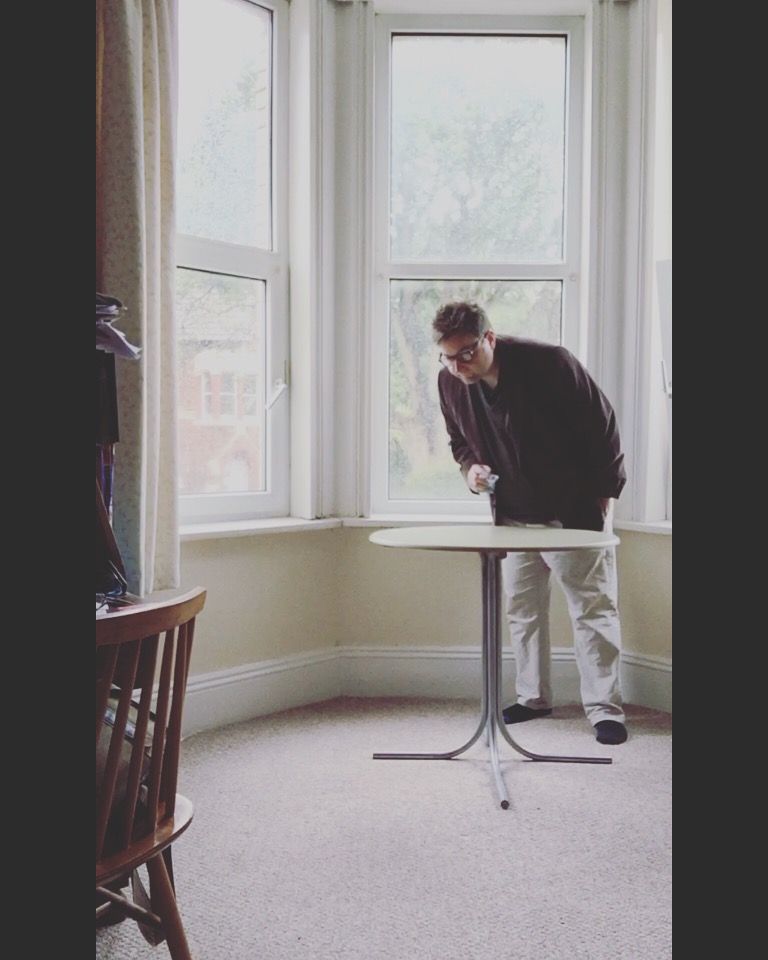
1. At the time of his death, Professor Zazzo Thiim was the oldest that he had ever been.
2. His last words were said to be, ‘Don’t throw it yet, I’m not ready’.
3. Professor Zazzo Thiim occupied the William F. Beaverstock Chair in Literary Studies at the University of Basingstoke. Until someone told him to get up and sit in his own seat.
4. There were riots in Vienna the day he wrote a poem that wasn’t called ‘Frank’. (There’s no connection between these two events, there just happened to be riots that day.)
5. Five words never used in his poetry : cumulative, hopscotch, kiwi fruit, sausage, enamel. (That’s six, but whose counting?)
6. Professor Zazzo Thiim’s hat is preserved in the New York Museum of Modern Art. In the Lost Property Office.
7. Zazzo Thiim translated into Navajo means ‘partaker of fungus’.
8. Professor Zazzo Thiim was never actually given the title of ‘Professor’. It just happened to be his first name.
9. Zazzo Thiim could easily have become MP for Basingstoke North if had he registered as a candidate, campaigned, and received the most votes.
10. Professor Zazzo Thiim never once attended a cricket match.
11. Professor Zazzo Thiim had phobias of cuckoo clocks, dustpans (but not dustpans with brushes), sofas, people called ‘Mark’, the colour magenta, his own left shoulder, and underground tube trains running on over ground lines.
12. Contemporary fans of Professor Zazzo Thiim include John Craven, former Canadian Prime Minister Stephen Harper, Lady Gaga, the two members of Oasis who aren’t those annoying brothers, Dame Judi Dench, Ian Rawlings (who played Philip Martin in ‘Neighbours’), and that bloke who played the android on that thing with the spaceship that used to be on TV, you know, the one with the annoying theme music.

Tag Archives: comedy
The Arrival (a short story from 2002)
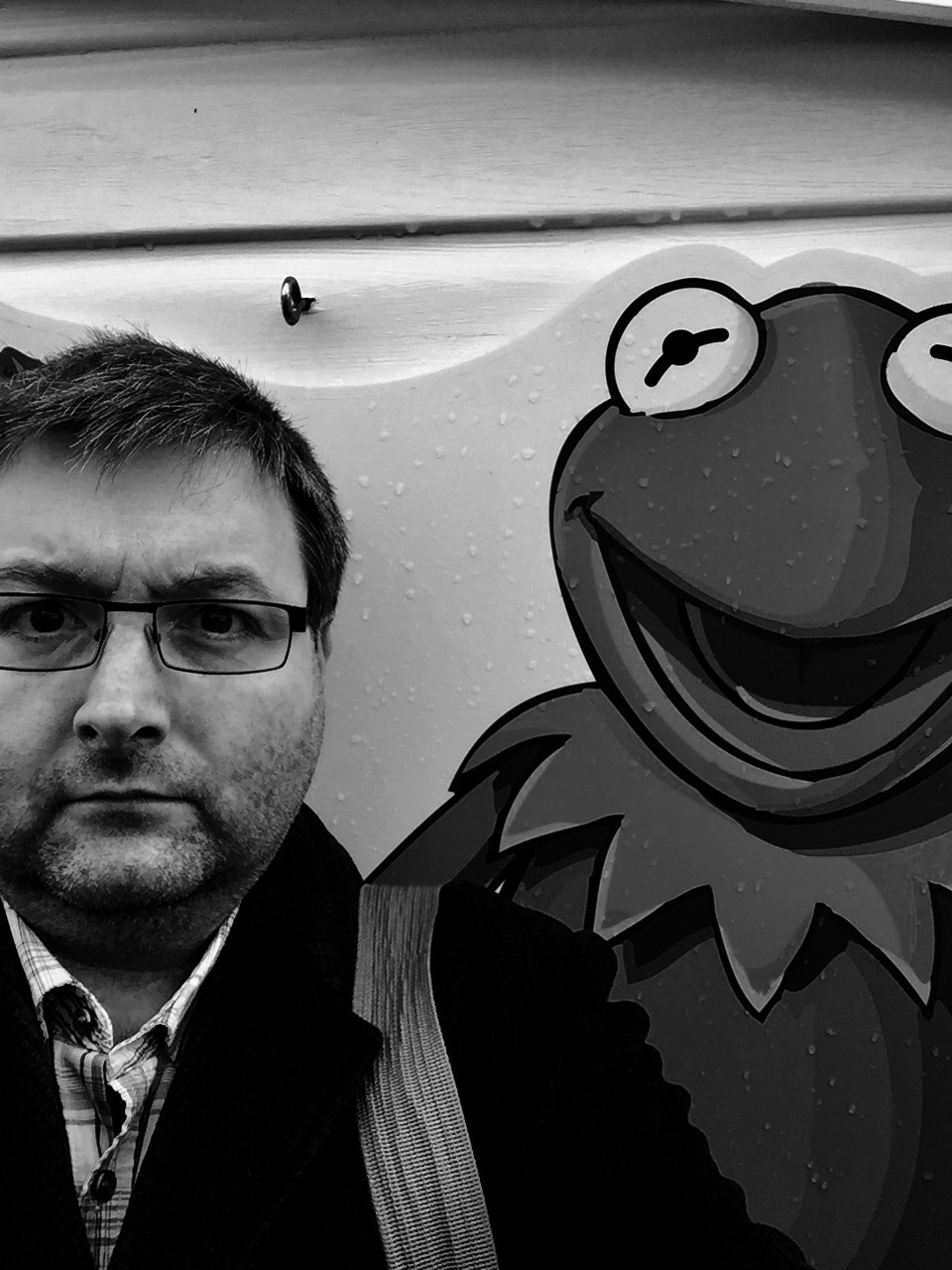
A committee was set up in order to plan for the visit. A chairman was voted for, an elderly gentleman with a walrus moustache. He was then replaced with another elderly gentleman. The secretary resigned because she objected to the name of the committee. The replacement secretary used to be the treasurer, so a treasurer had to be found. The original chairman wanted to be the treasurer but the new chairman objected. Both the chairman and the prospective treasurer then resigned from the committee, so a new chairman had to be found as well as a treasurer. The positions were eventually filled with a man who used to be a car salesman, who said he knew all about planning visits. And the Treasurer was shared among the other members of the committee on a rotation basis. Just like a quiz show on TV, someone commented. The comment was recorded in the minutes.
A name had to be invented. Someone suggested the Visit Committee, but there was another committee called the Visiting Committee and it was thought that this would lead to confusion. Someone else suggested the Committee for the Visit, but this was also voted down because it sounded boring. The person who suggested it was the person who was also the Treasurer on this occasion, and she resigned. A third suggestion was to call the committee something trendy, just like a modern company, a name which would hint at science and progress in the arts. Implosion was the name that was banded around. The secretary commented that it sounded like something from The Apprentice. The person who suggested it was very upset about this and he threatened to resign, but just as he did they came in with the coffees so he stayed on for a bit. This was recorded in the minutes.
They finally decided on the Systemal Function for the Application for the Arrival of the Visitor and His Entourage. Or SFAAVHE, for short. This was recorded in the minutes.
It was then time to decide what the committee would actually plan for the visitor’s arrival. There was no doubt that he was eminent, so it was agreed by all that he should have a red carpet when he stepped out of his car. Then someone said that he shouldn’t be in his own car at all. If he was so eminent, they argued, then, surely, he should be driven? OK, then. A limousine would pick him up from his house. But he lived two hundred miles away. This was a problem. They decided they would compromise. He would drive as far as the halfway point and then the limousine would pick him up. It was generally agreed that this was a good idea and it was recorded in the minutes.
Then someone pointed out that red carpets were hard to find, and they got mucky if it rained. The under-secretary was dispatched to source a long red carpet. She asked what sourced meant and the chairman said that it meant to go and fine one. She asked why he didn’t say that in the first place, and the chairman said that it was business-speak, that’s how they said things in the world of business. The under-secretary objected to the tone that the chairman took and she resigned. A new under-secretary was then voted in and he said that he would look on the internet to find a red carpet. Ten minutes later he said that he could only find a yellow one. That will have to do, the chairman said. And all of this was recorded in the minutes.
The meeting then moved on to who would be there to greet the visitor on his arrival. One of the members suggested the head of the department, but then someone else reminded her that the head of the department was currently being investigated for fraud and it would be best that he were to stay out of the limelight. The chairman said that this was not the way to treat the head of the department and that he should be there. The treasurer then reminded the chairman that he, too, was caught up in the same scandal, so the chairman then resigned and a new one was voted in. She thanked the previous chairman for his hard work, but then she spilled coffee on her lap. She resigned, so that she could go to the bathroom and wash it off. When she got back to the room, the original chairman had been voted back in. And all of this was recorded in the minutes.
The next item for discussion was the food that would be provided for the function once the visitor had arrived. Someone suggested prawn cocktail, but they were reminded that the budget would stretch so far. Someone then suggested prawn cocktail crisps, but they were laughed out of the room. Someone suggested those funny spicy sausage things that go on sticks and you have to move them upwards with your thumb as you eat them, and they are often seen in films set in North Africa, but no-one knew what he was going on about, so someone else suggested scotch eggs. Scotch eggs it was. Then the secretary announced that he was allergic to scotch eggs, and someone said that he wouldn’t even be at the function, he wasn’t important enough. He then resigned. A new secretary was voted in, and this was recorded in the minutes.
Much discussion then centred around the manner in which the eminent guest would be introduced to the members of the department before he entertained them all with his speech. One person suggested a strict clock-wise motion around the room, someone else suggested anti-clockwise. The chairman said that the guest should be left to speak to whoever he wanted, but that the most prominent members of the department should be introduced to him slyly, subtly, so as not to provoke suspicion that the whole thing was stage managed. Someone then suggested name-badges, coloured according to the importance of the person wearing them. It’s what we did in the war, he suggested. Even Hitler wore a name badge. There was a show of hands and it was decided that there would be name badges. The discussion of whether they should be in higher or lower case went on for half an hour. And all of this was recorded in the minutes.
The meeting had almost finished and no-one had resigned for a while. The secretary was asked to read out the minutes, but he objected, so he resigned. The new secretary was then asked to read out the minutes and he did so beautifully, but in Spanish. The next secretary read out the minutes. This included the reading of the last minutes, which included the reading of the minutes before that, which included the reading of the minutes before that. This went on for some three hours. By the time he had stopped reading the minutes, everyone else had gone home. And this was also recorded in the minutes.
The secretary then resigned, but as there was no-one around to record this in the minutes, no-one actually knew about it.
The visit did not go to plan. The eminent guest was not greeted half way by limousine because he caught the bus instead. And when he arrived at the department, (climbing off the number 443), he tripped over the yellow carpet because he though it was a continuation of the pavement. The head of the department met him, but just as he did so he was handcuffed by the police and dragged away for questioning. The eminent guest was then led to the hall where, instead of meeting and greeting, and looking at name badges – (the font of which was so small he couldn’t read them anyway, and he was colour-blind), he crammed a scotch egg into his mouth and promptly choked, before asking why they had not supplied, instead, those spicy sausage things on sticks that you see in films about North Africa. And on the way to the podium to deliver his speech, he almost tripped over the end of his scarf.
‘Ladies and gentlemen’, the chairman of the welcoming committee announced in to the microphone. ‘Let me introduce to you, Professor Zazzo Thiim!’
Nobody clapped, because the committee had forgotten to send out any of the invitations. It had not been recorded in the minutes.
Branching out, a Zazzo Thiim story
Here’s an old one from 2007.
There has been much said and written about the following subject in the academic community, it seems almost superfluous to add my own comment to the wealth of material already published on this topic. And yet the story itself seems somewhat compelling, like all good mysteries, and more so because it is, quite defiantly, true. The fact that a senior practitioner in literary matters has attested to the honesty of all involved adds a touch of authenticity to the whole situation, and who are we to argue with the judgement of a colleague so esteemed as Professor Zazzo Thiim?
‘They were branching out, pure and simple’, he told me, one charged evening at the local pub. He leaned back in his chair and seemed, just for a second, incredibly tired, as it the events of the previous week had drained him of energy. ‘I first heard it reported to me by one of my younger students, a naive fellow whose panicked account seemed ill-judged and unworthy of comment. But then other students and colleagues began attesting to the fact. They, too, had heard and seen with their own eyes, that the local skateboarders were quoting from Alfred Lord Tennyson. I knew immediately that I would have to probe deeper’.
The old man leans forward across the table and interlaces his fingers. ‘I started that very evening. With a flask of cocoa and a pair of opera glasses, I went down to the local skate ramp and watched them from the bushes. I felt like a television botanist watching the mighty gorillas of some dank, faraway jungle. How incredibly amusing their mannerisms, how obvious the social gradations and rank within their clique, that they might defer to the most able of their group, and lend advice to the weakest. I would surely have watched longer had not I felt a sudden hand on my collar and a policeman inquire as to what I was playing at. ‘We have a name for people like you’, he told me. I can tell you it wasn’t a comforting situation, but when I told him the reasons behind my being there, his face relaxed. ‘Ah yes,’ he said. ‘The poetry thing. We’ve been racking our brains over that one, I can tell you. Come down to the station’.
‘Why?’ I asked, ‘Am I under arrest’.
‘Not at all’, he replied. ‘We’ve just found one of them trying to break into the library. Perhaps you might like to have a quiet word with him’.
The lad in question was a poor specimen, I can tell you, a pathetic, individual whose half-hearted attempt at perfecting the skater-boy look was almost laughable. On being asked exactly why he was breaking into the library he denied all knowledge that it had been such a building, that he was under the impression more that it was the off licence. When the constable slid a copy of Tennyson’s poetry across the table towards him he made a frantic attempt to grab it from his hands, only for the book to be snatched away from him. ‘Not so fast, sonny’, the constable said, in his laconic, laid-back voice. ‘First we need to talk terms. We can help you get your fix, but first you must help us. We need your skateboard’, he continued. ‘You see, there’s a little mystery here, and we need it cleared up’.
The Professor lets out a laugh. ‘I cut quite a figure on the skateboard ramp, I can tell you. Sure, I fell off a few times, but I soon won respect from the posse not only for my aerial acrobatics but also for my detailed knowledge of Romantic-era poetry. Indeed, things were going along quite fine. How glad I was to see that the stories were true – a particularly athletic turn at the board would be greeted with the words, ‘At Arthur’s ordinance, tipt with lessening peak!’, or a bad fall decorated with the expression, ‘lay low and slay him not!’ I must say, I quite enjoyed my spell with the lads, and at no time did they twig that I was a seventy-four year old academic professor, except when I passed around a packet of sanatogan in the mistaken belief that it was a bottle of alco-pops. ‘A fine pinnacle!’, I yelled, heading up the ramp at great speed. ‘And made as a spire to heaven!’ Brad was especially vocal and conversant in Tennyson’s later works and at times he would exclaim, ‘Sluggards and fools, why do you stand and stare? You are no king’s men!’, or even the ultimate insult, ‘Let this be thy last trespass, thou uncomely knave!’ As the sun started to set, the dusk spread out her silken fingers and seemed to caress the shapely ramps, and in the encroaching dark came a camaraderie I have not yet ever felt, not even in the throes of really good group discussion on Hemingway. Joining in with their masculine bravado, I put up the hood of my jacket and, feeling somewhat exuberant, shouted, ‘While Jove’s planet rises yonder, were now to rage and torture the desert!’ Oh, how absolutely wonderful I felt!
The effect, though, was immediate. The skaters stopped in their tracks. One skateboard, bereft of its rider, swung to and fro on the ramps before it, too, fell silent. ‘What was that?’ Brad asked. Flustered, I repeated my quotation. ‘You’, he said, breathing harshly through quivering nostrils, ‘Are an imposter!’
The rest of the group crowded in on me. I stumbled, and tried to make some kind of retraction to my earlier statement, but the damage was done.
‘That was Robert Browning’, Brad pointed out. ‘What are you, some kind of freak? Who quotes from Browning at a skate ramp?’
‘Yeah’, someone else piped up. ‘What kind of a sicko are you?’
I don’t mind telling you that I was scared. I escaped with my life, and for this I am monumentally thankful.
Naturally, the trouble vexed me for ages. Back at the department I toiled at my desk and tried to read into the whole episode some kind of reason, some kind of explanation behind the adoption of Tennyson. I looked at his rhythms, I looked at his metre, I looked at his rhyme scheme, but none of them matched with the rhythms I had heard on the skate park ramps. The content of his poems were also barren in their significance. I could see in his metrical skill and his lyrical genius no link to the satisfactory clatter of skateboard on concrete, no link between his romantic inclinations and narrative expression to the wearing of a hoodie. Late one night, though, thoroughly tired and dejected, I found the skateboard that I had borrowed that night, and the more I looked at it the more I could see that there was, however slight, a connection of sorts. Four wheels, I told myself, and one standing platform, just like the four isolated tenets of romanticism, the stylistically gothicism inherent, the reaction against enlightenment, imagination, vision and idealism, mixed with the surface and sureness of Tennyson’s reign as poet laureate – surely, this was what the skaters were alluding to in their adherence to his work? How relieved I was to get to bed that night’.
The Professor frowns and he lowers his voice. ‘I wrote up my report the next morning and submitted it to the head of my department. That lunchtime I felt free. In the Spring air I could hear the clatter of a distant skateboard and I nodded, knowingly, to myself. The world seemed right, somehow. The world seemed a better place. But that afternoon I received an anonymous letter.
How horrendous the news that it contained! It came from an ex-skater, whose adherance to the poetry of Tennyson had been questioned by some members of the group. He said that the skaters were not quoting from Tennyson – oh no – they were reading. There was a book stuck in the overhanging tree, he explained. And to prove their dexterity on the skateboard, the skaters in question would attempt to read a line at random as they were suspended in mid-air. If it had been a crisp packet, the anonymous writer concluded, then they would have read out the ingredients. There was no mystery.’
The Professor drained the last of his wine and made to stand. ‘The department has been embarrassed by this whole episode,’ he said, ‘As you can probably imagine. I would be grateful if you could not mention some of the more lurid details of this story’, and with that, the old man was off.
I followed a few minutes later. It was a dark night and there were a few stars hung in the sky. As I walked back to my car I was overtaken by a child on a unicycle, and he was quoting Oscar Wilde. But then, it could have been the drink.

What influences me?
Someone asked me not long ago what inspired me as a spoken word artist. Now, when I used to run Poetry Island and I was just starting out as a performance poet, I was hugely inspired by other performance poets, in particular Byron Vincent, Rachel Pantechnicon, Jackie Juno. I felt that my finger was on the pulse of the spoken word world and I would watch YouTube videos all the time, studying performance and techniques and generally trying to learn as much as possible. But I don’t do this now nearly as much as I should.
In fact my influences of the last few years have been almost entirely not spoken word based. Perhaps this is a good thing, because it might mean that I won’t subconsciously at least copy another poets style or content. One of the things I’ve been very careful to do is to create my own identity and not sound like any particular clique or group. The downside of this is that unless I’ve seen a contemporary performance poet for real, I probably don’t know much about them. Someone asked me not long ago what I thought of a particular Harry Baker poem, and they were mildly incredulous when I told them that I didn’t know it. ‘But it’s his most famous poem!’ He seems a nice lad.
I’m My major influences have always been music. Quite how these influence me is a mystery. I like pop music, and I kind of see spoken word as being the pop music of the poetry community. The approach of musicians such as the Pet Shop Boys, Sparks, Lady Gaga, Yello, and the way that they stay fresh and continually reinvent themselves, is more of an inspiration. Pop music is ephemeral and it cheers you up for three minutes, but it doesn’t change your life. And I hope that this is what my poetry does, too. I touch on social themes and issues such as gay rights, but I’m quite aware that my poetry will never change the world.
I’m also influenced by artists working in different genres, such as art, (abstract expressionism, pop art, Tracey Emin, Gilbert and George), performance art, (Laurie Anderson, naturally, and Marina Abramovich), storytelling, (Dandy Darkly), cabaret, (MargOH Channing, Flotilla de Barge), and page poetry (Frank O’Hara), and sitcoms such as Seinfeld, Curb Your Enthusiasm and Flight of the Comcordes. Oh, and also sport. The determination of certain participants in the British Touring Car Championship demonstrate the verve and drive needed to get to the top. I bet Colin Turkington doesn’t realise how much of an influence he is on a spoken word artist!
Funnily enough, i don’t watch much comedy, nor do I know much about the standup scene. I used to perform regularly at various comedy nights and see some great comedians such as Dave Thompson and Mitch Benn, and I really should seek out more work on YouTube from top comedians, as the basics are almost the same.
So there, that’s what drives me on, and if I’ve learned anything from this post it is that I should really watch more and keep up to date with those who excel in my chosen area of expression!

The Day This Summer I Almost Gave Up On Spoken Word
It’s been a strange year for a lot of reasons. Professionally for me, it’s been a very good year with lots of opportunities and reasons to get excited about the future, some of which I can’t reveal right now. But just a few months ago it looked very different.
I was reminded of this by the retirement of Nico Rosberg, the current formula one world champion. For those uninitiated with motor racing, he won the world championship after a thrilling duel with Lewis Hamilton, reckoned by many to be the best driver in the world today, then promptly announced his retirement. It was a brave and honest move.
This summer I performed at the Edinburgh Fringe. I was only there for a week, but the usual Fringe madness was endemic, the seemingly endless cycle of promoting and leafleting, flyering, talking, then putting on a show in front of three people at the most. I was getting audiences at least, but I was not having the best of times, in a noisy venue which was very supportive and friendly and yet wholly unsuited to my show, which demanded long periods of quiet. Consequently I did not enjoy the experience. However, I did appear at a few other shows, as a guest at Stand Up and Slam, which my poetry helped the Poet team to a resounding success, and at the Boomerang Club, where I headlined on the very last day of the fringe.
By this time I was feeling a little frazzled by the whole experience. I’d also had one or two problems, such as losing my passport, so while I should’ve been flyering and leafleting, I was making phone calls and stressing about the passport, because I had a trip to New York and it was looking like I wouldn’t have a passport in time to get there. I’d also had to move accommodation for the last day of my stay due to another procedural problem. So it was all quite stressful.
On the penultimate night I thought, hmmm, why don’t I give it all up? The possibility of a promotion had come up at work, and this would mean less spoken word, perhaps I ought to go for the promotion and not do any spoken word at all, become a professional and competent retail manager instead. And as the penultimate day wore on I thought more and more that this was the right decision.
So I planned the set for the Boomerang Club in the knowledge that this might be my last ever performance anywhere. And where better to do a last performance, but headlining in Edinburgh? It would be a great story. Something to remember for the rest of my life while ploughing ahead into the beauty of a career in retail.
On the way to the gig from my new lodgings, I walked along listening to music, walked past the Courtyard, and someone recognised me from the Stand Up and Slam event, they acted as if they’d just seen a celebrity. It made me feel good.
The show went well and I finished on my poem ‘Plop’, which I normally start routines with. I did this because it was a little symbol to myself, a little nod. The show went very quickly, and I sat down and thought, well, that’s done then. And now I’m a retail manager.
Getting home to Devon took about twelve hours and when I finally arrived my mind was blank. But then something weird happened the next morning. It was like my brain had been wiped, that the whole future of spoken word seemed a blank canvas on which I could completely start again.
And instead of retiring, I found myself acting as if I was a complete newcomer. I set in motion a system of rehearsing and concentrating on performance skills. I decided to try and learn all of my new material. And I decided to have fun. Why should I stop doing the only thing I’m halfway decent at?
And I decided not to go for the promotion.
It’s a gamble that has paid off. I’ve got a few opportunities and projects which are quite advantageous, financially, and I’m even considering reducing the number of hours I do in my day job to accommodate these. This whole half year has been a complete reinvention. And of course, I had a fantastic gig in New York, once I’d sorted my passport out, winning over a cabaret crowd in Greenwich Village right next door to the Stonewall Inn.
It’s been a weird year, and I’m so glad that I didn’t Do A Nico!
Make your own Robert Garnham Poem with this Automatic Robert Garnham Whimsy Generator
Make your own Robert Garnham Poem with this Automatic Robert Garnham Whimsy Generator!
Your birth month:
January : An ocelot
February : A badger
March : A haberdasher
April : A lollipop lady
May : A dental hygienist
June : Jeremy Clarkson
July : Mark
August : My Aunt
September : A duck wearing a Groucho Marx moustache and glasses
October : Another badger
November : The bus driver
December : TV’s Alan Titchmarsh
Your eye colour:
Brown : is playing a trumpet.
Green : is getting a refund on some trousers.
Hazel : is sneezing.
Blue : Is looking for the tv remote
Grey : has a dodgy stomach.
Other : is fumbling for some loose change.
Birth order:
Eldest child : Look out,
Middle child : Get ready,
Youngest child : Eat some cake and
Only child : Hang on a sec.
Hair colour:
Blonde : They’re coming after you next.
Brown : There’s bound to be an argument.
Red : They’ll send you a Facebook request.
Grey : run!
Black : did someone say ‘plop’?
Bald : Fetch a bucket.
Other : Put the kettle on.

An Interview with MargOH Channing
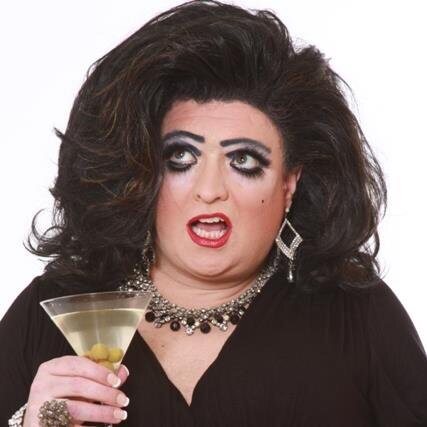
Last month I performed in New York and I had the pleasure of making the acquaintance of MargOH Channing. MargOH is a singer and comedian whose performances mix high camp and cabaret style singing with the seriousness of life itself, issues of identity and representation. We hit it off immediately, sharing a green room, though it must be noted that she finished all the Martini, and I had to help her down the stairs after a bit of a stumble on the second landing. MargOH is an engaging and almost tragic figure who has been very inspirational to me personally. I jumped at the chance to probe her in more detail in light of the recent presidential elections.

1- You come from a fishing community. How did you end up on the New York cabaret circuit?
Darling my road was long and winding. I came from a very broken family so I had to go out on my own at a very young age. I actually moved to NYC as a child to work at my Aunt’s bar where I was discovered by Russ Meyer and was cast in his film “Common Law Cabin” and the rest is history…I call my cabaret career winding down as I’ve done just about everything, even Liberace!
2- I’ve noted from your work that you like the occasional drink. How does alcohol affect your performance?
I don’t know how anyone can perform without it? Many years ago Elaine Stritch told me after I had a rough night at the Reno Sweeney. She said MargOH! “Stick to one before the show, one during and afterwards whose counting”. She came on a night when my panties fell off and I tripped and fell on Rex Reed, he was not happy as he picked pubes out of his teeth…well anyway its not like I gave him the clap!
3- Dear God. Trump. Did that actually happen? What’s the mood right now in liberal New York?
Let me make a martini! People in this country are basically stupid! Reality TV has leaked into our news sources and everything is so sensationalized we can no longer tell the difference between fiction and reality any longer. Plus everyone is very nostalgic instead of looking to the future. The fact is people over 65 and their white kids vote for the old days when certain people knew their place. That is what got Trump elected. When we as a nation realize “Political Correctness” is progess then maybe we can elect visionaries instead of dusty old hacks…was that too harsh?
4- Your performances and incredibly funny, occasionally tender, and with excellent comic timing. Who are your influences?
I have so many influences but most of all Judy Garland is my muse, someone to aspire to be as a performer. When I started performing I wanted to be a celebrity, you know be loved, but that’s all wrong! As you get older you realize its about the work and sharing that connection with an audience. Judy did that better than anyone and I try to remember that everytime I walk out on stage, things may not be perfect but if you connect with just one person then it’s all good. I’m also a big fan of Totie Fields, Sandra Bernhard and downtown legend Penny Arcade.
5- What’s a perfect night, in the eyes of MargOh Channing?
Honestly, a good old dinner party with friends where someone ends up under the table or you wake up with someone in your bed and can’t remember a thing…Those are the moments I cherish…
6- There’s an underlying hint of personal tragedy in your act. Have times been hard?
Are you sure that’s not my Chanel #5? In the world of Social Media where everyone shares their good times, I like to mess with everyone and let them see the real me…I never met a happy comedian, have you?
7- When you’re putting a show together, what makes the perfect big opening?
As an audience member I do not like formula in a show, makes me feel they are taking the easy way out, challenge me please! Actually for the first time in my new show HUNG I open with a song, “You Go To My Head” . I’ve never done that before and do find it fun. In the past I’ve always opened with an overture or entrance song by my back up singers but since they all quit I had to change it up. The one thing I do always do is end with a ballad. Once, my musical director Tracy Stark asked me ‘Why do you always end with a sad song”? I replied, “I am a sad song.”
8- Do your family miss you, now that you’re a big star in the big city?
Of course, my sister Rita is always asking me to come back to Bangor to be her receptionist, she is a highly successful Opthalmologist! I never would have thought that was possible since she is cross-eyed but she is a trooper. My mother on the other hand is a bit of a problem so we shipped her off to a retirment home in Wasilla, Alaska. I thought it best Sarah Palin keep an eye on her or vice-versa…They come to shows when they can so we are all good!
9- What influences your writing?
The underdog is my inspiration for writing. Injustice and inequality drive me to do what I do. I never felt part of the party so I write about that. It’s not always being the belle of the ball, it’s how you trip the one that is in the nicest possible way to let them know they may deserve it but I’m not sure why because you seem wretched. Does that make sense?
10- What advice might you have for any young buck who would like to take up performing?
My best advice for an upcoming performer is something Burlesque Legend World Famous BOB said to me. “If you aren’t making yourself nervous or frightened every couple of weeks then you aren’t trying hard enough”. It was the best advice i was ever given and it’s so true. Do what you love to do and the audience will come, it may be harder and take much longer than you thought but when it happens you’ll know you stayed true to yourself and its magic. XOXO MargOH!
Check out MargOH’s website:
Professionalism and free gigs
Lately I’ve been pondering on professionalism, or more precisely, my own professionalism as a performance poet. The reason I’ve been pondering on professionalism is that I’d like to get to a stage where I can say definitely that I am a professional. And I suppose the ultimate definition of professionalism is that I get paid to be a performance poet, and that it is sustainable and economically viable.
So the thing is that I’m quite lucky at the moment on two counts. The first is that I have a job, a nine to five job in retail management. So whether I’m professional as a poet or not, I’m still going to get paid. The second lucky thing is that I get paid to perform, in the most part. I also have books to sell and workshops, and I organise poetry events, and every now and then I get commissions which also pay. So in that sense I’m professional in that it’s slightly more than just a hobby.
However, I still do things which I’m sure a ‘professional’ wouldn’t. I find myself doing lots of free gigs, and these gigs will never be economically viable. It’s all very well doing a free gig if it’s for charity, giving up ones time for a good cause. But a lot of the major gigs I’ve done over the last year have been unpaid.
I live in a very silly part of the world. Paignton is nowhere near any major urban hub. There’s no culture here, so therefore there are no major poetry gigs. The last spoken word gig in Paignton was probably when the Epicentre Cafe held one of its wonderful Word Command nights, and that’s about four years ago. And then there was my book launch on the local book shop, but that’s about it. So if I’m going get paid for a gig, it would be Bristol or London at the nearest, and that means two or three hours on a train.
So every gig that I get paid for entails expense of travel and time, and actually getting there in the first place. I’m very fortunate to have had paid gigs all over the Uk and have made a bit of money doing so. But a lot of the gigs I’ve done have been unpaid.
So why do I do them? I was pondering this last night. What are the benefits? I suppose the major one is that I meet new people and get a chance to sell them books. I see other performers and o get inspired, and it’s always great to network and meet new and exciting people. And I can use my old material and see that it still works, or try out new pieces.
If I was making a living from poetry, then this would not be a viable means of making a living. Yet we need the free gigs so that people can see us. It’s advertising, and the best kind of advertising. That’s what I always tell myself.
So I’m happy to do the free gigs if they’re doable, but I have to choose them wisely. If every performer demanded payment then the gigs wouldn’t happen. If I were to leave my job and concentrate on my art full time, (something I’m considering at the moment), then I’d have to think very hard about such events.
I got heckled twice this week. Weirdly.
So something weird happened the other day, and the weird thing that happened was that I got heckled. And then two days later something weird happened again and that was that I got heckled. And the weird thing about this weird thing that happened was that this happened with the same poem. And another weird thing about this weird thing was that the heckles were both so dissimilar even though they happened during the same poem.
It’s a new poem which I use as an introduction to myself. I wrote it in Edinburgh and I performed it for the first time at the Boomerang Club when I co-headlined there. One of the inspirations for writing it was watching the wonderfully powerful performers in Edinburgh such as Dandy Darkly and Matt Panesh, people who I really admire and use language effectively. It also uses highly literary language for comic effect, accentuating the traditional idea of a spoken word poet from Shakesperian times.
So the second time I performed it was in Exeter in Sunday night, and because it’s a poem which introduces me and my oeuvre, it’s the first poem of my set. So I performed it and someone shouted out, ‘I like that!’
Which is a nice heckle. I did a stand up comedy course a few years ago and one of the sessions was all about heckling. The course instructor told us that there are several types of heckle: just helping out, saying something nice, being drunk, or showing off. So this was a saying something nice heckle, the correct response to which is, ‘thanks’. But like a deer caught in a car headlights, I just said, ‘muhhhh’.
The rest of the set went very well.
And the second time I performed the poem was in Swindon two days later. At the end of it someone shouted out, ‘That doesn’t rhyme’.
Of course it doesn’t rhyme. It doesn’t have to rhyme. Poems don’t have to rhyme. Ok, there was a lot of rhymey poetry at the gig where I was performing, but my own stuff seldom rhymes. Perhaps this was a ‘just helping out’ kind of heckle, and my response to it was, ‘thanks’. Which I suppose is a delayed reaction to the heckle from the last gig.
So there we have it. I’m looking forward to performing the poem again because it seems to elicit a response of sorts. Or maybe it’s just a wacky coincidence. I don’t know. I have no idea what’s going on. 
The most insignificant full stop (part seven)

I asked my assistant Lars to write a full stop on the table while I was out of the room. My job was then to find it and eradicate this.
If I hadn’t found the full stop, the knowledge of its continued existence would have given it a significance far beyond its actual worth.
Or I would have begun to doubt that Lars had drawn it in the first place.
Or I would have begun to doubt the existence of Lars.
You can watch the video here.
https://youtu.be/9TDkQN-tbuI