Ruminations of an Accidental Poet Part One: How I Became a Performance Poet


There’s not much to do in Virginia Water once the lights are off. In fact there’s not much to do when the lights are on, either, unless you are one of the millionaires whose villas dot the woods and thickets of this strange commuter-belt town, the summer air thick with pungent earthy aromas, honeysuckle, fleshy rhododendrons, a sudden rain shower sounding like polite theatre applause as it falls on jungle vegetation. Nothing to do at all. Even less if you happened to live in one of the small cottages, one of the two-up two-down workman’s houses which still survived into the 1990s before they were all bulldozed to make way for mansions bought by supermarket magnates and glam rock superstars. And even less yet again if you lived in one of these cottages and it was the mid seventies, and it was a period of rolling black-outs and you and your young wife lived in the top bedroom, and the other three rooms of the house were owned and occupied by the in-laws. There’s absolutely nothing to do under these circumstances.
          I was born the following January.
          There are things that I can still remember from a very early age. I can remember the hideous flowery purple and pink bedspread on my parents bed. I can remember the hideous flowery yellow and brown curtains over their window. I can remember the woods, the ominous, black, dense woods that would pull in the darkness amid their gnarled trunks like a lonely miser gathering in the eternal emptiness and oblivion which awaits us all. And I can remember the hideous flowery blue and white polyester dress that my grandmother used to wear.
          I can remember my Grandad, too. My Grandad had brown buttons on his cardigan and I would play with them whenever he held me. He wore big, thick rimmed glasses, the kind I’d see on television comedians. With just a word or two, my grandfather could reduce a room into peals of laughter. I suppose what I’m trying to say here is that I kind of take after him a little bit, that’s the inference. I even wear the same type of glasses.
          My Grandad had a large shed at the bottom of the garden, a corrugated hut which looked like something from the Alaskan gold rush. Inside the shed were lathes and drills and all kinds of incredibly intricate machines which he would work over late into the night inventing tools and other equipment. There were shelves of tobacco tins full of nuts and bolts, rolled up blueprints and official patent letters tucked away amid the paint tins and the boxes. It was no place for a toddler, but I would stand in the doorway and watch as he operated his machinery, transfixed by the way he’d dance from one machine to the other. Years later I’d do the same, escaping to a shed or an outbuilding to work on manuscripts and poems, books, short stories, enmeshed in my own little world away from everyone else. So there I go, comparing myself to him again.
          At this stage of my life, I didn’t have a sister yet, nor was I a spoken word artist. Nothing in my demeanour hinted that I would be a spoken word artist, and to be honest I didn’t really have the vocabulary. I did used to like putting buckets on my head, though, and there are plenty of photos of me with a bucket on my head. The fact that I’ve made a career out of very silly hats possibly stems from this.  I can’t even remember how this came about. I’ve just got other people’s word to go on and, as I say, photographs. Perhaps I just liked making people laugh. As I say, it was Virginia Water and it was the 1970s, so there wasn’t much else going on. A toddler with a bucket on his head obviously passed for light entertainment back then.
          The sporadic power cuts continued and two years later my sister was born.
          The thing is, I can’t remember seeing my sister for the first time, yet I remember the day itself vividly. The reason for this is that I was with my Dad and my Uncle in Staines High Street, and they had just bought me a red pedal car, and the fact that it came in a big box and was obviously for me, made me feel very special indeed. It didn’t even occur to me at that stage that the red pedal car was a consolation prize for no longer having everyone’s undivided attention. In fact, the next time I would ever have everyone’s undivided attention would be on the stage as a spoken word artist. It’s something I would never experience again for quite some time, and even during sex, people would just close their eyes and think about someone else. Anyway, I had a red pedal car, which my mother, for some reason, christened Bertie, and a sister who, because we were not a religious family, wasn’t christened at all, but was named Angela.
          And oh, what a vicious thing she was. Aunts and Uncles would cower in fright. If anyone were foolish enough to pick her up, she’d bite a chunk out of their shoulder. From a very early age she’d boss me around, and in these crucial years of my own development as a human being, she taught me the valuable lesson that it’s sometimes not worth the effort because other people will always kick up a bigger fuss than you. Whenever we’d play games, my mother would whisper to me, ‘for goodness sake, let her win’. Which was another lesson I learned at a very early age. It’s not the winning or the losing that counts, it’s making sure that your opponent doesn’t throw a tantrum. At least I got a pedal car out of it.
          I can’t remember the age at which I would begin to mythologise my past and my upbringing. I think it was probably just after my fourth birthday. We moved out of my grandparents and away from Virginia Water to a council house in the Surrey suburbs on an estate on a hill a couple of miles from the end of Heathrow’s runway. There are those who believe that homosexuality is a result of home conditions and human relations, the psychological environment of our formative years, and while I do not agree with some parts of this hypothesis, I understand that such people would probably point to the fact that I had spent most of my time up to this point with three generations of strong-willed women in my grandmother, mother and baby sister, as definitive proof. My grandfather was usually in his shed inventing things, and my dad was invariably at work in his job as a civil servant. On top of that, the Queen was a woman and so was the prime minister, and every single one of my teachers would be a woman until I was ten years old. I would dream of a time when men were allowed to make decisions and be in charge of things, perhaps then there would be no warfare or violence.
          As I say, I do not agree with the environmental thesis of homosexual development, but I remember thinking from a very early age that something was amiss. (Not that I knew it was necessarily amiss. I thought my behaviour was perfectly normal. I couldn’t understand why people would get so uppity when I showed no interest in football, soldiers or motorbikes). I wanted a handbag, just like Mum’s. My two teddy bears, Fred and Jumbo, were both male and yet in my imagination they were also a couple. And most weirdly of all, the engraved pattern of my grandmother’s sideboard looked, to my young eyes, like a man’s bare legs and boots, a pattern repeated on both doors of the sideboard so that it looked for all the world like two men flat on their backs with their trousers off and their boots in the air. I found it weird that nobody else had ever noticed this or even commented on it, and also the fact that whatever they were doing, they’d decided to keep their boots on. To this day, I’ve always had a thing about legs.
          I can’t remember much from the age of three.  Perhaps times were hard and I was affected by the certain malaise or ennui easily associated with those who feel their lives are going nowhere. At the age of four I started school and I discovered that other people existed outside of my own family group. I found it inconceivable that people could have birthdays on a day that wasn’t the second of January. In a bizarre quirk of fate, I shared my birthday with my dad, my uncle, my great uncle and my grandfather, and it didn’t help matters that  one of the first friends I met in school  also had his birthday on the same day. In a deep and philosophical moment I might even be tempted to say that this deconstructed the obvious and laid the foundations for a variance in all things, souls dancing in the overbearing consciousness of the mind of a four year old who would later revel in difference and the position of the outcast, but what it actually meant was that it was always someone’s birthday other than my own. And when my own did come around, I had to share the cake.

The other major thing that I discovered at school was writing. From the age of six I became somewhat precious, at all times aware that I was a tortured genius and that I had literature pulsing through my veins. Or at least, I thought it was literature. I started writing because I wanted to have a book published like the books that my mother had in the case on the landing at the top of the stairs. I wanted to see my name next to those who’d written the books which she cherished and held forever in semi-reverence behind the sliding glass door of the MFI cabinet which dad had swore profusely while putting together one weekend. The volumes within seemed to have their own aura and mystique, and I knew that truth and reality were kept behind their slightly crumpled spines. I wanted to be treasured as much as these titans, these philosophers, that my mother would, ever so proudly, hold me in as much esteem as she held Jilly Cooper. I could feel the literature within me, or at least, I thought it was literature. In actual fact there was probably hardly anything of any literary worth until I was around ten. Each day my mother would drag me off to school and I would only ever be truly happy if it was raining, because rain meant that we could stay indoors during break time and not run around the school playground. We were given paper on which to draw, but I found that I filled up the paper much more effectively if I wrote instead. I’d use a turquoise felt tip pen. And as the rain beat against the plate glass window of our county first school, my head would be transported to all kinds of places, my imagination fascinated with the possibility that the characters I’d invented could do absolutely anything. It rained a lot that year, and before long I had a novel.
          My school was very religious and we had Bible readings every day and double Bible readings on a Thursday. In my mind the adventures of the characters in the Bible were easily comparable to the adventures of the characters in my novel, and if the Bible was an example of storytelling, believability, authenticity and gritty reality, then I knew that I’d got it spot on. For this reason I decided to call my first novel ‘Bible 2: Revenge of the Bible’, but my deeply religious teachers seemed to be dead against this idea.
          ‘You can’t call it that!
          ‘Why not? It’s just as good as the first one’.
          ‘The Bible is the word of God! It’s a sacred text! A lot of people could become very offended’.
          ‘Well, Bible 2 is the word of me!’
            ‘How dare you!’
            ‘And it’s got dogs in it!’
          Because all of the characters were dogs, for some reason.
          ‘It’s the word of dog!
          A comment which did not go down too well In the event I settled on a far less provocative, though oddly postmodernist and even minimalist title, calling the novel ‘R’, because ‘R’ was the first letter of my name and, therefore, quite important indeed.
          It is true to say that my career stagnated for the next four years or so and it wasn’t until middle school that my writing started to flourish in any meaningful way. In the meantime I’d continued writing and I would spend almost all of my spare time concocting stories and short works and there was a brief flurry of excitement when I was eight and, possibly to shut me up, my mother sent a manuscript to Penguin Books. I couldn’t see how they could possibly reject the works I’d sent, but alas the editors  didn’t quite see how my manuscript could fit in with their publishing strategy and the novel never came about. It is true to say that I saw a niche in the market for novels about dogs flying through space and solving crimes, it’s only a shame that Penguin Books failed to share my excitement.
          One person who did share my excitement was my teacher, Mister Shaw. There were two things amazing and astounding about Mister Shaw. The first was that he was a man. This was the first time I’d ever seen a man in a position of power and there was something liberating about this. It didn’t matter that he was as camp as Christmas, (as my Dad described him), or that he walked as if he had a roll of lino under his arm (as my Dad described him), what mattered was that he was a symbol for equality and made me believe that anything was possible. I’d imagine him each night going home to his wife and telling her about his day, and she being ever so supportive of his achievements. The second amazing thing about Mister Shaw was that he was the first person who took my writing seriously
          Yes, I know that my mother wrote to Penguin Books. (Come to think of it, I’ve never seen any actual proof that she ever did). But Mister Shaw saw in me a talent which would one day envelope the world and make me synonymous with deep, powerful and engaging literature. He also saw that my career had been stagnating and was the first person to suggest that perhaps I might like to have human beings as the protagonists of my work rather than dogs. This was one of the most shocking things that had ever been said to me, but that night I went home and wrote a novel about a man called Bill, who was an Olympic skier who solved crimes in his spare time. The next day I took it back in to school and Mister Shaw asked me to read it out to the class
          ‘Really?’
          ‘Yes, Go for it. What’s the point in writing if you’re never going to have an audience?’
          A performer was bom that day, dear reader With the rapt attention of Class 4, in the cosy confines of our prefabricated classroom hut on the edge of the school playing field, I read the stories of Bill the crime solving Olympic skier, and his comedy sidekick Ed, and Ed’s incredibly fierce wife Lenda. And I put everything into my performance, using different voices for the characters and the narrator, and the class watched on both aghast and unable to disguise their mirth that a comedy
performance genius studied each day among them. It was a reading worthy of note, as engaging as it was shocking and the whole hut resounded to my sonorous tones as each one of my classmates sat on the edges of their chairs, barely able to contain the excitement. And when my two minutes was up, Mister Shaw announced that this would be a daily occurrence.
          And so it continued until the novel was done, until the end of the term by which time, to cater for the class and its insatiable appetite for more Bill and Ed stories,(which certainly did not lead me to getting beaten to a pulp each break time), I’ d written several more volumes. Bill and Ed became mini celebrities, and I longed for each day when I could, for just a short period, have everyone’s full attention. Even my closest friends would show their support and remark on my achievement with phrases such as, ‘Wow, you’ve certainly written quite a lot of these’, and, Please, tell me how the novel ends’, and, ‘How many more of these are you going to write?’

Little did I know that these would be the glory years, as far as my writing was concerned. Never again would I feel the undiluted support of my peers or the critical acclaim of my own literary output. By the time I left middle school I felt, what with having fifty two novels under my belt, that I was now to be regarded as something of a veteran of the literary scene. ‘Prolific’ does not even come close to describing the work that I churned out during this period, working on novels scratched in exercise books at every spare moment I could find. I can remember a family holiday in Hastings, walking back to the caravan park with my parents down a narrow country lane, feeling a new exercise book in my hand and the excitement of all the adventures that my characters would have. I must have been insufferably boring.

Going to secondary school could very well have ended my writing career. There was far too much going on now: homework, studying, the giddying swirl of hormones that suddenly necessitated appearing as ‘cool’ as the most pressing matter of every single moment, the bruises and psychological torture of getting beaten to a pulp every break time for not appearing ‘cool’, and a growing fascination with the same gender. My secondary school was huge, a factory for learning placed in a dank suburb of west London fed by the smaller middle schools of the surrounding area, a sprawling network of buildings and tower blocks, sports halls and annexes home to well over two thousand pupils, most of whom are currently now in prison. This sudden influx of new faces meant that I was surrounded by hundreds of young men of my own gender who were, overwhelmingly, much better looking than any of the losers I’d been to middle school with.  Yet throughout the mental strain of trying to be cool while at the same time being beaten up for not being cool and concurrently trying to act cool about being beaten up for not being cool, I still wrote. I thought, misguidedly as it would seem, that it would make me cool.
          The whole of my first year there was a dizzying splurdge of self-realisation and deep loathing. How wonderfully would this have been as inspiration for my writing, had I not still been ploughing ahead with the Bill and Ed stories and their adventures as crime-fighting Olympic skiers. Perhaps this constant writing might even have taken my mind off the sudden throbbing lust I felt for certain classmates, the agony of spending so much time with them and yet incapable of letting anyone know lest I should be revealed to be that most despised individual, a homosexual. For this was the nineteen eighties, and the only representative media depictions of my own self were as comedy high camp with humorous punchlines, or dangerous subversives threatening the very moral stability of society itself.
          The regular break time beatings began to subside after the first year. The boys who beat me up could see that there really was no sense to it, no enjoyment in these daily pummellings, because something had changed in me. I’d discovered comedy. It’s all very well demonstrating your prowess to various friends and onlookers by repeatedly punching a first year student in the face, but this seems less attractive when that first year student says something so incredibly funny, truthful and personally hurtful that your various friends and onlookers burst out laughing at your expense.
          In a bizarre twist of fate, I’d discovered New York stand up comedy and I would memorise routines and one-liners, quips and put downs that seemed to play very well to the breaktime bully crowd. ‘Don’t stop’, I’d yell, ‘I’m almost at an orgasm!’, even though I didn’t yet know what an orgasm was. ‘I’d say pick on someone your own size, but the nearest gorillas are in the zoo’. ‘I knew you were coming, I could hear your knuckles dragging’. That would take another thirty years. I had nothing to lose, it’s impossible to get beaten up while already being in the process of getting beaten up. And the reason I’d discovered New York stand-up was because I’d been given a long distance radio by my uncle and I could tune in to radio stations from anywhere in the world. I’d found a comedy station by accident and would listen to it to try and help me sleep.
          Armed with a sudden love of comedy writing and emboldened by my first ever successful application of this for pure personal gain, buoyed also by the feeling of playing to an audience and getting laughs, and then adding homosexuality to the mix, I would write. And I wrote, and wrote, and wrote, and wrote, and wrote.

          If you thought I couldn’t possibly get any more annoying at this stage with my writing, then you’d be wrong, as fortune decreed that I would be able to do just that. My grandparents gave me an old 1950s Olivetti typewriter, a chunky, clunky old metal box of a thing on which you’d have to press down each key really, really hard to get any sort of mark on the page. The silent pursuit of writing in pen in an exercise book now became an activity which all of the family could enjoy, as the act of composition was now such a cacophonous affair, a byproduct of this metal behemoth of a machine being that the whole house shook, creaked and rumbled every time I did any amount of typing. Within a few weeks I’d taught myself to type with two fingers and become seriously addicted to the smell of correction fluid. The letter E was the worst, it would stick every time I used it, so much so that I would set some of my novels in Wales just because the place names didn’t use so many vowels. Even now, thirty years later while typing on an iPad or a computer keyboard, I still press down harder on the letter E than any of the others. The adventures of Bill and Ed continued, though Ed had now been replaced with Justin.
          I’d spend hours with that typewriter. The thing was built to last. Indeed, it still works today and I use it often in residencies and as part of art projects. Even at the end of the nineteen eighties it was outdated and finding ribbons for it was a tricky business, a simple writing session would leave me covered in black ink and absolutely physically exhausted. The typewriter was so loud that people would complain. Pedestrians walking past would wonder if there was someone in the house with a machine gun. Pictures would swing back and forth on the wall. My solution to this was that I’d go out and type at a wallpaper pasting table in the garage, but first the wallpaper pasting table broke, and then the neighbours would complain. How was I to know that they were running an illegal minicab business from the adjacent garage?
          By the time I left secondary school and went to sixth form, Bill had retired as an Olympic skier and was now a detective. (Why not?). I had a collection of GCSEs good enough to scrape into doing my A-Levels, though it was probably obvious to everyone but myself that I’d never be good enough for university. The lads I’d fancied from school were far from bright and I’d never see most of them again, only hearing about their exploits through mutual friends or the prosecution court reports in the local paper. By now they were boozy, car obsessed and mostly had girlfriends, though even some of the school bullies would greet me with a cheerful wave, the ones who weren’t now in politics or petty crime.

Sixth form college seemed to pass very quickly. To the outside observer it must have looked like I was very industrious indeed. In fact I was so industrious that I didn’t once have time to fall in love, nor did I have time to concentrate on my writing career. I focussed fully and exclusively on my studies with the idea of escaping from the suburban blandness of my upbringing to some far flung university, where I would get a qualification and then have lots of sex. As it was, I failed miserably in most of my subjects, left college, and got a job cleaning toilets at the local supermarket.
          This at least gave me time to concentrate on my writing. How evocative, the sultry night neon, working the late shift and spending twenty minutes in the staff room working on yet another Bill and Justin adventure. The supermarket was huge, a purpose built facility with twenty aisles and a basement car park. At least I didn’t bring my typewriter with me. I kept a notebook with me at all times on my cleaners trolley, just next to the chlorine tabs and the bleach, this being a period well before health and safety. My refuge away from the world, just like my grandfather’s shed, turned out to be the mop cupboard under the stairs next to the chiller cabinets, a bolt hole away from the busyness of the supermarket where I could write unhindered before the fumes took over and I became lightheaded.
          It was around this time that two things happened which would send me off in a completely new literary path. The first was that I discovered the writings of Frank Kafka. This was, on the whole, a bad thing, because it opened my mind to several miserable possibilities and taught me that it’s all very well and good being funny, but a damn good mope will get you all the attention you need. How enamoured I became at the writings of this modernist insurance clerk with his manic stare and the preoccupation with never quite getting into things. I became obsessed with the very image of him more than I did his actual work. How I wanted to be him! How I wanted to be that the lonely, pale, existentialist icon beavering away on his manuscripts in an almost mystical trance, sat at his desk looking out over the slate tile rooftops of Prague. I wanted to be the new Kafka, coming home after a hard day scrubbing urinals and mopping up god knows what from the wazza floor, to create the most amazingly miserable short stories in which all hope has been long obliterated. In such a manner I took down my bedroom net curtains and turned my desk around so that I might similarly work while gazing upon the urban sprawl of my own imaginary ghetto. Yet the view from my window was not of cobbled lanes or the close packed tenements of the Prague old town, but of back gardens, barbecues, trampolines, conservatories, compost heaps and garden sheds.
          How assiduously did I mimic Kafka’s style, discarding all traces of comedy for dense paragraphs, non-standard punctuation and visionary allegorical hints verging on the mystical. ‘The Bus’ was an early classic, a short novel set on a bus ticking over at a bus stop but never actually going anywhere. Then I wrote ‘The Train’, about a train which pulls into the station but never leaves. I then wrote a novel called ‘The Ticket’, about a man who, without actually having done anything wrong, gets a parking ticket. Then I wrote ‘Metaphorisis’, a novel about a fly who wakes up one morning to find that he is a travelling salesman. In a further rash development, I decided that I didn’t even need capital letters, (which were always problematic with my old typewriter), and once a novel was finished I’d send it to a literary magazine, and they’d wrote back very quickly to ask if I was aware that it didn’t have any capital letters.
          The other thing that happened was that my grandfather died. He’d had a series of strokes and had been recovering in a nursing home, and appeared to be on the way to a brilliant recovery. Indeed, he seemed to be enjoying the nursing home, and he was in remarkable spirits whenever I’d visit. One day he was told that he was now well enough to go back home and live with my grandmother again the next day, and he died that very night.
          Sometimes, the coroner told us, people just give up all hope.
          My father and I cleared away his shed. It was a sacred place for me, and to see it torn down felt more symbolic, as if there were one less place to hide in the world. Yet even at this moment me head was full of Kafka, almost as if I should embrace the sadness and the hopelessness of life. As a day out and a pleasant change from cleaning toilets, my parents took me to the coroner’s office to sign the official death certificate, which was done by a very eccentric official wearing a multi colored bow tie and with a moustache that I can only describe as exuberant. He signed the paperwork with a fountain pen, his handwriting as artistic and as lurid as his facial hair, and that very afternoon I bought a fountain pen for myself. I have used it to write every single creative piece ever since.
          By the time I was twenty, then, I was a completely different writer and success seemed just round the corner. I had a pen and a typewriter and a head full of dreams and a view of the world that was entirely unique, (except that some Czech writer from the beginning of the century had had one or two similar ideas). Success and literary greatness seemed just round the next corner. I was going to be a famous writer!
       
Not much happened for the next twenty years.

          It seemed inconceivable that none of the great publishing houses wanted any of my experimental Kafkaesque pieces. After all, weren’t these the same publishing houses that were falling over each other for such material in the 1930s? Couldn’t they see that I was just as innovative as these existentialist titans, and that really, no progress had been made in literature at all in the following eighty years? The people that ran these publishing companies couldn’t possibly be as well read as me. I’d read all of Kafka’s stories and I understood well over half of them, and I’d not even spotted a single spelling error in any of them. And my novels came with the added bonus of invented punctuation, no capitalisations and, in the one novel which I knocked up over a frenzied weekend while the snooker was on, not one single letter M. Nevertheless the enthusiasm stayed with me, and when my parents decided, supposedly on a whim, to move out of the suburbs and off to the provinces. I decided, like many a displaced writer before me, to come along with them.

          By now I was no longer a sullen youth. No more the emotional despondency of early adulthood, for I had brightened considerably, adopting all the nuance of the urban moper. Transposed to the provinces and a small town in the middle of nowhere, I became a Londoner, a mysterious metropolitan outsider to whose drab outer garments the fog of the capital still lingered, even if I actually came from the suburbs west of the airport and had probably only been on a tube train six times. The way of life in the sticks was much slower, and the attitudes of the locals tended towards the more conservative. I felt that I had made a mistake. I also felt, or at least, had a nagging doubt, that I would ever make anything from my writing. One particularly anonymous morning I put my pen to paper to begin a new novel about a man who would never make it into the local cinema where he was queuing, and would simultaneously metamorphose into a badger, when I suddenly thought, well, really, what’s the point?

          And I put the pen down.

          I found a job in retail management. I went through several fashions and styles. Surfer dude, skater boy, sports jock, gentleman, hipster, chap, chav, businessman, loafer. My hair varied from mullet to curtains, side parting, centre parting, down at the front and spiked at the back, spiked at the front and down at the back, dyed blonde, dyed grey, dyed red. It was a busy six months. I cannot keep track of all these personalised metamorphoses.

          By now I lived in my own rented flat over a shop in a seaside town. It suited me just fine, and I felt very content being there, apart from the boredom and the loneliness and the meaningless of my existence and the lack of opportunity and the lack of any kind of companionship and the inherent lingering suspicion that life was running away from me. I decided that maybe I needed some culture, something beyond the strange fungus that grew on the walls of the adjacent bus station. I needed something intellectually stimulating.

          I went to a performance poetry night in a small arts cafe in the next town. I found my intellectual fulfilment. A variety of poets, primarily men, spewed comedy verse about baked beans or cricket or the pitfalls of putting together flat pack furniture, and while it didn’t rhyme or seem particularly poetic, the audience loved it and applauded enthusiastically. It seemed as funny as the stories I’d written all those years before at middle school. There were some amazing lines and some good rhythms, and it all felt very familiar because this is the sort of thing I’d been writing until I’d become all Kafkaesque, and the audience were appreciative and amazed. A poem about sending a naughty text message to the vicar by mistake went down very well and the audience went wild and clamoured for more. A lifetime of writing and a thousand rejection slips melted from my mind to be replaced by a new thought, that I could do this! How long would it take to write something like this? Ten minutes? And look at the audience, bent over double in tears of laughter at the words that someone else had written. I could do this!

          ‘Yeah, sure’, the MC said, at the end of the night when I asked him for a slot at next month’s event. ‘I’m always willing to give a slot to a newcomer’.

           ‘Actually, I’ve been writing for . . .’, I replied, then cut my answer short. ‘I mean, thanks, Thanks so much!’

My new show, ‘Bouncer’ – A progress report

So I’ve performed my new show five times now. And I’m performing it again tomorrow in Paignton, to an invited audience at a secret location. I’m starting to get to know it now, because these sorts of things only seem to come alive once they’ve been seen by an audience.

In a sense, I only really discovered what the show was about once audiences had seen it. It’s far darker than I thought, with themes touching on fame, ambition, truth, disappointment, even mental health.

There are poems which always seem to get good reactions from the audience. Two of these, ‘Who Wants Fame?’, and ‘Fabaranza’, are real fast-paced silly poems. ‘Zach’ always seems to go down well, too. As does ‘You Should Write A Poem About That’. In the latter poem, I decided to employ a puppet so that it appeared that I was having an actual conversation with someone, and I think this part of the show really works.

The first place I performed the show was at the St. Anne’s Centre in Barnstaple, a wonderful ex-chapel with very creaky floorboards and Gothic architecture. It’s so old that the new extension on the side was built during Tudor times! I performed the show four times here and had some lovely audiences. Last week I performed the show in Guildford, upstairs at The Keep pub, to another lovely audience. I made a slight change for this gig, adding a poem at the start of the show, ‘Coffee Shop’, which I’d written in an attempt to emulate the style of Dame Edith Sitwell.

On the way home from Guildford, I pondered on the script and how there are several moments where it seems that the tension needs popping. To relax I listened to one of my favourite comedians, John Mulaney, but instead of relaxing, I listened to how he would do this during his own monologues. I’ve since added three ‘tags’, as the Americans call them, moments where I comment on what I’ve just said, hopefully for some audience reaction. I’ll be using these ‘tags’ during the Paignton performance this week.

The thing about a new show is that one is always comparing it with the show that came before. The previous show, ‘Yay!’, accompanied the Burning Eye book of the same name, and I performed it over two years. I’d also written and rehearsed the show during lockdown, so I knew the thing inside out. But there was always the sense that the scope of the show was limited because it had to use poems from the book.

With ‘Bouncer’, the sky was the limit, and while I was free to choose the subject matter, I then had to write bespoke poems to fit in. So it felt with ‘Bouncer’ that the poems were not as well established as those in ‘Yay!’, particularly because the poems in ‘Yay!’, had been written over a period of five years, not a few weeks! Consequently, I rehearsed much, much more because I wasn’t sure myself whether they should have been in the show at all.

But I’m now much more relaxed about the show. I know it inside out, more than I probably ever did with ‘Yay!’, and because of this I can have fun with my voice and delivery and movement and all of the other things that a performance poet has to think about, rather than just trying to remember what comes next.

So, basically, I’m very happy with how the show is going. The next stop is the Edinburgh Fringe in August, and who knows what that will bring?

Below is a list of the poems in the show, as well as a video of ‘You Should Write a Poem About That’.

Coffee Shop
Zach
You Should Write a Poem About That
Who Wants Fame?
Beard Envy
London is Mine for the Taking
The Contestants Await
Fabaranza
Your City Never Seemed So Cruel
Woodlouse Boy

How I’ve changed as a performer

I had a lovely gig in Bristol the other week. The venue was a theatre on an old lightship in the harbour. It was moored to the quay almost totally static but even so I kept lurching sideways. The boat wasn’t even rocking, it was probably just something psychological going on deep within me. Boat = movement. What a nob, I expect people thought.

I’d fretted a lot over my set for the gig. I often get Set Fret but this was something else. I wanted to do some of my old bangers, of course, but I also know that I can’t keep hold of them forever, and that the new stuff has to be unleashed on the world at some point.

But there’s also another thing going on. Over the last couple of years I’ve begun to assess what it is that I like in a performance and I’ve been trying to translate that to what I do on stage. Humour and timing, of course, are things I’ve always had an eye on, and hopefully been got at, but lately there are one or two thinks that I’ve been tinkering with because, well people change over the years, don’t they?

One of these things is volume. I’ve begun to appreciate volume. Or rather, I’ve begun to appreciate it less.

Maybe I’ve been watching too many Ivor Cutler videos. Or Bob Newhart. Or, come to think of it, almost all the people I watch for enjoyment. Laurie Anderson. Edith Sitwell. Alan Bennett. They’re all quiet, somewhat reserved, and seldom loud. Yet they’re funny and they’re clever and I want to be both of those things. I’ve been to plenty of poetry gigs where the poet - and it’s usually a young man, though I don’t want to develop stereotypes- suddenly starts bellowing into the mic halfway through a poem. That sort of thing’s not for me. I’d feel I was bullying. If you’re going to shout, then at least stand back from the mic. I feel it also changes the dynamic of a performance from enjoyment to hostility. I know that some people may enjoy this, and may appreciate this in a performance, because a performance is what it is and what we’re all there for, but we’re all different, and hooray for that. For me, though as soon as a performer starts shouting, I feel that I want to Get Out Of There. So I come away from these performances hoping that I don’t annoy people in the same way.

So this means that I’ve been trying to adopt a more relaxed, conversational tone when delivering my linking material. And I’ve been working hard at this, because it’s hard, after a lifetime adopting something of a more performative tone. But I’ve been having a bash at it. Here’s my little secret as to how I’ve been conditioning myself to be slightly more conversational and less forced: I start my set with the words, ‘Hello, there’. It’s impossible to be loud or forced when the first thing you have said is, ‘Hello, there’. And if I feel myself getting more forced or desperate or less conversational, then I say to myself, ‘Hello, there’.

One of the other things I’ve been concentrating on is sex. No, not in that way. I mean, the sexual content of a set and the effect that this, too, has on an audience.

In the early years of my comedy poetry career, I relied quite a bit on content of a sexual nature. Naturally, this was a comedic version of sex, performed (the poem, I mean), by someone who you’d think was probably not very good at it, and therein lay the humour. Indeed, my first collection with Burning Eye, ‘Nice’, was about relationships and more specifically, sex, in the most part. I remember someone writing in a copy of it that had found its way into a poetry library in Manchester, ‘Not nearly enough mention of sex’.

The thing is, I was in my thirties when I wrote some of those poems, and possibly just about passable enough to seem naive and comfortable with such relationships. But now I’m very nearly fifty and the idea of me being on stage talking about sex seems, well, creepy. I’m aware that many in the audience will be thinking the same thing.

I’m not alone with this idea. I was chatting with an LGBT performance poet who’s much higher up the spoken word ladder than me, and he was saying that he is going through a similar process of removing the sexual content from his sets because, as he gets older, he feels it less and less appropriate. I felt that this vindicated the unease I also feel these days of standing at the mic and talking about orgasms and the such. It also maximises the humour when I might mention something vaguely sexual during a set.

So it feels that I’m becoming much more mature as a comedy poet, and gosh, that’s taken it’s damn time. I’m more aware of the audience and more aware of what it is which makes me feel, after a performance, that I’ve done something I can be proud of. This has come about through several years of studying what it is that people laugh along with (as well as laugh at). It also means, hopefully, that I’ll not be stereotyped, just like the words written in that copy of Nice.

We all change. In fact, that was the subject of my very first solo show, ‘Static’. But right now, I’ve never felt so relaxed as a performer, and so at one with my material. Another friend of mine, the American fringe performer Dandy Darkly, once said to me that you can be as silly and as weird as you want to be, so long as you do it with conviction, and that’s definitely what I’ve been aiming for of late.

On poetry slams in the age of Zoom – and an idea for a new kind of poetry slam!

This week I took part in an online poetry slam, and as ever, I was blown away by the quality of the performances and the sheer poetic talent of those taking part. By the wonders of Zoom, participants in many parts of the country, and further afield, poured their heart out and took the audience to the darkest places of the human psyche, taking in every part of lived experience along the way, from death, to rape, to misogyny, genocide and personal angst. They did so using language and imagery which stayed with me long afterwards, painting pictures using words which imprinted on my imagination the emotions of what it means to be human. The slam was won, rightly, by the performer who’d performed the best, written the best, and absolutely nailed the format.

I was lucky enough to get out of the first round with a poem using humour to tackle the weighty subject of homophobia. My strategy, however, had been then to revert to a couple of comedy poems. However I knew that the mood of the night was to embrace the deeply serious, and that comedy poems certainly wouldn’t cut the mustard, so I did a semi-comedic poem about death in the second round, my hand kind of forced by the dynamics of the evening. In the event, I was incredibly happy with my performances, and happier still that the strategy I’d picked would probably work well at another event.

But then I got thinking: Just when did poetry slams in the UK become so serious? My performance career now spans three decades, (okay, so I only performed in two years of the 2000s, and we’re only one year into the 2020s, but who’s counting?). And when I started slamming all those years ago, the one certainty was that audiences, judges and fellow competitors alike were up for a laugh. If you could write well and with humour, and perform it well and with humour, then the chances were that your chances were good. And this is something I’d always admired about the UK slam scene. People like AF Harrold and Jonny Fluffypunk were winning slams all over the place when I first started, and it felt wonderful being a part of such a very welcoming scene in which comedy was rewarded and regarded well in an art form, (poetry), which I’d always seen as snooty and stuck-up. The fact that comedy poets won slams also felt like the whole scene was somehow ironic. Sure, I’d been on the internet and watched American poetry slams, which were all about identity and big themes, where the serious poet, or, god help us, the poet who turned on the waterworks, was acclaimed as the winner. While over in the UK, AF Harrold was winning slams with poems about cats being better than dogs.

Sure, there were serious poets. Of course there were. At my very first slam, in Bristol, I made it to the final with my poem about beards and was (rightly) beaten by Steven Duncan, who did a wonderful poem about the black experience from Windrush to the present day, taking in racism and police brutality. But it was still a fifty fifty shot that a comedy poem would do the biz, and probably around fifty percent of the poets at the slam were comic poets.

And yes, I managed here and there to win the occasional poetry slam. It always felt ironic doing so. Because I’ve never seen what I do as poetry, and a poetry slam seemed the ultimate American and trendy thing to take part in. The fact that I could do so with poems about jellyfish and badgers and, of course, beards, seemed to drive a truck straight through such pretensions.

Naturally, over the last year and a half, most events have moved online, and one could argue that in so doing, they have made them more accessible and democratic. Online events have opened slams up to people who might never have been able to get out to events in far flung corners of the UK. (And to think, once a month I used to go to Bang Said the Gun in London just to take part in their weekly slam). With this increased online community, it seems that the American idea of what a poetry slam in has, stealthily, increased and encroached on the more traditional UK version. Obviously, I’m not saying this is a bad thing. It’s just the nature of these events, and the world has definitely become a more serious and, one would argue, less equal place over the last few years. Various movements have rightfully given voices to those who before might not have had a voice, or encouraged them to do so with bravery and gusto, and the poetry slam is the ideal place where this can occur. From Black Lives Matter to the #metoo movement, people are finding the courage, the depth, or the anger to draw attention to issues, and this is a wonderful thing.

So what is the point of this essay? Well, here’s my big idea. Understanding that the poetry slam genre has evolved, yet also feeling nostalgic for the days when comedy was almost an expectation of the poetry slam, I would like to propose a brand new type of poetry slam: a comedy poetry slam. While the rules and format would be roughly the same, there would be one or two tweaks. Such as: Yes, you are allowed props. Yes, you are allowed costumes. And yes, you can sing, or dance, or incorporate music. Judging criteria would be the same – performance, audience reaction and writing – but there would be scope for laughter and this could be taken into account. (This is another reason why, I believe, comedy performance poetry doesn’t work in the Zoom age in which everyone has their mic muted). In such a way, this will help poetry slams become entertainment again and reward those who experiment with the three minutes that they’re given. It’s time to draw attention to the performance aspect of spoken word, (after all, it was still called performance poetry back when I started, with the emphasis on the performance), and marvel in the inventiveness of so many fertile minds.

I had to de-tangle the cable (Poem written for Tonic scratch night)

This week I took part in Tonic, a lovely spoken word night in which poets write new material from prompts. The one that I chose was ‘I had to de-tangle the cable’. This was my effort.

Poem

I had to de-tangle the cable
And then I’d be able to plug in
And bask in musical delights,
The earphones a jumble of wires as tightly bound
As the curator at the Museum of Spirit Levels
When I told him that I had no interest in spirit levels
And he hit me over the head
With a spirit level
But I guess that’s my fault for going
To the Museum of Spirit Levels.

And you, sir, you with your eyebrows,
Wondering why I don’t go hands-free
Bluetooth hands free wireless Bluetooth
Hands free wireless connection WiFi WiFi
Whacka whacka boom boom,
To which I might reply hey, buster,
You’ve got a point.

Last night Ben came round,
Ben with his quiff,
And I said, tie me up, big boy,
Benny boy, Big Ben, and do with me
As you see fit,
But he couldn’t untangle my earphone leads
And started to pick away at the knotted wires
And said, this might take some time,
So we watched Pointless
And then had a row.

I had to de-tangle the cable
That ball of wires existed only to mock me
When I wanted music to rock me
Mock me for being human
Mock me for shouting out ‘The Krays!’
When the pub quiz host asked which brothers
Undertook the world’s first powered flight,
Mock me for that time I said
‘I’d give my right arm to be ambidextrous’,
Mock me for not saying to the curator in the
Museum of Spirit Levels
‘Are all your ghosts perfectly horizontal?’,
Damn damn damn,
That’s what I should have said.

I had to de-tangle the cable
Just like I did fifteen years ago
Which caused me to miss my audition for One Direction,
Which I was going to do dressed
In beekeeping nets
You know, with the big hood,
To which my partner at the time said,
‘That’s a very distinctly demographic you’re
Aiming for right there, Robbie Bobbie Doo Dah’,
And I said,
‘There’s a whole community devoted to it,
They call them Buzzers,
And by the way
My name is Sebastian’.

I had to de-tangle the cable
While standing at the bus stop
I looked at the bus times table
It said, once times bus is bus.

I had to de-tangle the cable
If Sheffield
Were the world’s first football club,
Then who the hell did they play?

I had to de-tangle the cable
A friend asked if I’d like some chocolate
From the shops.
I said, Wispa?
He said,
(Would you like some chocolate from the shops?)

I had to de-tangle the cable
Www.sexybeekeeperoutfits.co.uk

I had to de-tangle the cable
I’ve got seals and a walrus
And a narwhal
But my life lacks porpoise.

I had to de-tangle the cable
In the shower in the bath
And now
The end is near
And so i face
The vinyl curtain.

An ode to Jeremy Wade

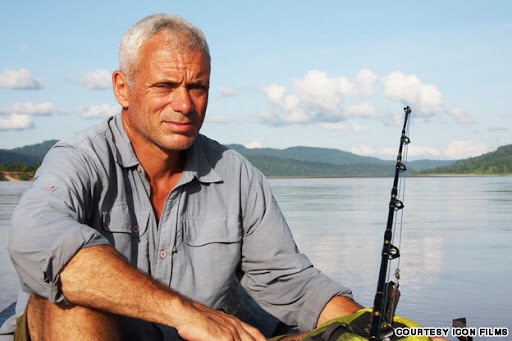
Today’s daily poem podcast is an ode to TV fisherman Jeremy Wade.

<div style=”font-size: 10px; color: #cccccc;line-break: anywhere;word-break: normal;overflow: hidden;white-space: nowrap;text-overflow: ellipsis; font-family: Interstate,Lucida Grande,Lucida Sans Unicode,Lucida Sans,Garuda,Verdana,Tahoma,sans-serif;font-weight: 100;”><a href=”https://soundcloud.com/robertdgarnham&#8221; title=”Robert Garnham” target=”_blank” style=”color: #cccccc; text-decoration: none;”>Robert Garnham</a> · <a href=”https://soundcloud.com/robertdgarnham/a-poem-for-jeremy-wade-wav&#8221; title=”Daily Poem 33 : A Poem for Jeremy Wade” target=”_blank” style=”color: #cccccc; text-decoration: none;”>Daily Poem 33 : A Poem for Jeremy Wade</a></div>

Looking back at my first solo show at the Edinburgh Fringe

Lately I’ve been thinking a lot about the Edinburgh Fringe and what a big part of my life the festival has become. This summer was due to have been my ninth visit, and my fifth with a solo show.

The current situation means that everything at the moment is up in the air, and several reports have mentioned the precarious position the Edinburgh Fringe might be in. I can’t now imagine a year without the fringe, and if it were to no longer be a part of our lives, then this would be a very big shame indeed.

Each year at the fringe, I keep a blog and this year I looked back to 2016, the year I took my show Static to Edinburgh. This was my first year with a show on my own, having been there in 2014 with Poetry Ping Pong, and 2015 doing guest slots at other shows and performing at the Burning Eye showcase with Monkey Poet.

What I didn’t mention in the blog, (maybe I was too embarrassed!), was that I left my passport on the plane flying up and it was lost. And I knew I was going to New York a few weeks later to perform, and at the back of my mind I was thinking, uh-oh, I won’t be able to do that now. So this was eating at me all the time during the fringe.

But there were good moments, too. Breakfast with a world famous performer who told me how to go snout the whole process properly. Killing it as a guest at a comedy night and then being recognised in the street by someone who’d seen me at that gig. It was a rollercoaster of emotions!

The other thing was that my show had moments of silence and prop work, performance art and movement, and my venue was the corner of a bar. So it was impossible to perform the show the way that I wanted it. By the end of the week, I really was thinking of giving up spoken word. I remember my last show was as a guest at Boomerang Club, and I genuinely went into that gig thinking, wow, this is my last ever performance!

Things turned out well in the end. Static at Edinburgh in 2016 was a turning point because it showed me that I had to work harder at performance poetry, and make it a career, and that I needed to be way more professional. The meeting with the famous fringe performer, which you’ll read about below, certainly changed my whole way of working and mindset towards the whole process. Indeed, maybe that was the turning point of my career. I still use his methods now, every single day!

So anyway, here we go. Time for a crazy adventure!

Day One

Well here I am then, on a train heading to the Edinburgh Fringe. Well, almost. First of all I’m going to Woking to spend the night in a room over a pub, and then tomorrow morning I will be flying up. It was either that, or fifteen hours on a coach. In fact it’s cheaper this way than getting the train. How ludicrous is that?

So how am I feeling about all this right now? There are several emotions. I’m nervous, naturally, that everything is going to go tits up. Nobody will show up for any of the gigs, and when they do, I fall into that age old trap of being crap. I’m excited, because this is the Edinburgh fringe and a lot of my friends will be there. I’m also grateful that I am able to spend an entire week immersed in art and culture.

I’m also nervous that the logistical arrangements I’ve made will fall apart. The accommodation, the travel, the train, the plane.

So here so am, then, on the train, and I’ve managed to get a high profile seat in first class. It was a whole three quid extra to get in here, and I feel privileged, because they don’t just let anyone in. That three quid means a lot.

And I’m the only one in here as the train leaves Exeter, which makes me feel kind of poncey. But then a lusciously blonde muscular lad sneaks in and plugs his mobile phone into the charger. A minute or two back he’s later to look at his phone. Then he slides in, commandeers the seat for himself. Good move!

And oh mamma, what a good looking chap he is. Amazingly he offerere me a Fruit Pastel, and then we get talking. Where are you going? Woking? Me too! Where do you live? Paignton? Know it well! What do you do? Spoken word artist? I’m a property developer. And we chat for ages, about books he’s read, his love of To Kill a Mockingbird, his skills as a weekend surfer, and then it starts to get embarrassing. Whenever I try to relax he asks something else, and all the time I’m looking at those luscious legs.

At Honiton he gets off and meets a man on the platform who gives him a suit in a bag. He gets back in and looks at the suit, the tie, spreading them out on the table. Very smart! We chat some more, and then the man comes to check the tickets.
You’re in the wrong section, he says. Please move back to the standard class.
I’ve still got two hours of this train ride to go, but I’m already thinking, ah, yes. The adventure has begun!

And will I still be thinking of this blond lad in seven days time?

Day Two

Heathrow

So here I am now at Heathrow Airport Terminal Five. I stayed last night in Woking, which is one of my favourite towns and a place where I’ve spent a lot of time. When I booked into the hotel I asked if it was okay to pay with a debit card. We accept anything, the receptionist said, apart from goats.

It seems kind of unreal at the moment that I shall be performing this afternoon in another country. Okay, that country is Scotland, but when you’re used to Torbay, anything north of Newton Abbot is dodgy ground. The coach driver from Woking to the airport was incredibly jolly and rather envious of my old suitcase, which forms part of the show. You don’t see many of those, he said.

I expect the baggage handling crew are saying that too, right at this moment.

Edinburgh

It was a weird day. I mean, they talk about the madness and the insecurity which hit some more than others. Has it already hit me?
The flight was fantastic. The stewardess who found me an empty overseat locker advised me to use it quickly as those who bring suitcases on board will nab it. She was one of the jolliest people I’ve met in a long while with an evident love of life and a loud booming laugh which echoed from the galley all round the plane.

The flight was 45 minutes. It took 30 to get my case at the baggage reclaim. I caught the bus to the city centre straight to my venue, arriving ten minutes before my show. The audience seemed to enjoy it, (both of them), but I treated it as a rehearsal and afterwards pondered on a raft of changes I might make for the rest of the run. I also need to be louder. Tomorrow will be an entirely different matter.

I walked the mile out to my student accommodation, then realised that I’d left my jacket at the venue!

It was great to see Dominic Berry and Chris White, and later on I bumped into Rose Condo, Dan Simpson and Rob Auton.
It’s going to be a mega week!

Day Three

I am deep into the Fringe, now. Yes, I know that sounds weird. But I’m into the rhythm of the Edinburgh Fringe and what it means to be here, which is to say, the usual routines of flyering, exit flyering, chatting to people, finding out when other people’s shows are, and that big contentious issue, the Bucket Speech.

What is the Bucket Speech? Well, this is the free fringe, so we don’t get paid to perform, but we don’t have to pay the venue either. Because of this, we are not allowed to charge visitors entry, but we are allowed to pass round a bucket at the end. Now I was having serious philosophical thoughts about this and I decided not to do a Bucket Speech, (the bit at the end of each show where you ask for donations), and instead make the whole thing free. Yes, really. Absolutely free.

I’m not yet sure if this is a good strategy. For me the joy is sharing the words and meeting people. There’s no way that I’d recover the costs of coming here. Now it must be said that I might change this philosophy, depending on how things go.
I have been flyering. But I haven’t really done that much. Yesterday I did lots of flyering in the Royal Mile, but then got bored, so I went to the museum and I had an excellent time.

I’ve met so many friends up here, people who I know from so many different parts of the country, like Rose Condo, who I met in Manchester, Dan from Bristol, and Sam Webber, who I know from Barnstaple. Today a friend is coming up from London. It’s like the annual meeting place of performance poetry.

The plan for today? More flyering, and I’ll be performing on the Royal Mile with some other poets. I haven’t even thought about open mic nights yet, or anything like that.
And the Fringe Flu? I haven’t caught it yet.

Day Four

My student accommodation is down the hill past the Scottish Parliament, turn left, then walk halfway to Glasgow. It’s a brand new building with one or two snags, the first snag being that it’s bloody hot even with the windows open, the second snag being that the sensor light in the bathroom stays on as well as the extractor fan for about an hour after use, the third snag being that it’s so far from the centre of Edinburgh. But that didn’t stop me being waken at seven this morning by what I thought was thunder, turned out it was a bloody cannon being fired. Is that normal, or are we at war? It sounded like they fired it right next to the building.

I’ve reached an odd point in the fringe, now. I don’t care if I don’t get anyone to come and see the show, now, because I’ve done it a few times and I’ve had an amazing time doing so. If nobody turns up, then I get an hour off! I mean, the way I look at it is that I’m offering to do a show at three o o’clock every day, and if no ones up for that then, OK, I’m all right with that.

I went to a few shows last night. Gary from Leeds, funny and as human as ever. Dominic Berry,enthusiastic and genuinely inspirational. I wore a tshirt advertising my show, and I thought, that’s a good move. The moment I stepped out the building someone yelled, in a. American accent, ‘Hey buddy, like the tshirt. Naaaahhht’. He’s probably a Trump supporter.

The agenda for today is a few more shows but first I’m off out in search of some modern art. Modern art is my passion and I want to see something inspirational.
Another early night tonight. I’m such a lightweight. The other night I went out with Dominic and Chris White, feeling like an old man. We didn’t even get to where we were going before I apologised and said that I really had to go home to bed, it was almost ten o’ clock. In fact, compared to all the other spoken word artists, I feel like a very old man. Even Gary from Leeds, baldies that he is, is ten years younger than me. I don’t drink, and I really can’t take these late nights. There’s an open mic at eleven pm every night by which time I’m usually in bed. Maybe that’s what’s keeping me sane?
I’m using the wifi in McDonalds to write this. I’m trying to see as much local culture as I can.

Outside my venue

Day Five

Well that’s another day done and dusted. I’m really into the rhythm now. The rhythm of expectations being cruelly dashed. Yesterday’s audience was a very minimal two. I asked them beforehand if they were there to see my show and they said, no. But do carry on. Don’t mind us, we’re just here for a drink and a chat. I did a couple of poems without any microphone and then took a couple of selfies. Can’t let an opportunity like this go to waste!

I made the mistake yesterday of going to the modern art gallery instead of flyering. I mean, I’m on holiday. There was an exhibition of Joseph Beuys, one of my favourite artists. I couldn’t spend a whole week here and not see it! The only trouble with Edinburgh’s modern art gallery is that it’s such a long walk from the centre of the city. So the whole trip took about two and a half hours.

Then an offer of a gig came through, representing Team Poetry at Stand Up And Slam, which is a poetry verses comedian slam. Everybody there was so young and whoopy, and the music was so incredibly loud, and the MC shouted and wailed and I couldn’t make head nor tail of it, but I went up and performed and the place went mad, I won my round and helped the poets win the whole contest. At the end we had to come out with slick jokes or short poems on a given theme and the theme was drinking, so I did the following haiku:

The man with no arms

Fighting in the local pub.

He was kicking off.

Which also brought the house down, and it was only afterwards, like, seven hours afterwards, that I thought about the Fringe joke competition and how it might have stood a chance in that. Had they not already done the competition at the beginning of the week.

So here I am, about to go out flyering and stuff. My legs are aching and it feels like I’ve lost two stone. It doesn’t look it, but it feels it.

Just a quick word about the show I saw last night, Dandy Darkly’s Myth Mouth. It was flipping fantastic! Storytelling and humour, camp wonderfulness and a celebration of the joy of living. Go and watch it!

My view while flyering

Day Six

Some of my performance colleagues here have been in Edinburgh for the whole three weeks and the fatigue is starting to show. There’s a certain numbness to them, as if they are kind of ever so dissociated from the world around them, a weariness, and most amusing of all, a slight loathing of anyone who’s just arrived. Last night I went to see AF Harrold at Hammer and Tomgue. AF is one of my favourite performers and a jolly decent chap too. He’d just arrived in Edinburgh and he was sharp, articulate, funny, alert. You could sense the love in the room.

I’ve only been here a week, of course, but a fatigue of sorts is finally starting to manifest itself. Having said that, I’ve finally got the art of flyering down to a tee. I spent the first few days oblivious to the fact that you have to make an impression and sell your show in about 2 and a half seconds. I’d spend the first two seconds of that time by saying hello. By which time they’d walked on. But now I just blurt out, ‘Free poetry show? Free poetry show? Free poetry show?’ And then act very relieved when someone takes a flier.

My legs ache like anything, I’ve been up and down that sodding hill so many times. I found a short cut the other day, it cuts a minute off the journey, and it was like the best thing that has ever happened. I’m starting to feel like a local. I see people making fundamental navigation errors and I’m thinking, Pffft, tourists! I’ve also built up this witty repartee with the man in the newsagents near my accommodation where each morning he pretends not to recognise me from the day before. Oh, how we laugh.
So there are two more Statics to go. But already I’m thinking of new projects, ambitious ideas gleaned from watching so many wonderful shows. I haven’t seen much poetry: the spoken word shows are storytelling in the main part, and very funny at that. However, I’ve found poetry in the best of places, such as Dandy Darkly’s fantastic Myth Mouth, which I really, really recommend. It’s perhaps been the most inspirational show I’ve seen while in Edinburgh, and the one that has really spoken to me.

It was misty and cool yesterday and I felt right at home. Today it is hot and sunny and I’m not looking forward to it.

I still haven’t seen any of my flat mates and the same packet of pasta has been in the fridge now for five days.

Day Seven

So the good thing about the fringe is that you see all kinds of different acts and the potential for being inspired is heightened. I’ve seen so much while here that I’ve got a very clear idea of where I need to be and how the show can be massively improved with just a few small tweaks. Yesterday I was very privileged to have breakfast and a long chat with one of my favourite performers, (who wishes to remain anonymous because of the trade secrets that he divulged thereat). We met at a coffee shop in the new town area and he took me through every aspect of putting on a show, from the logistical detail of publicity and accommodation, to the more fundamental aspects of rehearsal, writing, learning the damn thing. It was the most enlightening couple of hours I’ve spent in a long time, as he imparted information which an artist might ordinarily have to cough up a lot of money for. I bought him toast and coffee to say thank you. In fact, I was so inspired that I went away and did a little bit of writing right then and there.

Now, obviously I should have been flyering. And I did a lot of flyering yesterday, both in the Royal Mile and Cowgate. I flyered like you wouldn’t believe. And while I was flyering I was thinking, I shouldn’t be doing this. But it’s a necessary evil. Spoken word show? Hello madam, I’ve got a show today at three. Spoken word show? Spoken word show?

It’s a lonely business, flyering, even though you’re surrounded by people. You’re surrounded by all the other flyerers. And they’ve all got various degrees of annoyance, like the pushy ones, or the cheeky ones, or the ones who are just plain rude, and even those who insult anyone who doesn’t take a flyer. What’s that all about?

So I did all this flyering, and what do you think happened? No audience. I could only be philosophical about it, of course. I’m at the fringe, yes, but really I’m not that well known in the slightest. My show is on directly after Harry Baker, and he’s a world slam champion. And I’m also a slam winner. Well, second at the Swindon slam, anyway. Later on in the day I watched Gecko’s excellent show and he did a song about the painting that shares the room with the Mona Lisa and I thought, hmm, I know exactly how it feels!

But it’s all a great experience and a valuable learning opportunity. I’ve seen so much that has inspired me that I know exactly the manner and tone that I shall be adopting in my writing. And yes, I’m probably the oldest performer on the spoken word scene up here by quite some margin, but I feel all new and eager to get on with it.

My venue

Day Eight

So that’s it, then. I’ve done the fringe at Edinburgh with my first solo show. And I managed to combine it with a holiday, my first for a year or so. I think it was only in the last day when I thought, OK, better work at this. And wowzers, I spent four hours flyering. I flyerered in the Royal Mile. I flyerered in Cowgate. I went to other people’s shows and flyerered on the way out. I flyerered by mistake when I went in a shop to get some water and left my flyers on the counter. I flyerered like a machine which has been built just to flyer. And if all paid off, seven people came to the last show and they gave me money even when I did my ‘don’t worry, there won’t be a bucket speech’ speech.

Last night I had a feature slot at Boomerang Club. I’d been feeling a bit weird all day before that, what with all the flyering, and I even thought, hmmm, what if this is my last ever performance? I mean, last ever. What if I called it a day after this, after the Boomerang Club? It was only a fleeting thought, and it kind of mixed up with the knowledge that I would be going home, to make me feel unusually emotional. Plus if you’ve read my blog you’ll know that I’ve been having vision problems, which makes life difficult at times and has affected my ability to perform and read at the same time. So I did a set of all my favourite poems and finished off with my most favourite of all, ‘Plop’, which seems a good summing up of my performance career. But I also started the set with a brand new piece, which I call ‘Introduction’, a piece I wrote after my meeting the other day with a top fringe performer who really inspired me. And I thought, ‘If this is to be my last ever performance, ever, then why a, I writing new material?’ As I say, it was only a fleeting thought!

So here I am at Edinburgh Waverley station. I’m in Starbucks. And I’m feeling chipper about the future. Static is done and dusted but I’ve started rewriting it and I have a very clear idea of how it will evolve. It might still be Static, or it might be something entirely different, but it will be a different beast, and I’m really looking forward to the challenge of rewriting it, rehearsing it, learning it.

This has been the most incredible week and a huge learning experience. I’ve had so many adventures along the way and seen so much good stuff, and I’ve felt younger than I have in years, and also older than I’ve ever felt. I’ve got one or two projects on the horizon that I can’t wait to work on, performance art pieces and a multi-disciplinary piece which I’ve written and is very funny indeed, the music project, the novel, there’s so much on the go at the moment! It all makes me wonder what the next year will bring till I’m back here again.

And I remembered. Yes, I remembered. Do you recall my first blog, the one I wrote on the way to Edinburgh? I remembered the lad who came and sat with me, all those days ago, who charged his phone and we chatted. I thought I’d forget all about him, but I remember. I hope he’s had a good week, too.

Robert Garnham’s 17 Golden Rules for Getting the Most Out of Life!

Robert Garnham’s Words of Advice

1. No one is ever worth writing a poem for, though every now and then you’ll meet someone who’s worth a limerick, particularly if they come from Chard.

2. If someone tells you that they love you, it’s not always a test, it’s an affectation of the status quo, a joy delivered in the beauty of a relationship which actually works, so it’s best not to answer with, oh, that’s good.

3. Shrimp will always give you raging guts ache.

4. Hold on to your nostalgia, otherwise you’ll have nothing to be nostalgic about, except possibly for the time you used to be nostalgic about things, so maybe you can be nostalgic about that.

5. Look at your life. Isolate your fears, your demons, and anything else that gives you the willies. Engage with them and dance, and banish them with a smile and a wave and a cheer. Unless, of course, the thing that scares you the most is crushing loneliness.

6. It’s never too late to learn. It’s never too early to forget.

7. Only concentrate on that which requires no thought.

8. You might not ever mention the elephant in the room, but you can certainly wonder how it got through the door, and up the stairs.

9. Look at the mirror every morning and say, I am loved, I am loved, I am loved. At least this way you’re prepared for any other bullshit that comes along.

10. Everyone you see or meet or talk to has been born. Even Avril Lavigne. And if you think being born was difficult, try getting a mortgage.

11. Go on, help yourself to the last cake in life. Living is all about grabbing the last cake. Go on, have it. Enjoy it. The dog licked it.

12. Get up early one morning, when the dew is still on the grass, and go for a walk barefoot in the park. Let me know when you’re doing this so that I can come round and borrow your vacuum cleaner.

13.Do something that excites you every day. Subvert the rules. Turn things on their head. Naturally this does not apply if you’re an airline pilot.

14. How do we know that opening an umbrella indoors is bad luck? Who was the first person to discover this? How many similar things do we do which are good or bad luck without us knowing? Brandishing a vase on a Thursday? Sitting on a pouffe just after lunch? The mind boggles, Mrs Henderson, the mind boggles.

15. Give as much joy to the small things in life as you do to the large. Which is why me and my ex split up.

16. If at first you don’t succeed, then maybe catching bullets with your teeth isn’t the job for you.

17. If you don’t think you can get it out, why the hell did you put it in there in the first place?