With a sonnet so perplexing as this, there only seemed the one course of action: to call in the literary investigator, Professor Zazzo Thim.
He asked for accommodation on the second floor, where he might afford a view of the lawns and the sculptured hedgerows. He said he wanted to see a peacock. He said he had never seen a peacock, not a real one. I reminded him of the bad sonnet, that he had a duty to perform. I want to see the peacocks first, he replied, dropping his bags in the hall and rubbing his hands together with glee.
I reminded our guest that he had a job to do, that he had been promised a quite substantial sum to analyse the sonnet we had uncovered in our renovating of the library.
“Yes”, he said. “Yes, of course, how silly of me to forget. I am here for a specific reason and your hospitality should not be taken for granted”
The old man was taken to his room and I repaired to the library, expectant of his appearance therein. It was a crisp autumn morning and a mist rolled in from the vales across the lawn in front of the french windows. As a devotee of literature in all its forms, I had been intrigued to discover the sonnet in a notebook hidden in a crevice between two shelves and I was anxious that the work be scrutinised. that any literary merit might be deduced from its faded pages. Upon inquiry as to who might best carry out this investigation, I was told that Professor Zazzo Thim was at the very top of the profession, and I spared no expense at securing his services. I looked out on the mist-shrouded gardens with my hands behind my back, expectant and looking forward to the knowledge that he would impart, only to see his decrepit form ambling across the eastern lawn in hot pursuit of a peacock, waving his arms in the air, and hooting with delight.
Over dinner he showed no sign of his exertions. He leaned his padded elbows on the edge of the table and grinned at me. “You know”, he said, “This whole place exudes a certain atmosphere. I can tell that there might be more to it than just the one sonnet. I fear, my friend, that this whole building might conceal a wealth of literary surprises”.
“How so?”, I asked
“It has a certain feel to it, the same sensation I get when I walk into a library for the first time, or museum, or even a bookshop, and sense that words have been played with here, that language has been exerting itself, contorting into new and uncomfortable positions for the benefit of general entertainment”. He then grinned, and leaned closer. “And another thing”, he said. “You’ve got peacocks here”
“And what of it?”
“Peacocks congregate around places where sonnets have been written. It is a well known fact in the literary community. Wherever you see peacocks, there have been works of great power created. The peacock, you see, operates on the premise of sonic reverberations, and, in particular, the beat created by iambic pentameter. Mark my words, young sir, there are sonnets in this house!”
That next morning we met in the library and I showed him the notebook I had found during the renovations. He sat down next to the fire and, with a quizzical expression on his face, began to examine it in detail with a magnifying glass. The wood crackled and spat, and I stood there, awkwardly, with my hands behind my back. The old man was a sight in himself, every facet of his aged countenance concentrated upon the page, his thin, bony legs crossed at the knee, the long, slender fingers holding the magnifying glass daintily, as if he might lose all thread of his conscience if he were to hold the handle too tightly. At long last he turned to me and he said:
“It’s a sonnet”.
“I know! I know!” I could not help the tone of exasperation in my voice, for I had long imagined this moment.
“Ah”, he said. “You mean, you want me to analyse it in some greater depth?”
“Yes!”
He gave a great sigh and leaned his head back in the chair. “That could take some time”, he said.
“Is this not what I am paying you for? You may have all the hospitality you need, but I want a thorough dissection of this poem so that we might know exactly what it is about, where it came from, and what it means for the history of this house”.
“Fine”, he said. “Give me ten minutes”
I went for a walk around the gardens. The winter chill bit into me and I pulled the coat around my shoulders. The old man was plainly mad and I wondered if he really knew what he was doing. The university department, it is true, had seemed glad to be getting rid of him for a while, or at least, that was the impression I had received from their eagerness to unload him on me. Yet he had not come without his plaudits. I had entered his name on a search engine to find a list of credible achievements in the field of literary extremism, as well as several spoof web sites in which his methods were derided and mocked by affectionate ex-students. The more I thought about him, the more I told myself that he was a gentle man, an eccentric devotee of literature who would, I was now certain, get to the bottom of the mystery of the sonnet.
At this moment I heard a strange hooting sound. I turned a corner to see Professor Zazzo Thim, his arms outstretched, inches behind a peacock, which appeared to be running for its life.
We met again that night over sherry in the grand hall. “I must say”, he told me, “I was surprised and enthused by the sonnet. It is a peculiar work, but it fits all the criteria of a Petrarchan sonnet, with a rather perplexing turn and a couple of cheekily-placed caesura, and a rhyme scheme which lends it a certain credibility. Yes, my friend, you have a sonnet and I think you should be proud of it”
“I am glad”, I replied. “I feared it may have been nothing but a cheap imitation”.
“It is a fine work, which, within its lines, compares the love of a simple country boy for a young milk maiden, for the simple joy a cow feels upon milking. Some of its imagery could be seen as quite daring for its time.”
“Such as?”
And now the Professor quoted, “How joyously, betwixt thumb and forefinger, the teet is squeezed”.
“I see”
“But my friend, there are greater mysteries here, are there not?”
“What do you mean?”
“The peacocks, I note, are particularly agitated in my presence”
“Perhaps that’s because you keep chasing them all over the place”.
“I’m sorry?”
“Nothing”.
As I was saying, the peacocks , perhaps knowledgeable of my literary credentials, are loath to let me into certain pars of the garden as if they are protecting something. Have, you ever noticed this before?”
“I can’t say that I have”.
“It is a quite odd manifestation, and I think it should be investigated at this moment. You see, it is my prognosis that the peacocks are protecting another sonnet, perhaps one of such magnificence that its iambic pentameter powers them and keeps them agile in these autumnal frosts. Surely, by now they should be deep in their hibernation”.
“Peacocks do not hibernate!”, I told the old man.
“Then you see, they are being energised by something beyond our control.”
At this, Professor Zazzo Thim pulled on his jacket and slugged back the last of his sherry. “Come, he said, “We shall investigate this moment!”
Indeed, his enthusiasm was infectious. We left the grand hall and, by way of the main front door, entered the grounds of the house. Zazzo led the way, despite the cold, and a frost which had already begun to form on the lawns, a sparkling white which lent an ethereal splendour to the night. How strange that the peacocks should still be so restless, and not confined to their winter hut. For the first time I started to believe that the Professor might even be correct in his assessment, that the peacocks were hiding something, that they didn’t want us to proceed any further.
The gravel paths crunched under our footsteps and the lawns were hard with frost. The Professor was fearless as he pushed his way through the peacocks, their tails fanned as if in some attempt to halt our progress. And it was so cold, down in the hollow where the ornamental gardens were laid, a strong coldness which gripped my body and chilled me right to the bone. Our breath turned to vapour in the light from the torch, while the peacocks followed us down the hill, constant footsteps in our wake. At last we turned a corner to find a barrier of them blocking our path, their tails fanned, an impenetrable wall.
“What should we do?”, I asked, now fully reliant on the old man.
“We must do as they want”
“But we might risk the whole project!”
The beady eyes of the peacocks bore down on us, and, as one, they started to call, their shrill exclamations bouncing back at us from the shrubbery, from the trees and the bushes of the ornamental garden. A cacophonous moment, both frightening and sublime, and, with a force I had never seen before, they guided us, gently but persistently, into the entrance of the maze.
We were running now, running with them right behind us. We couldn’t stop, there would have been no option but to be pecked to death by their beaks. We turned corner after corner in the maze, the scampering feet of the peacocks just inches behind us, until, as if they had guided us, we were in the very centre, the small statue of my great, great uncle which marked the epicentre of the maze.
And there we saw them, hundreds of them. Peacocks lined around the hedges, as if in parliament, and were in the middle of them, just us and the statue.
“This is it”, I whispered, “This is the end”.
“On the contrary”, the Professor replied.
He bent down and began to wipe his hand along the wording on the plinth of the statue.
With a beating heart, I saw as the moss and the dirt began to be flaked off, and a poem be revealed to us, centuries old perhaps, yet persistent in its survival. The peacocks began to crowd around. The stone letters, so regular and formal in the light from our torches, archaic in their construction, their sentence structure.
“A sonnet!”, I breathed.
But the Professor was frowning. He crouched down and worked his way around the plinth, reading as he went. “It has a rhyme scheme”, he said. “And a ceasura, and a definite turn between the sixth and seventh lines. Yes, a sonnet, but….
By now, the peacocks were crowded in on us, as if they, too, were trying to read.
“But what?”
“There’s a syllable missing in the ninth line”.
“Read it to me!” I urged The Professor bent closer.
‘And yet my old heart it be not saved””.
“Nine syllables”, I whispered, counting them on my fingers.
The peacocks were pushing against us now, evil in their intent, crowding around, and they could surely have crushed us if they had the inclination.
At this, the Professor reached into a pocket and pulled out a chisel. And then, using a rock to hit the top of it, carved a small accent over the ‘e’ of ‘saved’ to transform it into ‘savèd’.
The result was instantaneous. The peacocks drew back, satisfied, then began to file out of the exit, allowing us to follow them into the cold night, from where they went back to their winter hut for hibernation.
The Professor and I returned to the Grand Hall and helped ourselves to another sherry.
He left the next morning and I was more than happy to cough up the extra money he demanded from his extra investigations. How happy we both were, to have solved a little mystery and put right the travesty of a bad sonnet. I thanked him once again as he clambered into the taxi, and as it pulled away he rolled down the window and he waved, smiling. His last words to me were:
“The peacocks shall bother you no more”,
I went back to the library and looked once again at the poem l’d found, the old notebook, now so faded as to be hardly recognisable.
I counted down the lines. “Hang on”, I said, to myself. ‘This isn’t a sonnet! It’s for fifteen lines!”
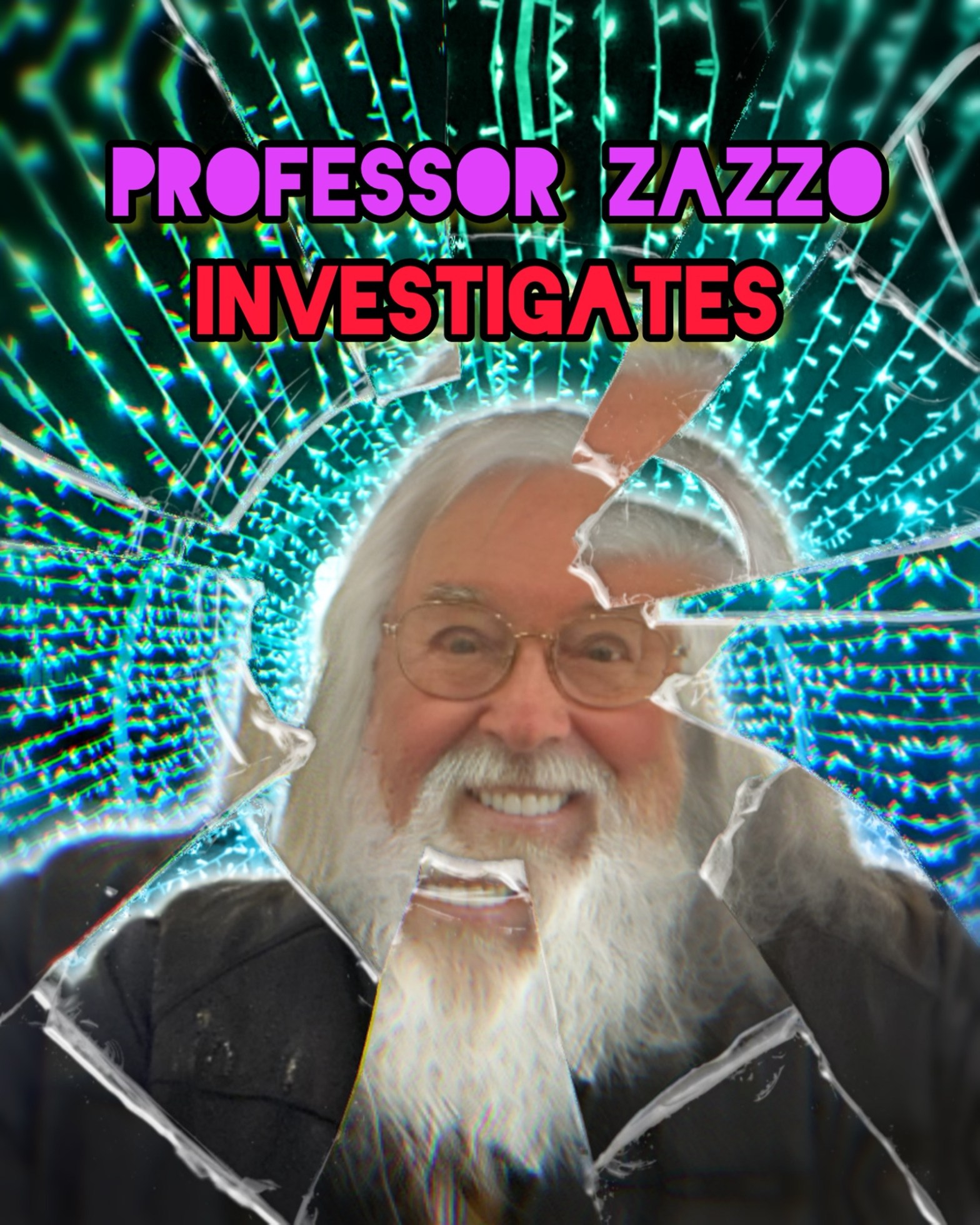
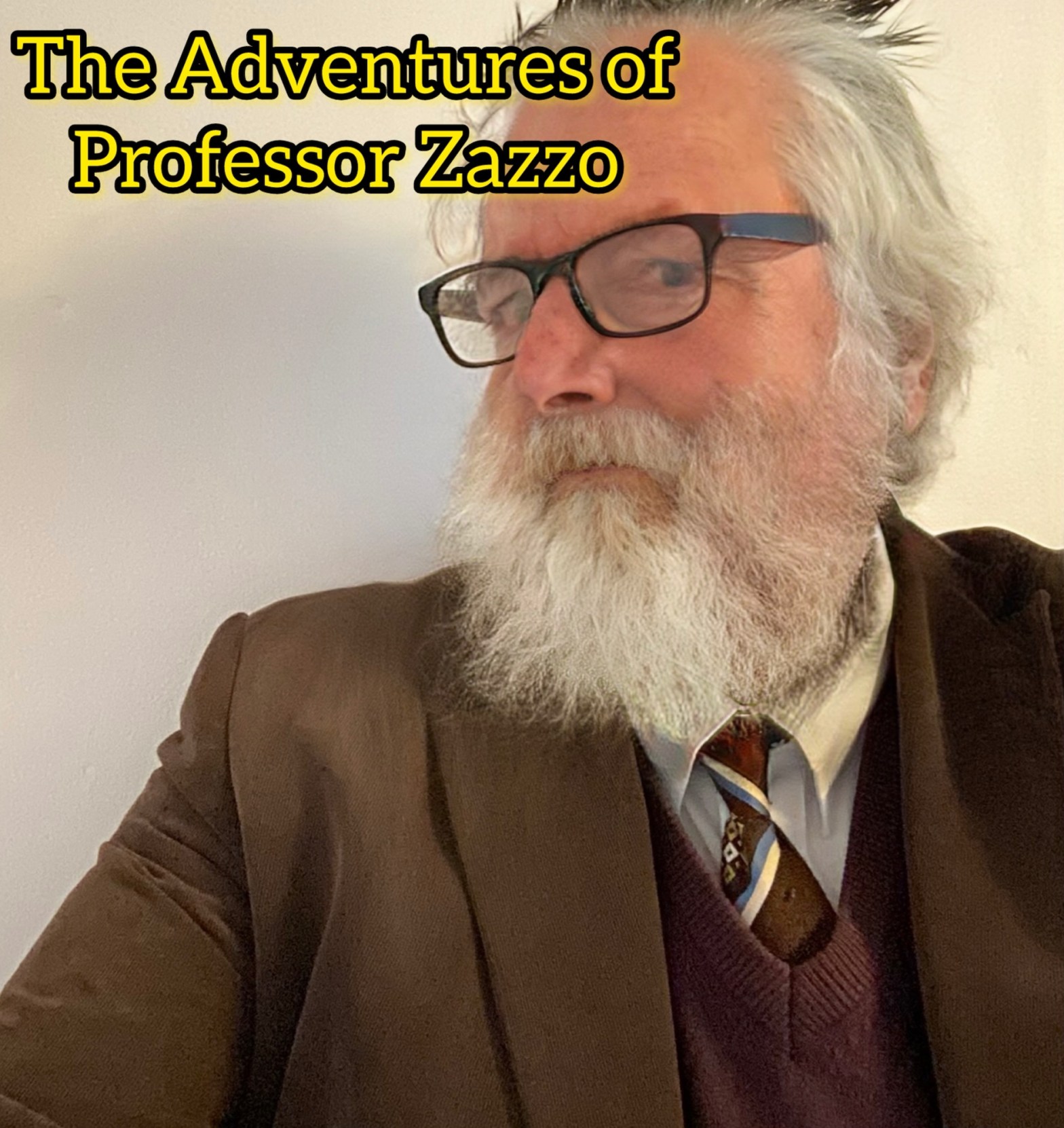
Between the late nineties and the mid 2000s, I wrote hundreds of short stories. This was a very hectic time in my life, and probably needlessly so. In 2000, I moved into a gothic flat near the seafront in Paignton, almost directly over the road from the shop where I worked. I was studying Open University every morning, getting up at 5, studying 6-9, going over the road and working 9-5, then home, and spending every single evening writing short stories. On my day off I’d attend a Writers’ Circle and it soon became apparent that the other attendees seemed drawn to my funnier stories. In one story, I invented a character, a professor of literature by the name of Zazzo, and soon the other members of the writers’ circle started saying things like, ‘Oh, I can’t wait to see what Zazzo gets up to next week!’ My Open University degree was in Literature, so I’d have to watch a lot of videos (it was still videos back then), and listen to lots of cassettes presented by these eccentric academic types who were a million miles away from the milieu in which I moved. I saw Zazzo as belonging to this community, perhaps barely tolerated by his contemporaries, and often shooting off at a tangent, seeing patterns where there were no patterns, narratives where there were no narratives. Zazzo was a literary investigator. Whenever there was a mystery with a literary element, Zazzo would be there. Skateboarders quoting Shakespeare for no reason? Send in Zazzo! A crab routinely predicting the winner of the Booker Prize every year? Another case for Zazzo! The discovery of yet another Brontë sister? Who do we call? Professor Zazzo! The Zazzo stories were saved on various floppy discs, and then promptly forgotten about for twenty years. I had no way of accessing them for quite some time, but now, thanks to various technological developments (and some paper versions I recently found), Professor Zazzo has been saved from obscurity! My life has moved on since those days. I’ve been working as a comedy performance poet since around 2008, and worked on various other projects, so it was a delight to rediscover this strange world. And I really hope you might enjoy reading some of the stories which I shall be publishing on this blog.
As the train pulled into the station, Professor Zazzo Thiim felt a twinge within him, deep down where he knew his heart should have been. He didn’t want to be there, he knew what was waiting for him. It was here, this very place where, years before – decades before! – he had given his infamous speech in which he had proclaimed the death, as an art form, of the short story. There had almost been a riot.
But the Professor was a sentimental man, and when he had received, in the depths of the University in which he taught literary experimentalism, a letter from a middle-aged lady who had witnessed him that day, fleeing for his life amid the baggage trollies and the tourists, pursued by an angry mob, he knew he had to go, just for old times sake. How lucky that he had given them the slip on platform sixteen, he thought to himself, as the train slowly navigated the last few inches of the track. Would anybody recognise him now, all these years later?
The grand old station was the same as it ever was. The glass roof was a dirty grey, matching the overcast skies outside, while the rusted superstructure was plastered with pigeon droppings. Zazzo pulled his coat collar around him as he stepped off the train on the worn tarmac of the platform. He felt a coldness in the air, an eternal coldness, as if all the emotion from the thousands, the millions of journeys begun and ended here, the lives separated, the people who would never see each other again, had somehow become crystallised and manifested just in him. The Professor began to shiver.
She was waiting for him at the exit of the platform, next to the aerodynamic train engine which throbbed and sizzled as it recovered from its journey. She recognised the white-haired professor from the photographs on the jackets of his various, little-read volumes on the literature of Greenland and the cultural significance of the Haiku in Guatamala. (Verdict: virtually none at all). She stepped forwards and extended her hand, then helped him with the big bag slung over his shoulder which contained the manuscript of his latest novel. They went to the station cafe.
“We talk about it even now”, she said, over a cup of coffee which steamed gently in the slant of morning light.
“I didn’t realise it was such a big event”.
“Big event?” she asked. “It was the only event”
The cafe was filled with travellers, youths with backpacks, old ladies with small trollies, all of them static for this one moment in time before they each went their seperate ways to the furthest corners of the continent. Behind the counter, the coffee machine let off a cloud of steam which moistened the ceiling, while a small radio played jazz in the kitchen. The saxophone made Professor Thim feel sad, though he didn’t quite know why. Something about the passing of the years, perhaps.
“You certainly caused quite a stir” the woman said. “Let me introduce myself. My name is Mathilda, and the day I saw you leaping over the tracks while being pursued by that mob, l was employed in the cigarette kiosk. I remember it now : your scarf trailing in the wind, the papers of your speech flying away behind you, the angry mob piling over baggage racks and the barriers like ants coming back to their colony. Nothing stood in their path! You started a change in me…”, she said, contemplatively.
“What do you mean?” the Professor asked.
“While I was working that morning I was listening to your speech. When I saw you set up on the main concourse with a soap box and a sheef of papers I thought you were just another religious nut, or maybe one of those hopeless politicians. But when you started speaking about the short story, and speaking so eloquently, I might add, I became entranced. I remember it to this day – the way you said that short stories no longer mattered, that we were all philistines because we preferred trashy novels or the television, that all writers of short stories are, in some ways, the chroniclers of the modern world, capturing moments and emotions in subtle
ways which other means can never attain. I remember the way you used to adjust the scarf around your neck as you talked, your face wrinkled in concentration. I was so captured by this! I couldn’t concentrate on my job, and when these people started crowding around you and heckling, I thought – a-ha! He has struck a nerve!”
“It’s nice that you remember” “, the Professor said, fingering his collar where the scarf would have been. He remembered the scarf, he still had it at home, somewhere.
“So I went home and I started to read short stories. Nothing major at first – romance, a bit of light comedy. Then I progressed to Dorothy Parker, Mark Twain, Chekov. After a few years I wanted more, so I started on James Joyce, Italo Calvino, even dear old Franz Kafka. Borges came next, of course, the master of them all. And now…”
“Yes?” the old man asked, fearfully.
“Now I’m reading Samuel Beckett”
“My word” , he whispered
“And it’s all thanks to you. My life has been enriched by that moment, by the passion and the fury of that one episode. I resigned from the cigarette kiosque, enrolled in university, and I began to acquire literary ideas of my own. Do you know what it means for a character to appear in a short story, for example? The characters believe themselves, for just one moment in time, to be so important as to be forever captured in the reader’s mind, and lodged there forever. Yet they do not have the longevity, the life-span of characters from, say, a novel. Such animosity exists between them! The moment in which they exist is so precious, so pure and concentrated that they could never last a whole novel with the same intensity. Just look at ourselves – if we two were to last a whole novel, we would be exhausted by the end of chapter three”
The Professor nodded, solemnly.
“I have so many ideas inside of me”, Mathilda continued. “And it’s all thanks to you. So when I read a textbook on the use of penguins in the shorter fiction of Virginia Woolf – (in which it was concluded that penguins hardly featured in any of her work) – and I saw that the author was a certain Professor Zazzo Thim, who, years before, had almost been lynched right here at this very station, I thought: T’ have to find him, I have to thank him personally for the life he has given me'”.
The Professor fingered the clasp of his briefcase. He felt so many different emotions. “I’m glad”, he whispered, above the soft saxophone solo from the kitchen. “That I have made an impact on someone’s life”.He opened the briefcase and pulled out a manuscript. “In fact”, he continued, “I would like you to have this . .”.
“What is it?” Mathilda asked, laying an expectant hand on her chest.
“My latest academic work, explaining the death of surprise endings in short works of fiction. It is my belief that all surprises have been eliminated, that nothing more can ever be said at the end of a short story which may shock or confound the reader. I have called it, ‘No More the Lonely Badger'”
“I’m touched”, Mathilda said. Zazzo passed the manuscript across the table towards her and she took it in her quivering hands. “No more surprises”, she whispered, reading the sub-heading. “An investigation by Professor Zazzo Thiim”.
“Just one more thing”, he asked. “Why did the crowd react so badly to my speech? Why did they set about me in such a hostile manner? Surely, the people of this city don’t care that much for the short story as to attack me personally, just because of my hypothesis? I’ve thought about it for the last forty years, I’ve thought about the effect I had and the passion they displayed, you see, and it, too, changed my life, it changed my ideas, and I started to devote my life to demonstrating that short stories do make a difference, and I have used the episode as an illustration in lectures, academic works and after-dinner speeches. Indeed, it could be said that my whole career has been based on this one incident! So tell me, why was the crowd so incensed?”
“Didn’t you know?”, Mathilda asked. “It was your scarf. They thought you were a United supporter.
The new fridge freezer is suspiciously quiet.
The new fridge freezer is suspiciously quiet.
I don't want to cause a fuss
And I don't want to cause a riot
But the new fridge freezer is suspiciously quiet.

Put some feta cheese in there,
Put some Camembert in there
Put some other things in there
It's very very quiet.

The new fridge freezer is suspiciously quiet.
The new fridge freezer is suspiciously quiet.
I don't want to cause a fuss
And I don't want to cause a riot
But the new fridge freezer is suspiciously quiet.

Bought it from a man from Bern
The man from Bern his name was Bern
Fridge freezer, Swiss geezer
So so quiet.

The new fridge freezer is suspiciously quiet.
The new fridge freezer is suspiciously quiet.
I don't want to cause a fuss
And I don't want to cause a riot
But the new fridge freezer is suspiciously quiet.

Have you turned it on?
Of course I’ve turned it on.
Have you plugged it in?
What am I, daft or something?

The new fridge freezer is suspiciously quiet.
The new fridge freezer is suspiciously quiet.
I don't want to cause a fuss
And I don't want to cause a riot
But the new fridge freezer is suspiciously quiet.

The old one went chigga chum chigga chum
The old one went witty witty woo
The old one went chigga chum chigga chum
The old one went to the tip.

The new fridge freezer is suspiciously quiet.
The new fridge freezer is suspiciously quiet.
I don't want to cause a fuss
And I don't want to cause a riot
But the new fridge freezer is suspiciously quiet.

The new fridge freezer is suspiciously quiet.
The new fridge freezer is suspiciously quiet.
I don't want to cause a fuss
And I don't want to cause a riot
But the new fridge freezer is suspiciously quiet.
As 2025 lumbers to a wimpering snuff, many of us see a world that seems almost unrecognisable to the one we’ve always known. Division and hatred, thinly veiled racism, outright transphobia, and the prevalence of the ego have combined to create a cultural environment in which core principles of neighbourliness and humanity have taken a back seat. Other and better writers have written about this and to much greater effect. It’s hard not to see our lives, dominated as they are by so many distractions, and consumed mostly by looking at a screen or a mobile phone, as being the primary reason for this. But I’m not a psychologist. Nor an analyst. I just believe that it’s so much easier to tell a lie than it is to disprove it. And quicker, too. Do I despair of the world? All I can say is that people get bored very quickly. They want instant gratification, and now. The shock of the new.
As for me, 2025 has been, well, unnecessarily interesting. I’d had a good life for the last fifteen years, writing and performing poems while working in my job, in retail management at the same branch of a charity for almost thirty years. 2024 was marked by the drug dealers who lived in the flat above my shop. There were frequent fights, arguments, knives, needles, gangs of ne’erdowells to contend with, all happening right above the shop. I thought it couldn’t get any worse, and then, all of a sudden, it did. In February of this year, the drug dealers upset someone, (an ex-girlfriend, apparently), who then announced on social media that she was going to burn down their flat that very evening. (Incidentally, this was Valentine’s Day. How symbolic). So the drug dealers did the right and humane thing, and moved out for the night taking their possessions with them. I watched them go through the security peephole in our back door. They loaded their possessions into a car. I hope they don’t burn the place down, to cover their tracks, I thought. So it was no surprise when I got a phone call first thing the next morning to say that the shop had burned down.
Yes, it was arson. But now I found myself in a tentative position. Would I still have a job, especially in the current financial climate? What would happen to my staff, would they still have a job? The company could very well have ‘let us go’ then and there, but they were understanding. I was made into a floating manager. My job was now to travel through the south west and cover at any branch where a manager was absent. Over the course of 2025, I worked in almost every town you can think of between Bournemouth and Cornwall. Some of them I thought they’d just made up. (Midsomer pNorton?!). I spent a lot of 2025 living in hotel rooms and eating buffet breakfasts. So yes, I still had a job.
But it was my performing which suffered. I could not commit to gigs because I never knew where I was going to be staying or working. I could not rehearse, because I used to use the shop to rehearse every single morning while I was getting the place ready. I couldn’t learn lines, especially in a hotel room. I had a few wonderful gigs which I had to book time off for, including Penzance, and a quick trip to Edinburgh. I had a good enough time.
The one thing I did, though, was to work on a novel. I’d already written the first draft when I applied to Curtis Brown Creative, and amazingly, I was let on the course. Over the summer we developed the novel, and it’s looking very good indeed. I am now tinkering with it and hoping that an agent or a publisher sees enough in it to accept it. I’m very happy with it, indeed.
This last month, I was made temporary manager of the shop in Torquay. This is much closer to home, and all of a sudden, I have time now to rehearse again. It feels like things have turned a corner. They’re even due to begin building work on my old shop, (the landlord died over the summer and nobody owned the place, thereby everything came to a shuddering halt). Which is to say, I’m starting to feel like my old self again. The whimsy is returning.
So what did I get out of 2025? A lot of memories meeting people all over the south west, and a novel, and the benefit of the tutelage of Suzannah Dunn, (who really liked my novel), and a huge amount of time sat on trains. (Working in TIverton for three months meant five hours on trains and buses a day). And time to look at my fellow passengers, all watching TikTok.
The world will not change and I cannot make it. I just know that there are civil people out there, concerned for humans and humanity, opposed to stupid wars and political bullying, opposed to toxicity, big business, politics in general. Sometimes it is better to whisper than it is to shout, but I only say this because I’ve never felt entitled to shout, and that there are others who are much better at it than me.
It may not have escaped your notice that I’m quite gay. I’m steeped in gayness, ensconced in homosexuality, which I wear like a coat which sparkles iridescent in my undeniable queerness. I’m gay in the same way that Donald Duck is a duck. Daffy, too. I’m massively gay. It is my identity and I’m incredibly comfortable with it, though this has not always been the case. And it has often been the subject of my poems.
When I was younger I was downright embarrassed by my evident homosexuality and I’d get all hot and sweat thinking that at any second I’d be unmasked and that this would result not only in deep humiliation, but also the possibility of a slapping, because the world was a different place when I grew up in the 1980s. The AIDS crisis was in the news and it seemed to give the more discerning homophobe a presumably tangible reason to accelerate whatever hate their puny minds could muster. But they had public opinion of their sides, and the government, too. Section 28 was prevalent, and it was illegal even to ‘publicise’ homosexuality, whatever that meant. There were no adverts for it on television. Tabloid newspapers continually outed pop stars in the crudest of languages. Brave soap storylines were mocked. Gay accents were impersonated by prime time hack comedians. School bullies shouted, ‘Backs against the walls, lads!’, which always got a laugh. No wonder I didn’t want the world to know.
And in my council house bedroom, I tried to make sense of it all. I reasoned that it was something I’d soon grow out of. Suburbia was a place of endless bland business-orientated culture-deprived outlets, roads, infrastructures, tower blocks, office buildings, slipways, airports, train stations, noise, pollution, homophobes, and a sense of Just Getting On With Things, and it all seemed very straight. Only the M25, which is far from straight. My school didn’t have a drama department, but we were taught German because it was assumed that all future business would be conducted with Germany, and we had something called Enterprise Week every year, which was nothing to do with Star Trek. We had to start up small businesses and try to make money. Survival of the fittest, dog eat dog, backs against the walls, lads. It was in this incredibly drab world that I spent my formative years, knowing deep down that there was something amiss.
Because the sight of a bloke with his shirt off would get me all a-quiver. Not that we had many shirtless blokes in the suburbs. I now live at the seaside, where they’re two a penny during the summer, but it was much different in suburban Surrey. The only place where it seemed even remotely likely was at the amateur football matches where one could hang around after the final whistle and see what happened, though these were inhabited almost overwhelmingly by the straight male community. And once the football season ended, the cricket season would be in full swing, and cricketers are usually less prone to spur-of-the-moment shirt removal. But whatever the sport, I’d come over all ‘unnecessary’ and retreat to the sanctuary of my bedroom and ask myself, irritably, when this damn heterosexuality was going to kick in.
Naturally, I had to come out to myself. And the thinking behind it went something like this:
I don’t seem to find the opposite gender attractive.
Most people find the opposite gender attractive.
There’s nothing wrong with these people.
There must be something wrong with me.
Society (and the Bible, for I went to a very religious Church of England school) dictates that there’s nothing wrong with those who find the opposite gender attractive.
But it’s not like I chose this. I am a product of both society and (according to my school), God. But what if –
What if
What if society (and the Bible) (and God) are wrong?
Isn’t God meant to be all-knowing?
They’re obviously wrong because I know that I didn’t choose to find my own gender attractive, which means that there is no god.
I’ve looked deep within myself and I really cannot get excited by boobs.
Gosh, I’m quite gay.
The weird thing is, I can remember exactly where I was when I worked through this whole process.
It was a sunny Sunday afternoon in 1986 just a couple of weeks before leaving middle school and going to secondary school. I was in the bath, and my parents were gardening. Mum was mowing the lawn. The noise of the lawn mower came in through the bathroom window. And just like Archimedes yelling ‘Eureka!’, I felt that I’d figured out an incredibly complex scientific equation and, as a byproduct, also happened to prove the non-existence of god. I was 12 years old. The world had suddenly exploded.
Naturally, this complex equation is something that every LGBTQ person has to go through. And perhaps it’s slightly easier these days because the world does seem a genuinely more accommodating place, and a lot of the working out has already been done. Perhaps it isn’t so easy. That’s why pride is important.
For me, the shame came shortly after making this momentous realisation, of course. The pride wouldn’t kick in until around 1999, which was also when I would have my first boyfriend. And in any case, there was so much else in life that I liked. The comedy of Bob Newhart, the writings of Douglas Adams, the music of the Pet Shop Boys, Formula One motor racing, civil aviation, late night jazz, travel, Doctor Who, and my cat, Lucy. This new-found gayness was only a small part of my identity and of what made me tick. Sure, there’s something hugely exciting about a good looking bloke with his shirt off, but the same could be said for the sight of a Boeing 747. But the shame was deep and it was real, and I couldn’t understand why I had been cursed with this weird affliction which, as far as I knew, only affected two other people in the entire world. It was just Peter Tatchell, Ian McKellan, and myself. I decided that it was best to keep it under my hat,
For 13 years.
Coming out was the predictable car crash. Apparently I was significantly more homosexual than my loved ones had been expecting. This had also coincided with my first relationship and, being 1999, the pre-Millenium angst which seemed to colour the world as a place of flux. If the ultimate state of the universe is chaos, then this at least made me feel better about the cupboard under the stairs.
As I explored this – to my mind – totally unsurprising aspect of my personality, mixed as it was with the slightly more surprising fact that I’d managed to snag myself a boyfriend, I realised that I would never be able to look at the world or, indeed, myself, the same way. The world was very slightly evolving, yet the act of ‘coming out’ still felt like a political statement rather than a personal necessity. The biggest mistake certain people made at this time was the assumption that my honesty, and my declaration of who I was, had been undertaken more to upset the status quo and to be purposefully reacting against society, rather than just stating a simple fact.
But this was, and remains, a necessary and final part of the process.
I might as well confess here and now that I was not one of the world’s greatest lovers. I was with my first boyfriend, Jamie, for over a year. And even though he was a few years younger than me, he had the onerous task of showing me the basics. But we didn’t have much in common. He liked clubs and dancing and raving and I remember going out clubbing with him and asking at the bar for a nice cup of tea. My next partner was a Lithuanian who worked in a Cornish pasty factory, and while my technique in the bedroom had certainly improved, he did insist on playing Lithuanian pop music at random moments. I then went out with a nurse called Paul, and then even more bizarrely, once we’d broken up, another nurse also called Paul, which certainly made things complicated. My next boyfriend wasn’t even ‘out’, so everything had to be kept hush hush, though we were together almost ten years. And when that was done and dusted, I went back to Jamie for a bit.
I’ve now been successfully single and celibate for a few years. Obviously, I do ask myself every now and then whether this disqualifies me from the Gay Club. I don’t know what I have to do to renew my membership, but as I said, homosexuality only ever felt like a very small part of me. I have other things going on, you see. Because, (and I’m still not sure how this happened), I became a performance poet.
It took a few years before I started mentioning LGBTQ themes and queer identity in my poetry. When I first started, my poems were fun and silly, but safe and non-threatening, and to be honest a lot of them make me cringe now. I think every new artist or performer goes through a learning stage in which they’re just finding their feet, working out their voice and their technique, and for me this seemed to take quite a while. Sure, some people found me hilarious and I was offered gigs here and there on the basis of poems which I’d perform while reading from a piece of A4 paper which trembled with my nervousness. And the poems were badly in need of editing.
In truth, I didn’t really take performance poetry that seriously, at the start. It’s just something I did every other week, and I’d bash out a poem, not read it until the night in question, and then throw it away immediately afterwards. But the laughter, oh, when you write something funny and the audience laughs, that’s the best feeling in the world, and I started to realise that I wanted this to happen every time. I wanted that laughter. It was like a drug, making people laugh. But the laugher only felt good if there was some purpose behind it. And my poems were mostly about other people.
I decided that it I were to sustain this laughter and be taken seriously as a performance poet, (because it was still called performance poetry in those days), I would have to study what other people did. So I’d go on this new website that had come out called ‘You Tube’, and there were one or two ‘slam poems’ on there. (At this stage I had no idea what a ‘slam’ was). These poems would be performed in front of huge audiences, who went wild and laughed at all the funny lines.
At the time, I’d just finished a distance learning university degree in literature, so analysing content, syntax, grammar, intent and meaning were second nature to me. I applied this to the poems I was watching and I discovered that the best ones all had something in common. They were all about identity.
This was another Eureka moment, and I wasn’t even in a bath. And once again, I remember exactly where I was. It was a sunny day (again!), and I was in the living room of my parents’ bungalow (in Devon, for we had moved ten years earlier), and I was watching You Tube on my dad’s laptop. And I remember writing in my notebook, IDENTITY, and then underlining it. And that afternoon, I wrote my first ever LGBT poem.
The thing I liked about what I’d called ‘The Straight Poem’, was that it was the first poem I’d written where I became aware of its internal rhythm, and the economy with which I could defer the funny lines. I structured it like a wave, allowing the funny moments a chance to breathe, and the audience space where they could laugh. But this was only half of what was going on.
Because this was the first time that I’d written a poem which not only addressed my identity, but played around with the whole theme making homosexuality the norm, and applying the way that straight people look at gay people but the other way around. During the poem, I’m amazed that a friend has just ‘come out’ as straight. It’s a silly idea, but it visits several straight cliches and ends with an absolute stinger of a last line which never fails to get a laugh. It felt new and it felt innovative, because I’d never seen another performer address LGBT issues in such a way back then in 2010, though I’m sure that one or two existed.
There would be one or two criticisms of the poem. A well-known performer at the time, (who I’d just beaten in a poetry slam, back in the days when I could beat people in poetry slams), said that there was nothing new about the poem. Another poet, (straight, male), said that the poem was incredibly prejudiced against straight males. Perhaps he had a point, but it’s not like I was punching down.
I did quite well with the Straight Poem. It helped me come second in the very first poetry slam that I entered, in Bristol, 2013. And then it helped me (joint) win the Exeter poetry slam. This was followed up with second places in Swindon and London, and a fourth in Wolverhampton. This was a totally surprising development for me, and while I have since come to loathe slam competitions with a passion that you can only dream of, they certainly helped put my name on the performance poetry map. Or ‘spoken word’, as it was now starting to be called.
I decided quite early that the best way to help make a difference in the promotion of LGBTQ lifestyles with my poetry was to normalise such identities. Which is top say, that the humour should be based not on homosexuality as the traditional 1970s stereotypical punchline, but as almost incidental to the evident homosexual content. In other words, the poems I was writing could (hopefully) be equally funny if they’d been written from the hereonormative position. My two poems The First Time, and Orgasms, were both about sex, only the sex contained within those works just happened to be gay sex. But it didn’t matter, anyone could have been doing it, and if the sex being described were straight sex, then the jokes would still have worked just fine. Sure, the gay content added to the building tension necessary for the explosion of relief which comes with the punchline in live performance situations, but the fact remains that so many of my poems from this period were about sex because I had recently stopped doing it on a frequent basis. This had given me the ability to stand back and see sex as the bizarre act that it is. Even educated fleas were doing it, but not me.
When my first collection, Nice, came out in 2014 published by Burning Eye, a couple of copies were bought by a poet who was a workshop facilitator working with youths in an arts centre in Manchester. She put the copies in her poetry library which everyone was welcome to browse when they were looking for inspiration. One day she sent me an email with a photo attached of what someone had written inside the front cover of one of my books. ‘Not nearly enough poems about sex’, someone had written.
Also in 2014, I started work on my first solo show, Static. I decided that Static would be autobiographical, telling the story of how I came to be comfortable in my identity, but it means that I would have to write some autobiographical poems to perform amid the prop-based performance art set pieces that I had, for some reason, decided to pepper throughout the show. The poem ‘2 Abbey 1’, (which was the name of my secondary school tutor group), was about being a closeted kid in a class full of (presumably) heterosexual lads, and it was set just a couple of months after that Eureka bath moment. The poem is also about my first infatuation with a fellow classmate, (or anyone, come to think of it), who would also be the subject of a poem called Cocky, in my 2021 collection Yay!.
‘2 Abbey 1’ felt like a milestone of my poetry writing career, because it was my first purely autobiographical piece and it made me realise that my own life, ostensibly so boring as it was, could be fair game for both poetic and comedic inspiration. It’s as the first time that I had seen myself as a character in my own work, and because of this, it seemed instantly recognisable. Because we’ve all been to school, right? Amid the jokes of ‘2 Abbey 1’, there’s also this sense of underlying sadness, that this was 1986 and the world was a different place, really not quite so accepting or as accommodating as it now seems.
‘Not Flamboyant’ was also written at this time, and it’s about people not realising I’m gay, written from the imagined perspective of one of those kids in my tutor group. ‘Why didn’t you tell me?’, the poem asks. But in actual fact I couldn’t tell anyone. I’m sure they all knew, though. That said, I enjoyed performing this poem because it made the (presumably predominant) straight audience a little uncomfortable, more so that it sounded as if I were about to skewer gay stereotypes, only once again for there to be some kind of ‘sting’ at the end of the poem which changed everything around.
It was probably about this time that I realised I was turning into some kind of ‘safe’ gay performer for straight audiences. The issues I was touching on were universal and serious, but they were not being done in a preachy kind of way. Audience members could therefore enjoy the jokes as well as the subtext, and I felt pretty good about this. That’s not to say that things always went well.
Sometimes they went too well. I remember performing at a very bizarre private gig in, of all places, a florist, where they’d decided to invite some friends round, cook them a meal and then have me come on as the after-dinner entertainment. The hosts knew all about my act, having seen me perform at a local theatre. By the time it came for me to perform, the audience was very tipsy and one chap in particular had decided that he would heckle. They weren’t nasty heckles, and afterwards he announced that he rather liked the gay stuff, even though he wasn’t gay. The next thing I knew, he was hugging me tightly and kissing me on the cheek, because, well, I think he assumed that this is the sort of thing that I would like. It was a little uncomfortable and I shudder to think that he would also have done this if I had been a female performer. I suppose he just assumed that he was the epitome of male beauty and that I should have been grateful for his unwarranted attention!
The poem ‘Jamie’ was about my first romance. It was not exactly a nostalgic piece, though there were touches of pathos in between the jokes and the one-liners, and writing the poem made me realise that I could mythologise certain moments from my own past. By the time I wrote the poem, it had been 18 years since I’d been with Jamie, and that relationship was definitely something I looked back on with immense fondness. In fact, once again, there was nothing overly preachy or political about the poem, it just depicted a relationship which just happened to be homosexual, and the subject of the poem was not that in itself, but the usual memories and fondness – and break-ups – which anyone goes through, LGBTQ or not. Around the same time I wrote a poem called ‘Kate’, which detailed a failed romance I’d had with a fellow student in 1991, hoping that having a girlfriend would magically make me straight or, at the very least, prove to the world that I was, when in fact I wasn’t. The self-mythologising of these two poems, I believe, certainly made me more confident as a writer.
Writing such poems did feel more like therapy than the creation of art. I’d spent the first adult years of my life unsure of what my motives had been and how I should have acted, and having this chance to stand back and write about them with the benefit not only of hindsight, but of the justification which came through performing these to an audience, helped me to feel more at ease with my own past. By this stage of my life I was starting to feel old, and a little overtaken by the succeeding generations. I had been late to love, late to ‘coming out’, late to living life as myself, late to the party, and this had been entirely due to the culture in which I had been brought up. Suburbia, the 1980s, the AIDS crisis, my own constitution as a human being, they’d all held me back or discouraged me in ways which, hopefully, no longer hinder those who want to be who they actually are. And this is definitely the kind of world I want to be a part of, where transgender people can live their own lives and come home to themselves, and gay people no longer need the ‘coming out’ process, or those Eureka moments, because such lifestyles are accepted the same way that hetereornormative assumptions are readily accepted.
By the late 2010s, it felt like the spoken word community had changed. When I’d first started performing, it had resembled more a cabaret in which invention, props, characters, dancing and costumes had been as much a part of the spectacle as the words themselves. The fact that I was an LGBTQ performer was often seen as part of this cabaret atmosphere, a justification for its existence. I wore a sequin top hat and a pink feather boa and I did so much crazy stuff with props that I would have to lug around with me a bulging bag full of wigs and gold-embossed bric a brac. In fact, often the words themselves were secondary, as I once performed a poem with no words in it at all. And it wasn’t just me, it was almost every performer, and it was flipping wonderful.
The scene now is dominated by the ubiquitous slam style, in which authenticity and emotional truth are key. My own performances have evolved along with this. I no longer turn up at gigs with boxes full of props, though the clothes that I wear are still very much a costume. There are many more LGBTQ poets now, and this is something which I inwardly celebrate, though the emphasis at spoken word events seems less like a cabaret in which spectacle is key, and more the sort of place where lifestyles and opinions are validated. Spoken word is a platform where people can assert themselves and their beliefs, their politics, their truth, preach hope and aim to change the world, and I flipping love it. Though I do get nostalgic for the old days.
You see, I’d always tried to depict my identity as incidental to the bigger themes going on within my poems. But I realised that I would very much like to assert a level of pride. Perhaps this was because I’d always felt a little outside of the gay community, without realising that I was slap bang right in the middle of it. Perhaps it was because most of my friends are straight. Perhaps it was the political situation in the world in the late 2010s, where it felt like the world was lurching suddenly to the right. Perhaps it was because I wanted to show some kind of solidarity to the transgender community.
I started work on a new batch of poems, which would ultimately become my collection and show, Yay!, again published by Burning Eye. I wanted the poems to be upbeat and celebratory, touching not only on identity, but also issues of mental health. ‘The Queer Express’, was written as a celebration of LGBTQ history and mentions Stonewall and freedom fighting, with lines such as, ‘Our history is one of pride and those who dared to stand / And fight the law and rise above, let’s shake them by the hand’. I had real fun writing this poem, not to mention a feeling of real emotion as the rhythms of the piece seemed to lead me on to other images and ideas which gave the piece an inexorable logic. I’ve performed this poem at pride events both online and in the actual world. It’s the first poem in which I have declared belonging to a community, and celebrating that community, and it is, I reckon, the gayest poem I could possibly have written.
‘To the Car full of Youths . .’, is another celebratory LGBTQ banger from the Yay!collection, though this is based on a true incident in which I was the subject of homophobic abuse while waiting to cross the street in Edinburgh one year. I didn’t think much at the time this happened, though afterwards it got me thinking: how had they known? The poem which resulted from this starts with a little fun as I try to work out how someone could identify me as LGBT just from my appearance, and then becomes a life-affirming pride-filled roller coaster in a similar sort of vein to ‘The Queer Express’, again ending on a very Garnhamesque ‘stinger’ with a killer of a last line. Tackling as it does the theme of homophobia, this is one of the few poems I perform which needs a content warning.
‘Nathan Went for a Walk in the Rain’, is a poem about mental health. It’s one of the few serious poems from the book and I’d written it after seeing the depression suffered by a friend of mine, and how this can easily lead to suicidal thoughts. The poem is a third person piece, and the imagined character within the poem, Nathan, feels bullied by the assumptions that people make about straightness and how he approaches the world. In my mind as I wrote the poem was the idea that Nathan was LGBTQ, though this is not asserted in concrete words, and the poem works whatever Nathan’s sexual persuasion.
So I was very pleased with Yay, both the book and the show. These were written and rehearsed during 2020, (we all know what happened in 2020, but needless to say I had a lot of free time), and the show was performed between 2020 and 2022.
In late 2022, it dawned on me that I’d been performing LGBTQ material for over ten years, and that it might be something of a challenge to work on some projects which had no LGBTQ content at all. Naturally, not all of my poems are about gay issues. (In fact probably only about 20 percent rely on their being gay-based). But every single one of my shows and books had such content in them, and I felt that the world might like to see what I could do if I were to concentrate on other things.
I came back from the Edinburgh Fringe in late August and immediately started thinking about my next show. The truth is, I wanted to do something mainstream. This isn’t to say that, in spite of my poems about pride and being comfortable with who I was, that I wasn’t comfortable with who I was. It was more about the challenge of writing a new show which found its laughs or its motivations elsewhere, just to prove to myself that I could do it. After much pondering and prevarication, I wrote a show about my ill-fated appearance on Britain’s Got Talent.
This is not to say that I have abandoned LGBTQ content in my work, or that I have turned my back on who I am. Far from it. While feeling, every hour of every day, distinctly and overwhelmingly gay, the need for actual sex – and indeed, male companionship – has dissipated over the last few years. I’ve always ever felt myself to have many identities and interests beyond those defined through my sexual orientation and gender, and as I’ve got older, the need to find love or to explore this part of me has been subsumed beneath the daily pressures of Just Getting On With Things. Sure, I wear a rainbow badge and I fill in my sexual preferences on forms and paperwork whenever it asks me, and I’m not about to go scurrying off back into the closet, but I feel somehow . . . Less gay than before.
Typically, I’ve written a new poem about this very subject. ‘Not As Gay As I Used To Be’, is a poem very much from an older perspective than those I performed over ten years ago. Tongue in cheek, it mocks my current – some might say, celebate – lifestyle, and I can’t wait to start performing this poem on stage. Bemoaning the fact that my gay radar is not as finely calibrated as it once was, the poem is a more or less accurate depiction of how I genuinely feel at the moment. And of course, it ends with something of a ‘sting’.
I often wonder what the young version of myself would make of me, today. I have loved and lost, and pined, and lusted, and made love, and enjoyed loving relationships, and I’ve done everything that I ever wanted to do when I was a young man who was still trying to figure out the world. And perhaps this is the biggest thing of all, the fact that I feel that I genuinely have been able to figure out the world. I know who I am and I know my place in the grander scheme of things, and I’ve performed silly poems in front of large audiences and I’ve made strangers laugh, and I’ve spoken with honesty and with a pride which didn’t exist when I was growing up. But most of all, I’ve seen new communities and groups gain the recognition they need to help make the world a more understanding place. And I believe that it’s happening, albeit very slowly, and more so in some places than in others.
I’m also aware that even though I often bemoan the circumstances of my upbringing as a young gay man, there are people in other places in the world where things are much worse off. My poem ‘The Doors’, which appears in my collection Zebra, was written after reading an article in Time Magazine about the situation of homosexuals in places such as Uganda and Russia, places where it is not possible, and often life-threatening, to live lives as comfortably as I have managed. I have lived a life of such incredible privilege compared to these people, that I’m truly thankful.


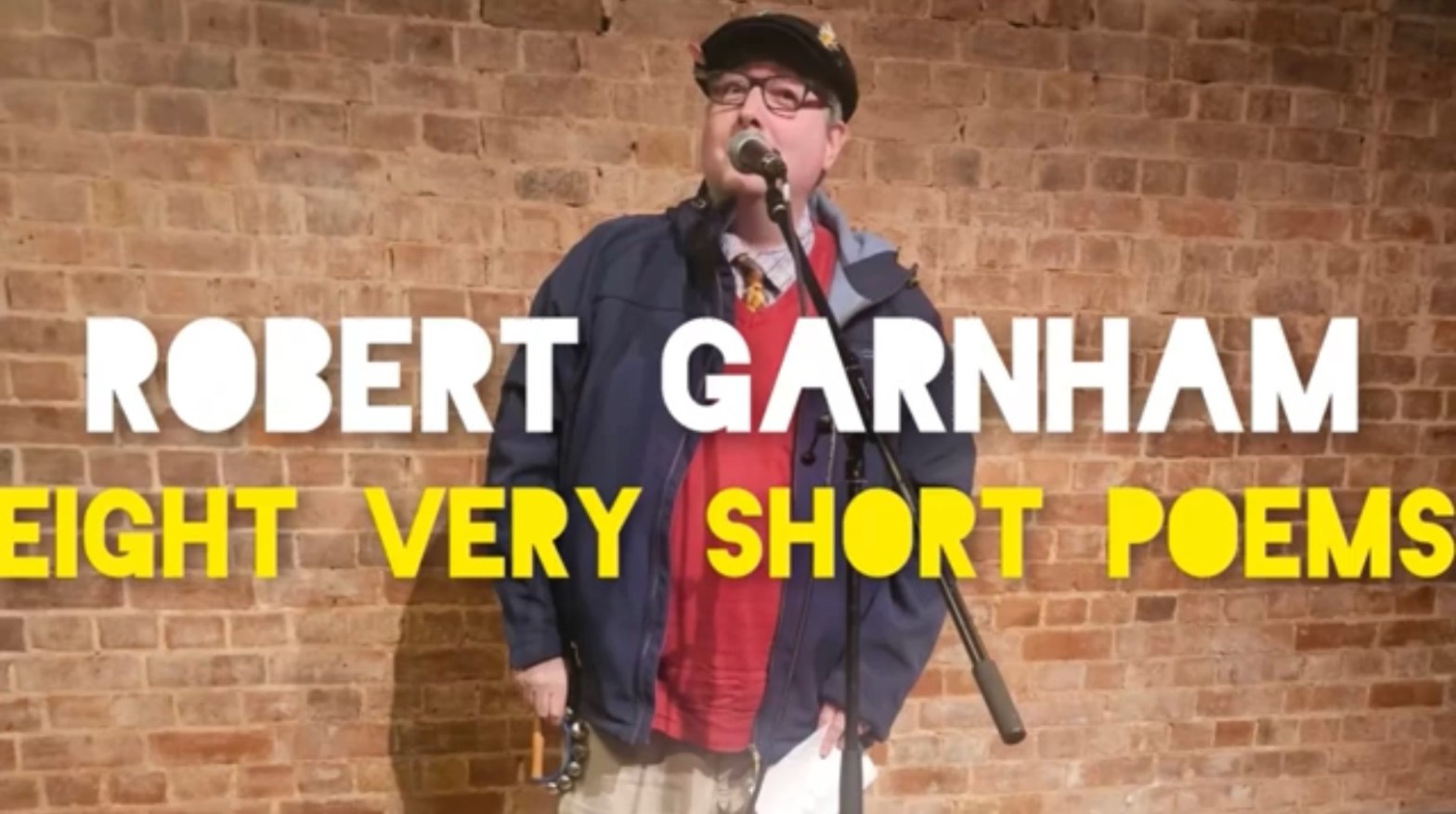


 Robert Garnham