Episode one of my unmade tv series, Professor Zazzo Thiim


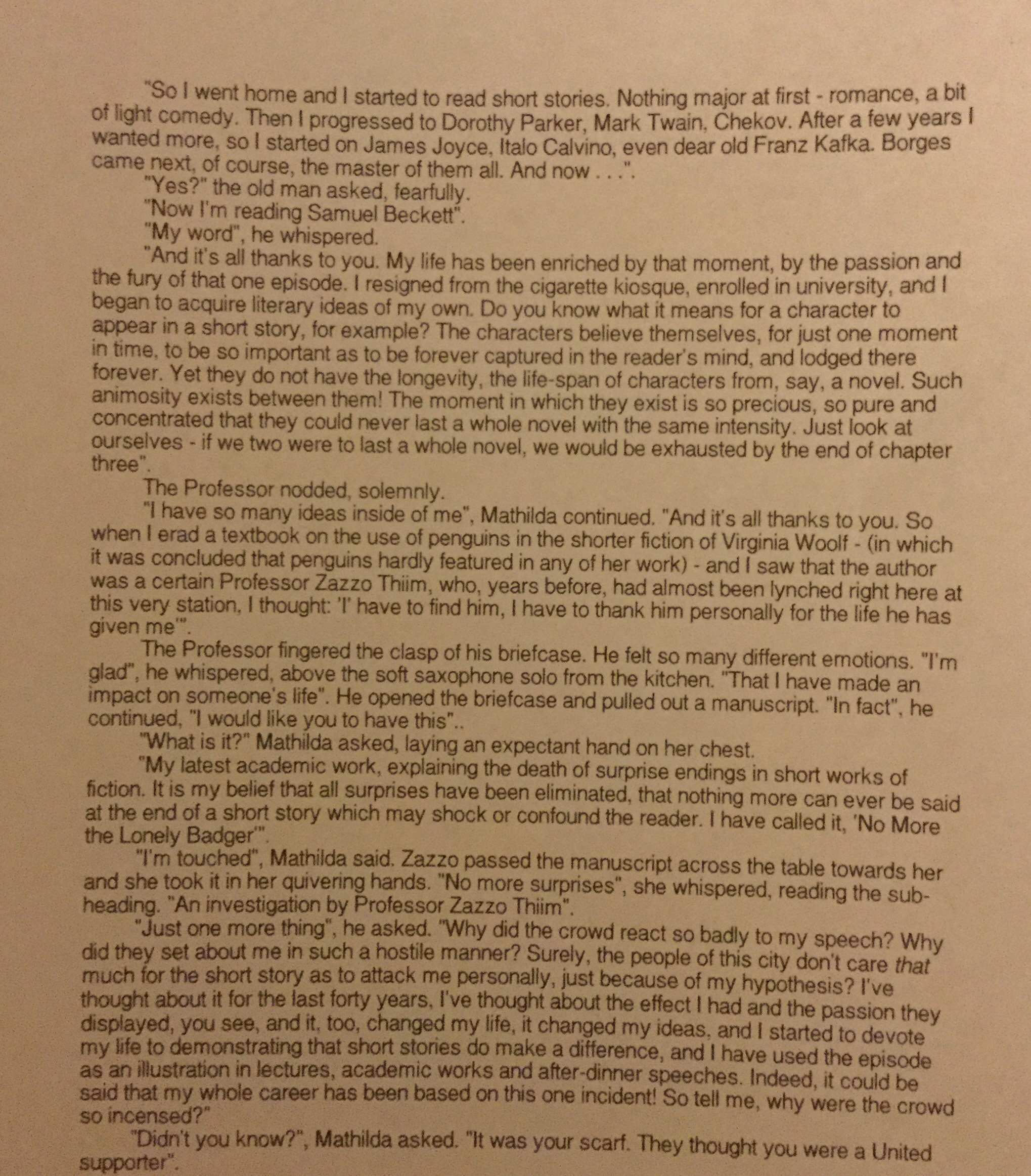

Performance poet and Professor of Whimsy

Episode one of my unmade tv series, Professor Zazzo Thiim
Martin Hodge was one of my favourite human beings. We met at a gig at the Bike Shed Theatre in Exeter, he came and sat on the same table as myself and a friend, and told me that he really liked my performance. He was so wonderfully sincere and immediately charming, and we exchanged email addresses, Facebook friend requests, all the normal modern means of connecting.
A couple of days later he sent me a text message asking if I’d like to appear on a radio show he was hosting, Listen Out, on Phonic FM. It was a radio show dedicated to Exeter’s LGBT community, and I jumped at the chance. I’d never done any radio work before, and I was incredibly nervous, I also had to journey up from Hayle in Cornwall, where I’d been staying with my parents.
But Martin was fantastic, we sat and had a pre show drink in a small pub on a Sunday night, and he completely put me at my ease. The show went very well indeed, and even though I was only on in the first hour, he invited me to stay for the whole programme, sat in the corner and listening to the music. Just before my section, he played Will Young, a beautiful song which even now reminds me of that night.
That was the first time I was his guest, and over the years I would guest again on both Listen Out and, when that had finished, The Respect Show. Martin was so genial and supportive, he got me a gig at a Phonic FM fundraiser at the Phoenix, and we’d keep bumping into each other at various events in Exeter. He was a keen fan of music and his knowledge of the local scene was almost encyclopaedic. One of the last times I saw him, he gave me a Pet Shop Boys cd, because he knew they were my favourite band, and he’d always play one of their tracks when I was on his show.
Martin was the most relaxed person I’ve ever met. Nothing ever seemed to faze him. He was the sort of person who could make anyone feel calm, his measured, genial tones perfect for the radio. He was incredibly generous too, with his praise, his time, his willingness to share his knowledge of music and the technology of radio work. I’ve never known someone with so many friends, either. It seemed that everyone in Exeter connected to music knew him, worshipped him, smiled at the mention of his name.
I last saw him just over a month ago. Croydon Tourist Office had a live gig on the Respect Show, and I’m sure it wasn’t exactly what he’d been expecting, but he seemed to enjoy it and immerse himself in the craziness of our act. I saw him briefly afterwards, as he walked past us, a cheery word or two and he was gone. That night we exchanged text messages, in which he thanked us for coming on the show.
Martin had so many friends, and it’s them that I’ve been thinking of the last few days. He will be so missed by so many people. His work in promoting music and encouraging people to have a good time will go on, you can still hear him on the archived pages of his radio show. To his family and loved ones I extend the deepest condolences, and to Martin I say simply, thank you.

Here’s the lecture that I delivered yesterday to the Torquay Museum Lecture Society.
I was at the Edinburgh Fringe this past summer. I was out in the Royal Mile handing out leaflets in a light drizzle for my one hour show and a chap asked me what my show was about. I told him that it was a spoken word piece, feeling a touch of pride as I did so. Because it wasn’t theatre and it wasn’t comedy, it wasn’t music and it wasn’t a dance troupe, it wasn’t mime, it was my own show, a spoken word piece. He frowned and said, well, doesn’t that describe any kind of show? Aren’t they all spoken word? Maybe, I said, apart from mime.
But he had a point.
For the last couple of years I’ve called myself a spoken word artist, albeit mainly because it sounds different and I was fed up with saying to people, ‘Oh yes, I’m a comedy poet, you know, like Pam Ayres’. Comedy poetry, in some people’s eyes, is the ultimate oxymoron. There’s nothing wrong with Pam Ayres, she’s seriously funny and warm, but it kind of made people think that I’d be seriously funny and warm. Spoken word artist sounds much better. It sounds cool. But this chap on the street in Edinburgh had cut right to the heart of what I do. It didn’t mean anything.
Some people prefer the term ‘performance poetry’. And for the purposes of this essay, I shall be looking at the art of what I do by using this term. The other reason that I use this term is because that’s what it says on the publicity material for this lecture. Performance poetry and spoken word generally mean similar things these days. It all goes back to the oral tradition.

What is the oral tradition? How far back do you want me to go? Cave dwellers had the capacity for communication but they didn’t have the internet, so it’s possible that they sat around and chatted, or grunted. And if so, did any of them use the tools of rhetoric, rhythm, rhyming and alliteration to describe the important caveman themes of the day, you know, the perils of upsetting a sabre tooth tiger, a really interesting rock, or once meeting an old man who, some believe, managed to live until he was nearly thirty years old. No major writings exist from this period so we can only speculate. Perhaps the cavemen were too busy inventing fire or going to Cher concerts to worry about performance poetry.
I already feel like I’m straying from the brief, the brief itself being ‘A History of Contemporary Performance Poetry’. Which as I’ve already pointed out, also means a history of contemporary spoken word. How you can have a history of something contemporary is a riddle in itself, and if I were more philosophically minded then perhaps I’d investigate this from an existentialist viewpoint. But as you can see in the caveman paragraph above, I’d like to get to the root of the subject. From the moment that life emerged on planet earth, two cells dividing to create this bizarre and mysterious journey upon which we all embarked the moment we sprang into existence, the moment that fish crawled out of the water and walked on land, the moment a mouth developed and vocal chords, and you know what, I’m straying from the subject again.
Performance poetry is shorthand for poetry. And what is poetry? Poetry is words, interestingly arranged. Poetry is the communication of sentiment and feeling, the infinite, the sublime. Poetry is communicating human experience, intangible emotions, urges and sensations, situations, parables. Some see the shipping forecast as poetry. The Argos catalogue has its moments. The South Devon bus timetable is poetry. It’s also fiction. Yet only the most avant gard would want to stand on stage and recite one of those special offer leaflets that you get in Lidls.
Jeffrey Wainwright, an expert on literature, defines poetry as ‘words which catch our attention not only through a grasp of their dictionary definition, but through their sensuous impression’. Stephen Fry, an expert on everything, describes poetry as a ‘primal impulse’, before wittering on about temp, iambic pentameter and clerihews. And the Oxford English Dictionary defines poetry as ‘vessels made of fired clay, the work of a potter, or a potter’s workshop’. Poetry means different things to different people, depending on circumstance and personal preferences. Some say that poetry is only poetry if it rhymes. In fact, Donald Trump tweeted something similar to this not long ago. My own view is that poetry is concentrated literature, a brief glimpse, simultaneously, into a personalized viewpoint, and the human condition itself. It doesn’t matter to me what form it takes. So up yours Donald Trump.
(I really hope I’m the first person in the history of Torquay Museum’s lectures to utter the words Up Yours Donald Trump from this lectern!)
Assuming that all poetry was written originally as spoken word, we can therefore see it as a means of communication. Certain words are given meaning, rhythm and a pattern established, rhetoric employed, rhetoric being deliberate speech with something to be said. Our pre-printing press forebears would communicate knowledge, advice, religious theology and maxims to ensure the continuance of a generation’s wisdom. Thirty days hath september. A rolling stone gathers no moss. Red sky at night. Metaphor and similie allow poetry to infuse even these sayings, unless of course Shakespeare came up with them first. He always seems to get his hand in.
Oral tradition, therefore, transmits knowledge, art, ideas, cultural material, family history, hymns, folklore, mythology, recipes, scriptures and advice to the next generation without using the written word. Most people couldn’t write, less could read. (Or maybe that should be the other way around). Mnemonic devices such as alliteration, repetition, assonance, repetition and proverbial sayings ensured the continues of such knowledge, for example, Buddhist teachings in India and Asia, Hindu wisdom, the dream lines of Aboriginal Australians, myths and stories of the western coast Haida tribes.
Even to this day, twenty five years later, I remember how the vegetable warehouse at Staines Sainsbury’s had its floor cleaned on a Thursday morning because of the rhyme I created to remind myself. ‘If floor be wet on Thursday, then that’s the day when the mops do play’. Which goes to prove that even twenty five years ago, I was a little odd.
The earliest forms of writing in ancient Greece, including the invention of the alphabet, without which choosing a CD in HMV would be virtually impossible, drew their meaning and character from spoken word. The poet Simonidies ‘ implied with scorn that his poetry would last for longer then mere inscription’, such was the opinion of that incredibly well known poet Simonidies.

Spoken word in ancient Greece was used as a method of developing myths and as a means of communicating their culture. Greek lyric was included as a part of the original Olympic games, though records are somewhat sketchy as to whether this was conducted, like the athletes, in the nude. There are some things you’d rather not see. Greek lyric poetry was composed to be accompanied by the lyre and were performed at symposiums, which were little more than elaborate drinking parties. Subjects included politics, war, drinking, money, youth, old age, all themes which are regularly explored today at most performance poetry events. Though unlike contemporary times, you don’t get endless poems about other people’s Facebook statuses.
The Homeric epics, The Illiad and the Odyssey, were both conceived by their authors as performance pieces. You’ll note that I used the plural there, as there remains some doubt as to whether Homer himself existed or was merely a character himself said to have composed these two works. At some point the epics were recorded on paper, papyrus, wax pad, homogenised into two canonical works which now stand as the definitive text.
The same can be said of Beowulf, the Anglo-Saxon epic, and all medieval literature. Poetry and lyric were always written, or rather composed, with an audience in mind, for public recitation and entertainment. Icelandic sagas, Norse myths, Arabian fantasies, African tribal traditions, Pam Ayres, Germanic fairy tales, Chaucer, Shakespeare and everything which existed up till the invention of the printing press and, shortly afterwards, the internet.
It was all performance. It was all spoken word, gesture and nuance, tone of voice, hand movements, acting, intonation, use of props, use of stage and scenery, and not written with the idea of one person in their drawing room reading it from a book next to a grandfather clock with the snow falling outside and the fire crackling and the farmers rotating their crops and the Roundheads and Cavaliers bashing hell out of each other and Queen Victoria dancing the tango with Emperor Nero. And even with the invention of the printing presses, there was no guarantee that anyone could actually read. In Victorian times, particularly the 1860s onwards, penny readings were a popular form of public entertainment in theatres and music halls, where a diverse bill of literary passages and poems were read or performed for an audience who paid a penny for the privilege.
The modern term ‘performance poetry’ was supposedly invented in the 1970s by Hedwig Gorski. I say ‘supposedly’ because it’s Wikipedia that told me this, and also Hedwig Gorski’s website herself. She also claims to have invented the phrase ‘pet sitting’, and if this is the case then good on her. I’m sure someone in the entire history of human evolution must have mentioned either of these expressions before 1970, but there you go. Hedwig apparently invented the phrase to describe the sort of avant gard spoken word musically accompanied work that she was doing as a means to dissociate it from the performance art and spoken word of Laurie Anderson who is, I tell you now, one of my heroes. Since the early 1970s, Laurie Anderson has been mixing spoken word with performance art, music and film to create a genre all of her own, while Hedwig Gorski wanted to be seen as a different kind of artist, equally exciting and inventive and personally inspirational, working on the effects of voice, word and music in a performative context. Quite where pet sitting comes in to this is anyone’s guess.
For the purposes of this essay I shall, retrospectively, apply the term ‘performance poetry’ to any kind of spoken word public poetry performance of the twentieth century before Hedwig Gorski. In fact I believe it all ties in with the performance poetry scene of the present moment. The only question is, where does one start? If all poetry is written for performance, then the choice is seemingly endless.
I’d like to start by mentioning Dorothy Parker. I mention her not because she was a performance poet, or is even seen as a performance poet, though she was clearly a poet and indeed she was clearly a performer, but because I just want to mention Dorothy Parker. Who knows how many poems, skits, witticisms and verses were delivered in a rowdy haze at the Algonquin Round Table all those years ago. I’m sure she would have had a lot to say about this lecture. So this is me, then, mentioning one of my heroes, Dorothy Parker.
To my mind there were four poets for whom the spoken word and public performance informed the public perception of their work. However, I regard only one of them as a genuine performance poet. The first is TS Eliot, active as a poet 1905-1965, the second is Robert Frost, active 1914-1963, the third is Dylan Thomas, active 1933-1953. Not only were these incredibly well regarded and experimental poets popular on the page, but their public performances were also noteworthy for being engaging and even entertaining. Dylan Thomas’ voice was instantly recogniseable in the new radio age, and easily imitated, yet it gave full flavour to the gravity and seriousness and also the occasional playfulness of his work. Indeed, so compelling and so entertaining were his performances that he toured the United States three times in the last four years of his life. Much as with Frost and Eliot, the style of reading and the seriouness afforded living poets, and the spread of radio and records into people’s homes, helped maintain and even increase the popularity of spoken word.
But was it performance? Thomas affected a measured, metred voice almost weighted in its rhythm and intonation. This was not a normal way of speaking, this was theatrical, at all times conscious of the audience balanced with the absolute belief in the solemnity or emotion of his words. Of which there were a lot. This, I believe, was definitely performance.
There was a criticism from those in academic circles that Thomas was too verbal in his language, obssessed more with the sounds of his words than their meaning, which, if it were the case, would fit in with the idea of Thomas as a poet with one eye – or ear – on future performance.
To my mind, there was one genuine performance poet from this period, and she’s another one of my heroes, along with Laurie Anderson and Dorothy Parker.
There is a danger that Edith Sitwell is remembered more for her eccentricity, clothing and muddled personal life than for her poetry. She was certainly a unique dresser, wearing robes and turbans, chunky jewellery and odd-shaped hats, and in spite of her aristocratic upbringing and bearings, she lived in bohemian circles in London and Paris. However, she was genuinely performance-driven and avant gard. Her poetry was often accompanied by music, said rather than sung, in varying speed and in perfect time with the music. In some respects she was like a 1920s rapper, and from all accounts she certainly did get jiggy with it. She experimented with the new craze of jazz, finding rhythm and meaning in discordance and imagery while, in her personal life rebelling against the usual accepted modes of behaviour. Indeed, her literary career was very long, stretching from the 1920s and the jazz age right up to the 1960s when she appeared on This Is Your Life. She wasn’t afraid to speak her mind, famously having a long running feud with Noel Cowerd, and disliking the Beat Poets of the 1950s because, according to her, they ‘smelled bad’.
Her most famous piece was ‘Façade’, performed for the first time in the 1920s and often at breakneck speed in time with the music, with Edith herself on stage yet hidden from view behind a curtain. This new performance style of poetry is said to have angered some, Sitwell herself saying that after one performance, ‘An old lady was waiting to beat me with an umbrella’. Yet her poetry recalled religious imagery, London in the Blitz, and the full expanse of human emotion. In spite of her bohemian milieu, Sitwell never found true love, pining for young gay men who were, quite obviously, not interested in her. I know how that feels.
It’s interesting to note that a lot of the trends and accomplishments in contemporary performance poetry can be traced back to Edith Sitwell : the emotion, the eccentricity, the wearing of interesting hats, perhaps even the poet and the medium being more noteworthy than the message itself. As Edith said, ‘Poetry is the deification of reality, and one of its purposes is to show that the dimensions of man are, as Sir Arthur Eddington said, halfway between those of an atom and a star’. It’s always difficult quoting someone when the person you’re quoting then quotes someone.
So who were these stinking Beat Poets, that Edith Sitwell found so pungent? The Beat Generation began as early as 1949 when Jack Kerouac coined the phrase ‘the beat generation’. It described a feeling, a sensation of failure, fatigue, of being fed up with the world and expected modes of behaviour. Kind of like most teenagers, really, except teenagers hadn’t been invented yet. One of the most iconic of Beat Generation moments was when Allen Ginsberg performed his poem ‘Howl’ for the first time in public at the Six Gallery in San Francisco, 1955. According to Ginsberg the poets involved in the reading ‘got drunk, the audience got drunk, all that was missing was the orgy’. As you probably know the long poem ‘Howl’ as published by the City Lights book store in San Francisco was eventually tried in court for obscenity, which probably did more to pubicise the book, the beat generation and the counter-cultural aspirations of the Beats than anything else. Beat Poetry performances were wild affairs. A contemporary newspaper reporter wrote, ‘The audience participates, shouting and stamping, interrupting and applauding’. This was not the sort of behaviour that would ordinarily occur at a poetry recital.
In truth the Beat Generation was a collection of individuals, mostly associated with California in the 1950s and 1960s. Jack Kerouac, Allen Ginsberg, Lawrence Ferlinghetti, William Burroughs, who would collaborate years later with Laurie Anderson. The freewheeling style of delivery and almost unconscious manner of writing would later inspire a whole generation such as the singer Bob Dylan, while their subject matter and performance style would still have an effect now on the contemporary scene. The strong language, the simple use of metaphor, the breathless delivery, words and sentences piled one on top of the other like a bottomless lasagne, along with a rejection of orthodox poetic conventions. Most of Ginsberg’s ‘Howl’ was written in one mad afternoon, while Kerouac’s novel ‘On the Road’ was typed out on as long seemingly neverending scroll of paper. In such a way the images and language feel spontanous, new and vivid, borrowing from the improvisational techniques of jazz. Not everyone was enamoured with this style of delivery and composition, the author Truman Capote saying of Jack Kerouac’s prose style, ‘That’s not writing, that’s typing’.
There’s a certain nostalgia among performance poets for this era. San Francisco is still seen as a hotbed of performance poetry, as can be seen in one of the few films in recent years with a performance poet as the main character, ‘So I Married An Axe Murderer’. The Beat Poets left their mark on the delivery of poetry, the counter-cultural status of poetry, the youthful engagement of poetry, poetry as cool. It’s the idea of the beret-wearing goateed Beat Poet with a double bass thrumming along to lines thick with imagery that people conjur when they think of performance poetry. I don’t usually correct people when they think that this is what I do.
Yet from this period comes another poet, who wasn’t a Beat Poet, but has influenced a lot poets on the contemporary scene. New York-based poet Frank O’Hara is the poet I most admire, and if it wasn’t for him I wouldn’t even be here now. I don’t mean that he gave me lift over here this morning. What I mean is that the discovery of Frank O’Hara completely changed the way I look at poetry, the subject matter, the freedom he brought to his work, the seemingly carefree attitude he took to his craft. O’Hara studied poetry and worked as a curator at the Museum of Modern Art, where he was influenced by the abstract expressionism of artists such as Jackson Pollock and Willem De Kooning. He wanted to replicate what they were doing on canvas in his poetry. His work embraced the traditions of the past, and then drove a truck straight through them, making a conscious decision not to discriminate between high and low culture, classical and throwaway. A typical O’Hara poem might be about a Mahler concerto, a ballet, human emotions, fine art, but also hamburgers, Coca-Cola and contemporary film stars. His work was primarily about the city of New York and would include descriptions of people, places, events, conversations and gossip from the film industry, or else about the way that he had spent his day, in one of his famous ‘I Do This I Do That’ poems. And this was evident in his readings and performances, his matter-or-fact conversational tone, purposefully camp and throwaway yet ultimately celebratory of life, urban life, city life, one of his most famous lines being, ‘I can’t even enjoy a blade of grass unless I know there’s a subway handy, or a record store, or some other sign that people do not totally regret life’. He could be deeply funny, and I really don’t think any other poet enjoyed living so much as he did. The fact that he died young at forty would ordinarily have been a sad footnote, the fact that he was run over by a beach buggy while walking blind drunk on a beach on the way back from a party says all you need to know about him.
Towards the end of the twentieth century the history of performance poetry becomes somewhat fragmentary. Over the next couple of decades there was a real flowering of different styles of spoken word poetry. I’ve already mentioned Hedwig Gorski and Laurie Anderson, both of whom were experimental in outlook and yet whose work touched on universal themes and concerns about social injustice and the environment. Indeed this was the start of an increased politicisation of performance poetry and the fact that it was a platform able and eager to give voice to those who believed they had none. The Beat Poets mentioned political aims in their work, particularly in terms of peace and the Cold War, gay rights, women’s rights, as a precursor to the flowering of Hippy culture in the 1970s. Performance poetry was able to embrace diverse voices and styles and incorporate elements from other cultures, including the artistic experimental Fluxus movement of the early 1970s, and also reggae, rap and African-Carribbean traditions. Linton Kwesi Johnson performed poems dealing with the experiences of being an African-Carribean living in the UK. His method of delivery was dub poetry, in which spoken word is delivered over reggae rhythms rather than sung, written rather than improvised. Benjamin Zephaniah also made his name in such a way, spreading Carribean culture into the mainstream and introducing new voices into the poetry community.
At the same time spoken word was represented at comedy venues by acts such as Pam Ayres and John Hegley, both blurring the lines between stand-up comedy and spoken word. Pam Ayres made her name on ITV’s Opportunity Knocks and is still the highest paid poet in the country today. John Hegley was equally at home on the comedy stage, fronting bands and singing as well as performing humorous poetry on prime time TV. However the award for the most ingenious mix of poetry and another genre has to go to John Cooper Clarke, who spent most of the 1970s performing his fast-paced comic poetry with a social conscience during punk rock concerts, usually to the derision, amazement and finally acceptance of the audience.
The Liverpool poets, Roger McGough, Adrien Henri and Brian Patten, brought a clarity, humour and mass appeal to poetry in the 1960s, once again blurring the lines between page poet and performance. The inventive techniques all three poets employed helped bring poetry to a much wider audience with exposure on TV and radio, records and publications, and subject matter and a delivery style which many found easy to consume. Indeed, the Liverpool poets spawned quite a movement, including pop music groups, folk groups, breakaway groups and a vivid emergence of pop poetry which went on to inspire a lot of the artists who followed.
This brings us, more or less, up to the present day.
I feel quite honoured to be a part of the contemporary spoken word scene. There’s an incredible variety and creativity around at the moment, even though the scene is frequently and, occasionally, youth-orientated. Contemporary performance poets such as Kate Tempest and Hollie McNish inspire youngsters to get involved in writing and engage with the world in their own language and style. There is a significant crossover with rap music, which itself is a development of spoken word and the fast-paced delivery of the Beat Poets and Bob Dylan. In London there’s a vibrant spoken word rap culture in which urban youngsters wearing fashionable clothing explore themes of alienation, racism, social injustice, and the same old timeless themes of love, family and relationships. Bristol also has a thriving scene and a distinctive voice of its own, again fast-paced and with a great use of internal rhyme.
One of the biggest developments in performance poetry came in the 1980s and the invention of the poetry slam by a Chicago-based poet called Marc Smith. Poetry slam is a performance competition in which the audience is asked to judge individual performers based on writing, audience response and performance. The first slams were held in Chicago, but they now happen all over the world in every major city and Wolverhampton. Indeed I have been fortunate enough to win a few slams in my time, which shows that I’ve still got it, and for a whole year I was officially the second best poet in Swindon. In the UK the Hammer and Tongue organisation holds regional slams leading to a national final at the Albert Hall every January. Since the 1990s there has been several developments on the slam poetry theme, with poetry rap battles – strangely popular in Bristol, in which poets and rappers spend three minutes insulting each other in rhyme – and the anti-slam, in which poets purposefully write and perform the worst poem they can possibly imagine.
I’m worried that one day I might win one of these by accident.
The history of performance poetry over the last thirty years reflects the social and political concerns of a culture as it speaks to itself. The Apples and Snakes organisation, a charity based around the promoting of speech, freedom and poetry, was set up in 1982 and has recently begun a project archiving the rich variety of British spoken word, curating publicity material from many early performers, such as Phil Jupitus and Craig Charles, who have since gone on to become household names. As society develops and changes, so do the social concerns of performance poets, and each year the wealth of experience and the diversity of the voices adds to the attractiveness of performance poetry as a genuine artistic movement. With the invention of YouTube, performance poetry has become an almost perfect medium to get a message across in three minutes or less, posted on websites and social media platforms. Every now and then a YouTube poetry video will go viral making poets such as Mark Grist and Vanessa Kisuule into internet celebrities. Some of my own videos have been watched by almost thirty people.
So the current scene is vibrant, diverse and almost unclassifiable. The typical performance poetry night will consist of
Political poets, poets concerned with social mobility poets, ranting poets, drunk poets, blank verse poets, what could be worse poets, rhyming poets, people who write poems about cats poets, stand-up poets, rap poets, page poets, philosophical poets, surreal poets who wear weird hats poets, murmuring poets, shouting poets, theatrical poets, musical poets, whimsical poets, short sharp energetic poets, ballad poets, domestic poets, global poets, slam poets, rambling poets, stories of personal oppression poets, beat poets, street poets, poems written in retreats poets, I’ve got a trumpet and I’m gonna blow it poets, street poets, radio poets, TV poets, once made an advert for Nationwide poets, Shakesperian poets, Bristol poets, poets influenced by the Liverpool poets poets, and the occasional writers of sonnets poets.
To be honest, I see myself as a spoken word artist.

Another one from the archives. 2008, to be exact.
Perfection
The fact that the whole of humanity had lived for this did not trouble him in the slightest. All of thought and philosophy, all of art, everything, including warfare and religion, had gone in to the construction of this one place, this hallowed, magnificent building where he would remain, living a life of idyllic bounty in an environment of absolute perfection. It wasn’t luck, nor was it heaven : it was the result of every virtuous thought there had ever been, and he, as the most perfect human who had ever existed, had been allowed to reside within its walls.
The whole place was spotlessly white, and painted so as to appear almost clinical in the equatorial sun. Yet there was a rosy hue which permeated everything, and a smell of jasmine which lifted into the air much like the smell of a summer garden after the rain. The corridors were decorated with classical statues, finely sculpted evocations of masculine beauty and workmanship which, bathed either in the sun or in the shadows which, thrown down by the angles of the building, hide within them the joy which comes from beholding without malice the achievements of a master. The floor is tiled, pleasantly. In the centre of the building there is a courtyard garden where soft fountains sprinkle water which, in the sun, cast rainbows and prisms of light, while the foliage is home to such wondrous birds of paradise as to mesmerise the casual viewer. Cushions and seats are provided, that the scene may be contemplated from whichever angle suits him best. Through two doors at the southern end of the courtyard is the library, an old, oak affair with a running balcony and a sliding ladder on wheels, where the greatest works of literature may be read or studied. In the centre of the library are desks with brass lamps and a leather armchair angled at such a degree as to facilitate unforced comprehension. There is an art gallery further on, and a small museum. The whole place is perfect.
He, too, is perfect. He has led a life of virtuous study and concern for his fellow man. In all of his relationships and dealings with other people he has been the most trustworthy and honest character, and yet he has been careful not to appear as too pious or pompous. He has never felt the need to bury himself within a certain political or religious organisation – (he sees, quite rightly, that to do so is to cede control of his character to a pre-conceived set of ideals or beliefs) – nor has he ever been overtly charitable – (for he is not one of those who prefers, rather than doing good, to be seen as doing good). He has always dressed smartly, and yet not too smart. He has never associated himself with one particular economic group, or racial group, or artistic group, or political convention. He has never felt malice towards anyone, and he tries all the time to see both sides of an argument before speaking his mind on any subject. He has never wanted to hurt anyone. In such a way he, too, is the ideal of perfection, the culmination of humanity.
He feels no guilt at living in the house, nor does he feel any guilt at having felt no guilt. At the same time he is conscious that guilt might have been a factor in his residing there. He wanders from room to room and fills himself with the ideals of perfection with which he has been identified. The food is perfect and it is textured just so, that he might relish each mouth-full without indulging. The temperature is well-maintained and there is hardly any noise at all save for the fountain, the birds in the courtyard, perhaps some soft jazz which emanates, at night, from somewhere ethereal. He has never felt happier.
It is especially gratifying to realise that the human race has existed just for this. So many philosophies and movements in both art and design have culminated in the perfect existence. Psychologists have toiled for centuries in the hope of discovering the most perfect, well-balanced way of spending one’s time. Artists have toiled, writers have written, in order only that the libraries and galleries of the house remain stocked with the finest of their achievements. And when he becomes bored of the house, there are sandy beaches and coves in which to wander, tropical islands, luscious, dense forests in which to wander. Nor is he alone. There are people nearby, friendly individuals, learned types, amiable fellows, beautiful men and women with whom he might converse or even fall in love with, people who care for him and want the best for him. Some nights he throws parties and entertains them, and they all drink and eat and they are very merry indeed, and they dance in the moonlight, under the stars, to the soft jazz or to whatever music might suit the occasion. Everything – it bears repeating – everything is perfect.
One day he went for a walk along one of the wings of the house. He stopped for a while to admire a classical statue, and he could hardly see the marks left by the sculptor on the marble from which it was cast. Likewise, the paintings in the gallery seemed hardly touched by human hands, even though they were signed and catalogued. How wonderful the human race could be, he thought to himself. And the house itself – each angle was carefully considered that the play of light and shadow be worked in unison with something else, some mental approximation of fine living. He walked slowly. He walked, taking in the atmosphere. He could feel time itself stretching, becoming null and void. That afternoon he would sit and write haiku, he decided, and then he might call some friends and they would come round, and they would eat spaghetti Bolognese. At the end of the corridor he sat for a while on a stone bench and he closed his eyes, allowing the sun to stream in through his eyelids. It was warm, it was beautiful, it reminded him of something distant. Perfect, he said to himself. Absolutely perfect.
Very faintly, he heard a soft, stifled belch.
Would you believe it’s been a year since my first collection, Nice, came out? It hardly seems it. I’m immensely proud of it and every time I see the cover I really have to remind myself that it contains all my own work.
 I was a weird kid. While all my friends wanted to win the FA Cup or Becky fighter pilots, the only thing I wanted was to be a published writer. I just loved the idea of holding a book knowing that it was representative of me and my imagination. And all through my teenage years I would write, bashing out short stories and novels on an old typewriter, which I still have, and all to no avail. But the dream persisted.
I was in Bristol when I got the email saying that Nice was going to be published. I was getting ready to support Vanessa Kisuule at Hammer and Tongue. I did a camp little dance around the hotel room, and Vanessa was the first person I told.
So Nice was launched last year, the official launch being on January 8th. I’d chosen the date specifically because it was David Bowie’s birthday and that his new album was coming out the same day, so that I could always remember the date. Naturally, people remember the date now for different reasons, but it was a great night, performing poems from Nice supported by all my friends. I’d had a book signing a couple of weeks before in my home town of Paignton, but the official launch was the big event that I’d always dreamed about.
The book still seems fresh. There are stories behind some of the poems, of course. Personal stories. I purposefully only chose upbeat, vibrant, funny poems because I imagined the book as being similar to a dance record. Clive Birnie told me that he saw Burning Eye as a record company and the books as albums, so I thought, well, let’s have a dance record, with computerised disco beats and flashing lasers. Let’s give it a throwaway title. Let’s not get too bogged down. And I think Nice has achieved this.
The last twelve months have been amazing, I’ve been all over the Uk with a back pack full of Nices and it’s been so well received. I’m still incredibly happy with it.
So pick up your copy of Nice today! It will help you get through those winter blues, I assure you!
http://burningeye.bigcartel.com/product/nice-by-robert-garnham
Out with the lads, Friday night, Jake all lairy and Tom all leery and all of them pretty beery, darts, pool, lager, perving over women, playful shoulder punches and heterosexual hugs, rhythmic belching on a hot summers night. And Jake says, ‘Here’s Pete’.
And you know past midnight the bars still open and the goodness the dwells within every soul, open minded and ready to accommodate this new friend, Pete.
‘Alright, Pete?’
Bloody hell!
Pete is a fifty six tonne sperm whale.
‘Pete’s famous’, Jake says, ‘Cos he can drink like a fish. Can’t you, Pete?’
Pete grins.
His polo shirt only just fits.
‘I’ve just been playing pool’, he says. ‘But I leaned on the table and the legs broke. Completely collapsed! But I won the game anyway because all of the balls just happened to go down the holes in the exact right order. We had to leg it’.
I want to ask him how he can leg it when he has not got legs.
‘Up till then’, he says, ‘It was going swimmingly’.
I also want to ask him how he can hold the cue with his flappy little fins but I’m afraid he might give me a slapping.
‘Let’s go out and get a curry’, Jake suggests.
‘Or a kebab’, says Tom.
‘I don’t know about you guys’, says Pete, ‘But I’d love some krill. I think there’s an all night plankton place near here’.
At this moment we hear some loud mouthed skinhead at the bar tell a joke in which the punchline denigrates certain sea-based large mammals.
‘Just what did you say?’, Pete asks.
The skinhead looks somewhat taken aback.
‘Sorry mate, I didn’t realise you were a whale. I couldn’t tell from the accent’.
But now we’re beginning to warm to Pete and plans are made to get a taxi back to our place. Helpfully, Jake suggests we might need a six seater, without drawing attention to Pete’s bulk, the elephant in the room.
‘We could watch a dvd’, Pete says. ‘But not something sad. I always start to blubber’.
‘You could stay over’, Tom says. ‘I could make up some beds’.
‘That’s fine, I can always sleep in the bath’.
At that moment a fight broke out at the pool table. One of the combatants lobs the cue ball, it sails through the air and goes straight into Pete’s blowhole, where it lodges, and he dies.

Well this year’s advent calendar was a strange one. Here’s every day in it’s unusual glory.
Today’s advent calendar picture was of a duck wearing a Groucho Marx moustache, nose and glasses.
Today’s advent calendar picture is of a clown waving his big shoe at a smoke detector
Today’s advent calendar picture is of the Easter Bunny trying to keep two sides of a build-it-yourself shed upright while Marilyn Monroe reads the instructions.
Today’s advent calendar picture is of the seven dwarves waiting, angrily, at a mobile chip van, while the lady serving, who for some reason is a panda, is looking at holiday photos being shown to her by Snarf from Thundercats
Today’s advent calendar picture is of Gandalf at the self service Tesco machine
Today’s advent calendar picture is of an advent calendar
Today’s advent calendar picture is of Vladimir Putin eating a Pot Noodle
Today’s advent calendar picture is of sixteen Laurels (from Laurel and Hardy) and Sid James queuing at a self service cafeteria.
Today’s advent calendar picture is of a frog trying to push a sofa up a flight of stairs, backwards, sweating profusely.
Today’s advent calendar picture is of an igloo, a bin with contents strewn around, and a polar bear flaked out by tranquilliser dart.
Today’s advent calendar picture is of a Peruvian brown bear wearing a scarf scraping frost off the windscreen of a parked car with its engine running.
Today’s advent calendar picture is of a sneezing unicorn.
Today’s advent calendar picture is of a badger and a rabbit having a row about who gets the last chicken mayonnaise sandwich in the chiller cabinet while TV’s Victoria Coren Mitchell sneaks in and grabs it for herself.
Today’s advent calendar picture is of a stack of suspended ceiling tiles, £11 each plus postage and packing
Today’s advent calendar picture is of the nativity scene. (Bit early but there you go).
Today’s advent calendar picture is of fifteen donkeys wearing sombreros and a man at a stall trying to sell them more sombreros but the donkeys are having none of it.
Today’s advent calendar picture is of a badger getting a refund on a pair of trousers.
Today’s advent calendar picture is of Lord Byron on roller skates in a crumpled heap next to a slightly dented Ford Focus.
Today’s advent calendar picture is of a panda in a library reading a Will Self novel, double checking some of the weightier vocabulary in a dictionary.
Today’s advent calendar picture is of Mr T from The A Team at the boating lake in the park, rowing a rowing boat past some rhododendrons.
Today’s advent calendar picture is of a squid waiting in the queue for the Primark changing room with a Tigger the Tiger onesie.
Today’s advent calendar picture is of Darth Vader in a lightsabre battle with Alan Bennett.
Today’s advent calendar picture is of Michael Portillo looking very grumpy on a rail replacement bus. Oh, and why not, Skeletor from HeMan is sitting three rows behind him, eating a Pot Noodle.
Today’s advent calendar picture is of a confused ostrich.

January : An ocelot
February : A badger
March : A haberdasher
April : A lollipop lady
May : A dental hygienist
June : Jeremy Clarkson
July : Mark
August : My Aunt
September : A duck wearing a Groucho Marx moustache and glasses
October : Another badger
November : The bus driver
December : TV’s Alan Titchmarsh
Brown : is playing a trumpet.
Green : is getting a refund on some trousers.
Hazel : is sneezing.
Blue : Is looking for the tv remote
Grey : has a dodgy stomach.
Other : is fumbling for some loose change.
Eldest child : Look out,
Middle child : Get ready,
Youngest child : Eat some cake and
Only child : Hang on a sec.
Blonde : They’re coming after you next.
Brown : There’s bound to be an argument.
Red : They’ll send you a Facebook request.
Grey : run!
Black : did someone say ‘plop’?
Bald : Fetch a bucket.
Other : Put the kettle on.

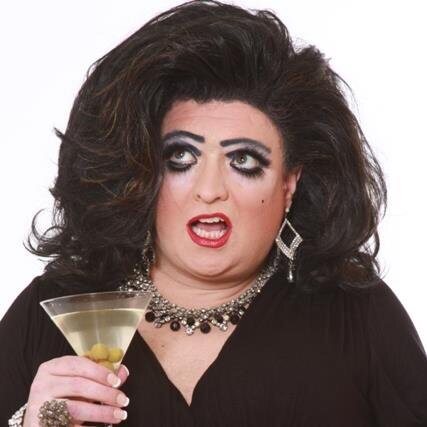
Last month I performed in New York and I had the pleasure of making the acquaintance of MargOH Channing. MargOH is a singer and comedian whose performances mix high camp and cabaret style singing with the seriousness of life itself, issues of identity and representation. We hit it off immediately, sharing a green room, though it must be noted that she finished all the Martini, and I had to help her down the stairs after a bit of a stumble on the second landing. MargOH is an engaging and almost tragic figure who has been very inspirational to me personally. I jumped at the chance to probe her in more detail in light of the recent presidential elections.

1- You come from a fishing community. How did you end up on the New York cabaret circuit?
Darling my road was long and winding. I came from a very broken family so I had to go out on my own at a very young age. I actually moved to NYC as a child to work at my Aunt’s bar where I was discovered by Russ Meyer and was cast in his film “Common Law Cabin” and the rest is history…I call my cabaret career winding down as I’ve done just about everything, even Liberace!
2- I’ve noted from your work that you like the occasional drink. How does alcohol affect your performance?
I don’t know how anyone can perform without it? Many years ago Elaine Stritch told me after I had a rough night at the Reno Sweeney. She said MargOH! “Stick to one before the show, one during and afterwards whose counting”. She came on a night when my panties fell off and I tripped and fell on Rex Reed, he was not happy as he picked pubes out of his teeth…well anyway its not like I gave him the clap!
3- Dear God. Trump. Did that actually happen? What’s the mood right now in liberal New York?
Let me make a martini! People in this country are basically stupid! Reality TV has leaked into our news sources and everything is so sensationalized we can no longer tell the difference between fiction and reality any longer. Plus everyone is very nostalgic instead of looking to the future. The fact is people over 65 and their white kids vote for the old days when certain people knew their place. That is what got Trump elected. When we as a nation realize “Political Correctness” is progess then maybe we can elect visionaries instead of dusty old hacks…was that too harsh?
4- Your performances and incredibly funny, occasionally tender, and with excellent comic timing. Who are your influences?
I have so many influences but most of all Judy Garland is my muse, someone to aspire to be as a performer. When I started performing I wanted to be a celebrity, you know be loved, but that’s all wrong! As you get older you realize its about the work and sharing that connection with an audience. Judy did that better than anyone and I try to remember that everytime I walk out on stage, things may not be perfect but if you connect with just one person then it’s all good. I’m also a big fan of Totie Fields, Sandra Bernhard and downtown legend Penny Arcade.
5- What’s a perfect night, in the eyes of MargOh Channing?
Honestly, a good old dinner party with friends where someone ends up under the table or you wake up with someone in your bed and can’t remember a thing…Those are the moments I cherish…
6- There’s an underlying hint of personal tragedy in your act. Have times been hard?
Are you sure that’s not my Chanel #5? In the world of Social Media where everyone shares their good times, I like to mess with everyone and let them see the real me…I never met a happy comedian, have you?
7- When you’re putting a show together, what makes the perfect big opening?
As an audience member I do not like formula in a show, makes me feel they are taking the easy way out, challenge me please! Actually for the first time in my new show HUNG I open with a song, “You Go To My Head” . I’ve never done that before and do find it fun. In the past I’ve always opened with an overture or entrance song by my back up singers but since they all quit I had to change it up. The one thing I do always do is end with a ballad. Once, my musical director Tracy Stark asked me ‘Why do you always end with a sad song”? I replied, “I am a sad song.”
8- Do your family miss you, now that you’re a big star in the big city?
Of course, my sister Rita is always asking me to come back to Bangor to be her receptionist, she is a highly successful Opthalmologist! I never would have thought that was possible since she is cross-eyed but she is a trooper. My mother on the other hand is a bit of a problem so we shipped her off to a retirment home in Wasilla, Alaska. I thought it best Sarah Palin keep an eye on her or vice-versa…They come to shows when they can so we are all good!
9- What influences your writing?
The underdog is my inspiration for writing. Injustice and inequality drive me to do what I do. I never felt part of the party so I write about that. It’s not always being the belle of the ball, it’s how you trip the one that is in the nicest possible way to let them know they may deserve it but I’m not sure why because you seem wretched. Does that make sense?
10- What advice might you have for any young buck who would like to take up performing?
My best advice for an upcoming performer is something Burlesque Legend World Famous BOB said to me. “If you aren’t making yourself nervous or frightened every couple of weeks then you aren’t trying hard enough”. It was the best advice i was ever given and it’s so true. Do what you love to do and the audience will come, it may be harder and take much longer than you thought but when it happens you’ll know you stayed true to yourself and its magic. XOXO MargOH!
Check out MargOH’s website:
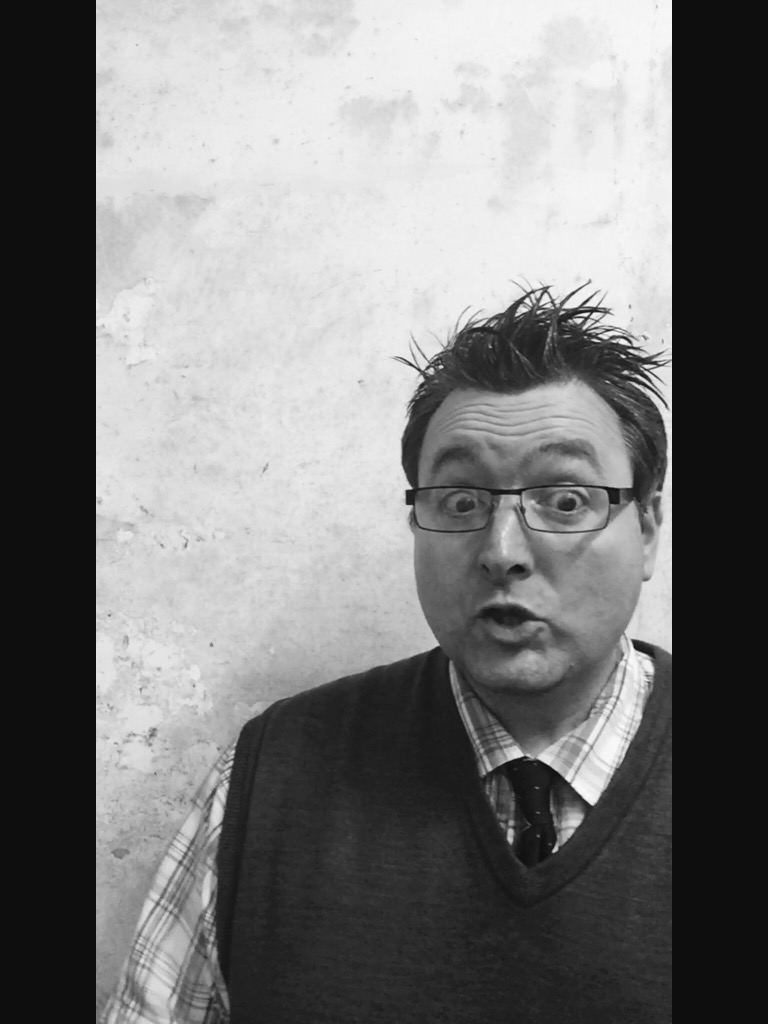
Last night I caught the train to Torquay and walked from the station to the Blue Walnut. It was seven years almost to the day since I started performing which means I’ve done the walk from the station regularly all that time. The road is steep and at one point it does a switch back, like a mountain road, and there are steps cutting through so that the pedestrian doesn’t have to follow the road and has a short cut. When I first started performing, I used to be so nervous walking this route that I would follow the road rather than take the short cut, because it prolonged the moment that I would arrive. In fact I used to be so nervous that before a gig, I would spend an hour in my flat lying on the floor staring at the ceiling, trying not to think about it.I chatted to Tim King last night and we both said how nervous we were before the gig. Perhaps it’s a good sign, being nervous. But even after all these years I feel something deep within, some fear of the unknown, of mucking it up, of being humiliated in front of a room full of strangers, of being exposed as an incompetent who’s only blagging his way through spoken word events.
The biggest fear is probably of completely losing touch with everything. With the audience, with the words on the page, with the whole situation. The line between being in the audience, being a normal member of society, and being a poet, particularly a humorous poet whose job it is to make people laugh, is very thin. Anyone can do it. I did. I made that leap after coming along to a poetry night.
But there’s a suspension of disbelief inherent in being in the audience, and this is the thing that keeps me going. They’re not judging you, they’re there to have a good time and they want you to do well, particularly if they have paid to get in. The moment you step in front of the microphone you are on show, and everything you do comes through the filter of being there. Actions become acts and words become performance. The promoter has chosen you to be there, an instance of curatorial design, you have been hand picked and therefore judged as worthy to be on show. The audience knows this.
But that doesn’t stop me from being nervous. Even last night, cutting through and using the short cut on the way to the Blue Walnut, I felt that the walk was quicker than usual and I felt a bit cheated because of this. But it wasn’t as bad as it was in the old days.


 Robert Garnham