Here’s the lecture that I delivered yesterday to the Torquay Museum Lecture Society.
I was at the Edinburgh Fringe this past summer. I was out in the Royal Mile handing out leaflets in a light drizzle for my one hour show and a chap asked me what my show was about. I told him that it was a spoken word piece, feeling a touch of pride as I did so. Because it wasn’t theatre and it wasn’t comedy, it wasn’t music and it wasn’t a dance troupe, it wasn’t mime, it was my own show, a spoken word piece. He frowned and said, well, doesn’t that describe any kind of show? Aren’t they all spoken word? Maybe, I said, apart from mime.
But he had a point.
For the last couple of years I’ve called myself a spoken word artist, albeit mainly because it sounds different and I was fed up with saying to people, ‘Oh yes, I’m a comedy poet, you know, like Pam Ayres’. Comedy poetry, in some people’s eyes, is the ultimate oxymoron. There’s nothing wrong with Pam Ayres, she’s seriously funny and warm, but it kind of made people think that I’d be seriously funny and warm. Spoken word artist sounds much better. It sounds cool. But this chap on the street in Edinburgh had cut right to the heart of what I do. It didn’t mean anything.
Some people prefer the term ‘performance poetry’. And for the purposes of this essay, I shall be looking at the art of what I do by using this term. The other reason that I use this term is because that’s what it says on the publicity material for this lecture. Performance poetry and spoken word generally mean similar things these days. It all goes back to the oral tradition.

What is the oral tradition? How far back do you want me to go? Cave dwellers had the capacity for communication but they didn’t have the internet, so it’s possible that they sat around and chatted, or grunted. And if so, did any of them use the tools of rhetoric, rhythm, rhyming and alliteration to describe the important caveman themes of the day, you know, the perils of upsetting a sabre tooth tiger, a really interesting rock, or once meeting an old man who, some believe, managed to live until he was nearly thirty years old. No major writings exist from this period so we can only speculate. Perhaps the cavemen were too busy inventing fire or going to Cher concerts to worry about performance poetry.
I already feel like I’m straying from the brief, the brief itself being ‘A History of Contemporary Performance Poetry’. Which as I’ve already pointed out, also means a history of contemporary spoken word. How you can have a history of something contemporary is a riddle in itself, and if I were more philosophically minded then perhaps I’d investigate this from an existentialist viewpoint. But as you can see in the caveman paragraph above, I’d like to get to the root of the subject. From the moment that life emerged on planet earth, two cells dividing to create this bizarre and mysterious journey upon which we all embarked the moment we sprang into existence, the moment that fish crawled out of the water and walked on land, the moment a mouth developed and vocal chords, and you know what, I’m straying from the subject again.
Performance poetry is shorthand for poetry. And what is poetry? Poetry is words, interestingly arranged. Poetry is the communication of sentiment and feeling, the infinite, the sublime. Poetry is communicating human experience, intangible emotions, urges and sensations, situations, parables. Some see the shipping forecast as poetry. The Argos catalogue has its moments. The South Devon bus timetable is poetry. It’s also fiction. Yet only the most avant gard would want to stand on stage and recite one of those special offer leaflets that you get in Lidls.
Jeffrey Wainwright, an expert on literature, defines poetry as ‘words which catch our attention not only through a grasp of their dictionary definition, but through their sensuous impression’. Stephen Fry, an expert on everything, describes poetry as a ‘primal impulse’, before wittering on about temp, iambic pentameter and clerihews. And the Oxford English Dictionary defines poetry as ‘vessels made of fired clay, the work of a potter, or a potter’s workshop’. Poetry means different things to different people, depending on circumstance and personal preferences. Some say that poetry is only poetry if it rhymes. In fact, Donald Trump tweeted something similar to this not long ago. My own view is that poetry is concentrated literature, a brief glimpse, simultaneously, into a personalized viewpoint, and the human condition itself. It doesn’t matter to me what form it takes. So up yours Donald Trump.
(I really hope I’m the first person in the history of Torquay Museum’s lectures to utter the words Up Yours Donald Trump from this lectern!)
Assuming that all poetry was written originally as spoken word, we can therefore see it as a means of communication. Certain words are given meaning, rhythm and a pattern established, rhetoric employed, rhetoric being deliberate speech with something to be said. Our pre-printing press forebears would communicate knowledge, advice, religious theology and maxims to ensure the continuance of a generation’s wisdom. Thirty days hath september. A rolling stone gathers no moss. Red sky at night. Metaphor and similie allow poetry to infuse even these sayings, unless of course Shakespeare came up with them first. He always seems to get his hand in.
Oral tradition, therefore, transmits knowledge, art, ideas, cultural material, family history, hymns, folklore, mythology, recipes, scriptures and advice to the next generation without using the written word. Most people couldn’t write, less could read. (Or maybe that should be the other way around). Mnemonic devices such as alliteration, repetition, assonance, repetition and proverbial sayings ensured the continues of such knowledge, for example, Buddhist teachings in India and Asia, Hindu wisdom, the dream lines of Aboriginal Australians, myths and stories of the western coast Haida tribes.
Even to this day, twenty five years later, I remember how the vegetable warehouse at Staines Sainsbury’s had its floor cleaned on a Thursday morning because of the rhyme I created to remind myself. ‘If floor be wet on Thursday, then that’s the day when the mops do play’. Which goes to prove that even twenty five years ago, I was a little odd.
The earliest forms of writing in ancient Greece, including the invention of the alphabet, without which choosing a CD in HMV would be virtually impossible, drew their meaning and character from spoken word. The poet Simonidies ‘ implied with scorn that his poetry would last for longer then mere inscription’, such was the opinion of that incredibly well known poet Simonidies.

Spoken word in ancient Greece was used as a method of developing myths and as a means of communicating their culture. Greek lyric was included as a part of the original Olympic games, though records are somewhat sketchy as to whether this was conducted, like the athletes, in the nude. There are some things you’d rather not see. Greek lyric poetry was composed to be accompanied by the lyre and were performed at symposiums, which were little more than elaborate drinking parties. Subjects included politics, war, drinking, money, youth, old age, all themes which are regularly explored today at most performance poetry events. Though unlike contemporary times, you don’t get endless poems about other people’s Facebook statuses.
The Homeric epics, The Illiad and the Odyssey, were both conceived by their authors as performance pieces. You’ll note that I used the plural there, as there remains some doubt as to whether Homer himself existed or was merely a character himself said to have composed these two works. At some point the epics were recorded on paper, papyrus, wax pad, homogenised into two canonical works which now stand as the definitive text.
The same can be said of Beowulf, the Anglo-Saxon epic, and all medieval literature. Poetry and lyric were always written, or rather composed, with an audience in mind, for public recitation and entertainment. Icelandic sagas, Norse myths, Arabian fantasies, African tribal traditions, Pam Ayres, Germanic fairy tales, Chaucer, Shakespeare and everything which existed up till the invention of the printing press and, shortly afterwards, the internet.
It was all performance. It was all spoken word, gesture and nuance, tone of voice, hand movements, acting, intonation, use of props, use of stage and scenery, and not written with the idea of one person in their drawing room reading it from a book next to a grandfather clock with the snow falling outside and the fire crackling and the farmers rotating their crops and the Roundheads and Cavaliers bashing hell out of each other and Queen Victoria dancing the tango with Emperor Nero. And even with the invention of the printing presses, there was no guarantee that anyone could actually read. In Victorian times, particularly the 1860s onwards, penny readings were a popular form of public entertainment in theatres and music halls, where a diverse bill of literary passages and poems were read or performed for an audience who paid a penny for the privilege.
The modern term ‘performance poetry’ was supposedly invented in the 1970s by Hedwig Gorski. I say ‘supposedly’ because it’s Wikipedia that told me this, and also Hedwig Gorski’s website herself. She also claims to have invented the phrase ‘pet sitting’, and if this is the case then good on her. I’m sure someone in the entire history of human evolution must have mentioned either of these expressions before 1970, but there you go. Hedwig apparently invented the phrase to describe the sort of avant gard spoken word musically accompanied work that she was doing as a means to dissociate it from the performance art and spoken word of Laurie Anderson who is, I tell you now, one of my heroes. Since the early 1970s, Laurie Anderson has been mixing spoken word with performance art, music and film to create a genre all of her own, while Hedwig Gorski wanted to be seen as a different kind of artist, equally exciting and inventive and personally inspirational, working on the effects of voice, word and music in a performative context. Quite where pet sitting comes in to this is anyone’s guess.
For the purposes of this essay I shall, retrospectively, apply the term ‘performance poetry’ to any kind of spoken word public poetry performance of the twentieth century before Hedwig Gorski. In fact I believe it all ties in with the performance poetry scene of the present moment. The only question is, where does one start? If all poetry is written for performance, then the choice is seemingly endless.
I’d like to start by mentioning Dorothy Parker. I mention her not because she was a performance poet, or is even seen as a performance poet, though she was clearly a poet and indeed she was clearly a performer, but because I just want to mention Dorothy Parker. Who knows how many poems, skits, witticisms and verses were delivered in a rowdy haze at the Algonquin Round Table all those years ago. I’m sure she would have had a lot to say about this lecture. So this is me, then, mentioning one of my heroes, Dorothy Parker.
To my mind there were four poets for whom the spoken word and public performance informed the public perception of their work. However, I regard only one of them as a genuine performance poet. The first is TS Eliot, active as a poet 1905-1965, the second is Robert Frost, active 1914-1963, the third is Dylan Thomas, active 1933-1953. Not only were these incredibly well regarded and experimental poets popular on the page, but their public performances were also noteworthy for being engaging and even entertaining. Dylan Thomas’ voice was instantly recogniseable in the new radio age, and easily imitated, yet it gave full flavour to the gravity and seriousness and also the occasional playfulness of his work. Indeed, so compelling and so entertaining were his performances that he toured the United States three times in the last four years of his life. Much as with Frost and Eliot, the style of reading and the seriouness afforded living poets, and the spread of radio and records into people’s homes, helped maintain and even increase the popularity of spoken word.
But was it performance? Thomas affected a measured, metred voice almost weighted in its rhythm and intonation. This was not a normal way of speaking, this was theatrical, at all times conscious of the audience balanced with the absolute belief in the solemnity or emotion of his words. Of which there were a lot. This, I believe, was definitely performance.
There was a criticism from those in academic circles that Thomas was too verbal in his language, obssessed more with the sounds of his words than their meaning, which, if it were the case, would fit in with the idea of Thomas as a poet with one eye – or ear – on future performance.
To my mind, there was one genuine performance poet from this period, and she’s another one of my heroes, along with Laurie Anderson and Dorothy Parker.
There is a danger that Edith Sitwell is remembered more for her eccentricity, clothing and muddled personal life than for her poetry. She was certainly a unique dresser, wearing robes and turbans, chunky jewellery and odd-shaped hats, and in spite of her aristocratic upbringing and bearings, she lived in bohemian circles in London and Paris. However, she was genuinely performance-driven and avant gard. Her poetry was often accompanied by music, said rather than sung, in varying speed and in perfect time with the music. In some respects she was like a 1920s rapper, and from all accounts she certainly did get jiggy with it. She experimented with the new craze of jazz, finding rhythm and meaning in discordance and imagery while, in her personal life rebelling against the usual accepted modes of behaviour. Indeed, her literary career was very long, stretching from the 1920s and the jazz age right up to the 1960s when she appeared on This Is Your Life. She wasn’t afraid to speak her mind, famously having a long running feud with Noel Cowerd, and disliking the Beat Poets of the 1950s because, according to her, they ‘smelled bad’.
Her most famous piece was ‘Façade’, performed for the first time in the 1920s and often at breakneck speed in time with the music, with Edith herself on stage yet hidden from view behind a curtain. This new performance style of poetry is said to have angered some, Sitwell herself saying that after one performance, ‘An old lady was waiting to beat me with an umbrella’. Yet her poetry recalled religious imagery, London in the Blitz, and the full expanse of human emotion. In spite of her bohemian milieu, Sitwell never found true love, pining for young gay men who were, quite obviously, not interested in her. I know how that feels.
It’s interesting to note that a lot of the trends and accomplishments in contemporary performance poetry can be traced back to Edith Sitwell : the emotion, the eccentricity, the wearing of interesting hats, perhaps even the poet and the medium being more noteworthy than the message itself. As Edith said, ‘Poetry is the deification of reality, and one of its purposes is to show that the dimensions of man are, as Sir Arthur Eddington said, halfway between those of an atom and a star’. It’s always difficult quoting someone when the person you’re quoting then quotes someone.
So who were these stinking Beat Poets, that Edith Sitwell found so pungent? The Beat Generation began as early as 1949 when Jack Kerouac coined the phrase ‘the beat generation’. It described a feeling, a sensation of failure, fatigue, of being fed up with the world and expected modes of behaviour. Kind of like most teenagers, really, except teenagers hadn’t been invented yet. One of the most iconic of Beat Generation moments was when Allen Ginsberg performed his poem ‘Howl’ for the first time in public at the Six Gallery in San Francisco, 1955. According to Ginsberg the poets involved in the reading ‘got drunk, the audience got drunk, all that was missing was the orgy’. As you probably know the long poem ‘Howl’ as published by the City Lights book store in San Francisco was eventually tried in court for obscenity, which probably did more to pubicise the book, the beat generation and the counter-cultural aspirations of the Beats than anything else. Beat Poetry performances were wild affairs. A contemporary newspaper reporter wrote, ‘The audience participates, shouting and stamping, interrupting and applauding’. This was not the sort of behaviour that would ordinarily occur at a poetry recital.
In truth the Beat Generation was a collection of individuals, mostly associated with California in the 1950s and 1960s. Jack Kerouac, Allen Ginsberg, Lawrence Ferlinghetti, William Burroughs, who would collaborate years later with Laurie Anderson. The freewheeling style of delivery and almost unconscious manner of writing would later inspire a whole generation such as the singer Bob Dylan, while their subject matter and performance style would still have an effect now on the contemporary scene. The strong language, the simple use of metaphor, the breathless delivery, words and sentences piled one on top of the other like a bottomless lasagne, along with a rejection of orthodox poetic conventions. Most of Ginsberg’s ‘Howl’ was written in one mad afternoon, while Kerouac’s novel ‘On the Road’ was typed out on as long seemingly neverending scroll of paper. In such a way the images and language feel spontanous, new and vivid, borrowing from the improvisational techniques of jazz. Not everyone was enamoured with this style of delivery and composition, the author Truman Capote saying of Jack Kerouac’s prose style, ‘That’s not writing, that’s typing’.
There’s a certain nostalgia among performance poets for this era. San Francisco is still seen as a hotbed of performance poetry, as can be seen in one of the few films in recent years with a performance poet as the main character, ‘So I Married An Axe Murderer’. The Beat Poets left their mark on the delivery of poetry, the counter-cultural status of poetry, the youthful engagement of poetry, poetry as cool. It’s the idea of the beret-wearing goateed Beat Poet with a double bass thrumming along to lines thick with imagery that people conjur when they think of performance poetry. I don’t usually correct people when they think that this is what I do.
Yet from this period comes another poet, who wasn’t a Beat Poet, but has influenced a lot poets on the contemporary scene. New York-based poet Frank O’Hara is the poet I most admire, and if it wasn’t for him I wouldn’t even be here now. I don’t mean that he gave me lift over here this morning. What I mean is that the discovery of Frank O’Hara completely changed the way I look at poetry, the subject matter, the freedom he brought to his work, the seemingly carefree attitude he took to his craft. O’Hara studied poetry and worked as a curator at the Museum of Modern Art, where he was influenced by the abstract expressionism of artists such as Jackson Pollock and Willem De Kooning. He wanted to replicate what they were doing on canvas in his poetry. His work embraced the traditions of the past, and then drove a truck straight through them, making a conscious decision not to discriminate between high and low culture, classical and throwaway. A typical O’Hara poem might be about a Mahler concerto, a ballet, human emotions, fine art, but also hamburgers, Coca-Cola and contemporary film stars. His work was primarily about the city of New York and would include descriptions of people, places, events, conversations and gossip from the film industry, or else about the way that he had spent his day, in one of his famous ‘I Do This I Do That’ poems. And this was evident in his readings and performances, his matter-or-fact conversational tone, purposefully camp and throwaway yet ultimately celebratory of life, urban life, city life, one of his most famous lines being, ‘I can’t even enjoy a blade of grass unless I know there’s a subway handy, or a record store, or some other sign that people do not totally regret life’. He could be deeply funny, and I really don’t think any other poet enjoyed living so much as he did. The fact that he died young at forty would ordinarily have been a sad footnote, the fact that he was run over by a beach buggy while walking blind drunk on a beach on the way back from a party says all you need to know about him.
Towards the end of the twentieth century the history of performance poetry becomes somewhat fragmentary. Over the next couple of decades there was a real flowering of different styles of spoken word poetry. I’ve already mentioned Hedwig Gorski and Laurie Anderson, both of whom were experimental in outlook and yet whose work touched on universal themes and concerns about social injustice and the environment. Indeed this was the start of an increased politicisation of performance poetry and the fact that it was a platform able and eager to give voice to those who believed they had none. The Beat Poets mentioned political aims in their work, particularly in terms of peace and the Cold War, gay rights, women’s rights, as a precursor to the flowering of Hippy culture in the 1970s. Performance poetry was able to embrace diverse voices and styles and incorporate elements from other cultures, including the artistic experimental Fluxus movement of the early 1970s, and also reggae, rap and African-Carribbean traditions. Linton Kwesi Johnson performed poems dealing with the experiences of being an African-Carribean living in the UK. His method of delivery was dub poetry, in which spoken word is delivered over reggae rhythms rather than sung, written rather than improvised. Benjamin Zephaniah also made his name in such a way, spreading Carribean culture into the mainstream and introducing new voices into the poetry community.
At the same time spoken word was represented at comedy venues by acts such as Pam Ayres and John Hegley, both blurring the lines between stand-up comedy and spoken word. Pam Ayres made her name on ITV’s Opportunity Knocks and is still the highest paid poet in the country today. John Hegley was equally at home on the comedy stage, fronting bands and singing as well as performing humorous poetry on prime time TV. However the award for the most ingenious mix of poetry and another genre has to go to John Cooper Clarke, who spent most of the 1970s performing his fast-paced comic poetry with a social conscience during punk rock concerts, usually to the derision, amazement and finally acceptance of the audience.
The Liverpool poets, Roger McGough, Adrien Henri and Brian Patten, brought a clarity, humour and mass appeal to poetry in the 1960s, once again blurring the lines between page poet and performance. The inventive techniques all three poets employed helped bring poetry to a much wider audience with exposure on TV and radio, records and publications, and subject matter and a delivery style which many found easy to consume. Indeed, the Liverpool poets spawned quite a movement, including pop music groups, folk groups, breakaway groups and a vivid emergence of pop poetry which went on to inspire a lot of the artists who followed.
This brings us, more or less, up to the present day.
I feel quite honoured to be a part of the contemporary spoken word scene. There’s an incredible variety and creativity around at the moment, even though the scene is frequently and, occasionally, youth-orientated. Contemporary performance poets such as Kate Tempest and Hollie McNish inspire youngsters to get involved in writing and engage with the world in their own language and style. There is a significant crossover with rap music, which itself is a development of spoken word and the fast-paced delivery of the Beat Poets and Bob Dylan. In London there’s a vibrant spoken word rap culture in which urban youngsters wearing fashionable clothing explore themes of alienation, racism, social injustice, and the same old timeless themes of love, family and relationships. Bristol also has a thriving scene and a distinctive voice of its own, again fast-paced and with a great use of internal rhyme.
One of the biggest developments in performance poetry came in the 1980s and the invention of the poetry slam by a Chicago-based poet called Marc Smith. Poetry slam is a performance competition in which the audience is asked to judge individual performers based on writing, audience response and performance. The first slams were held in Chicago, but they now happen all over the world in every major city and Wolverhampton. Indeed I have been fortunate enough to win a few slams in my time, which shows that I’ve still got it, and for a whole year I was officially the second best poet in Swindon. In the UK the Hammer and Tongue organisation holds regional slams leading to a national final at the Albert Hall every January. Since the 1990s there has been several developments on the slam poetry theme, with poetry rap battles – strangely popular in Bristol, in which poets and rappers spend three minutes insulting each other in rhyme – and the anti-slam, in which poets purposefully write and perform the worst poem they can possibly imagine.
I’m worried that one day I might win one of these by accident.
The history of performance poetry over the last thirty years reflects the social and political concerns of a culture as it speaks to itself. The Apples and Snakes organisation, a charity based around the promoting of speech, freedom and poetry, was set up in 1982 and has recently begun a project archiving the rich variety of British spoken word, curating publicity material from many early performers, such as Phil Jupitus and Craig Charles, who have since gone on to become household names. As society develops and changes, so do the social concerns of performance poets, and each year the wealth of experience and the diversity of the voices adds to the attractiveness of performance poetry as a genuine artistic movement. With the invention of YouTube, performance poetry has become an almost perfect medium to get a message across in three minutes or less, posted on websites and social media platforms. Every now and then a YouTube poetry video will go viral making poets such as Mark Grist and Vanessa Kisuule into internet celebrities. Some of my own videos have been watched by almost thirty people.
So the current scene is vibrant, diverse and almost unclassifiable. The typical performance poetry night will consist of
Political poets, poets concerned with social mobility poets, ranting poets, drunk poets, blank verse poets, what could be worse poets, rhyming poets, people who write poems about cats poets, stand-up poets, rap poets, page poets, philosophical poets, surreal poets who wear weird hats poets, murmuring poets, shouting poets, theatrical poets, musical poets, whimsical poets, short sharp energetic poets, ballad poets, domestic poets, global poets, slam poets, rambling poets, stories of personal oppression poets, beat poets, street poets, poems written in retreats poets, I’ve got a trumpet and I’m gonna blow it poets, street poets, radio poets, TV poets, once made an advert for Nationwide poets, Shakesperian poets, Bristol poets, poets influenced by the Liverpool poets poets, and the occasional writers of sonnets poets.
To be honest, I see myself as a spoken word artist.




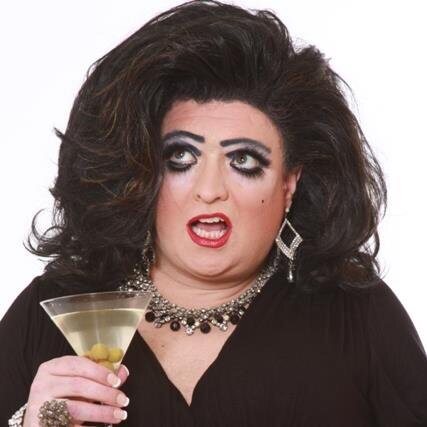

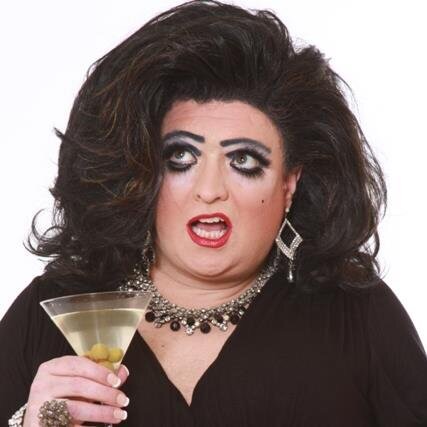
 Robert Garnham